A Profound Day on Capitol Hill
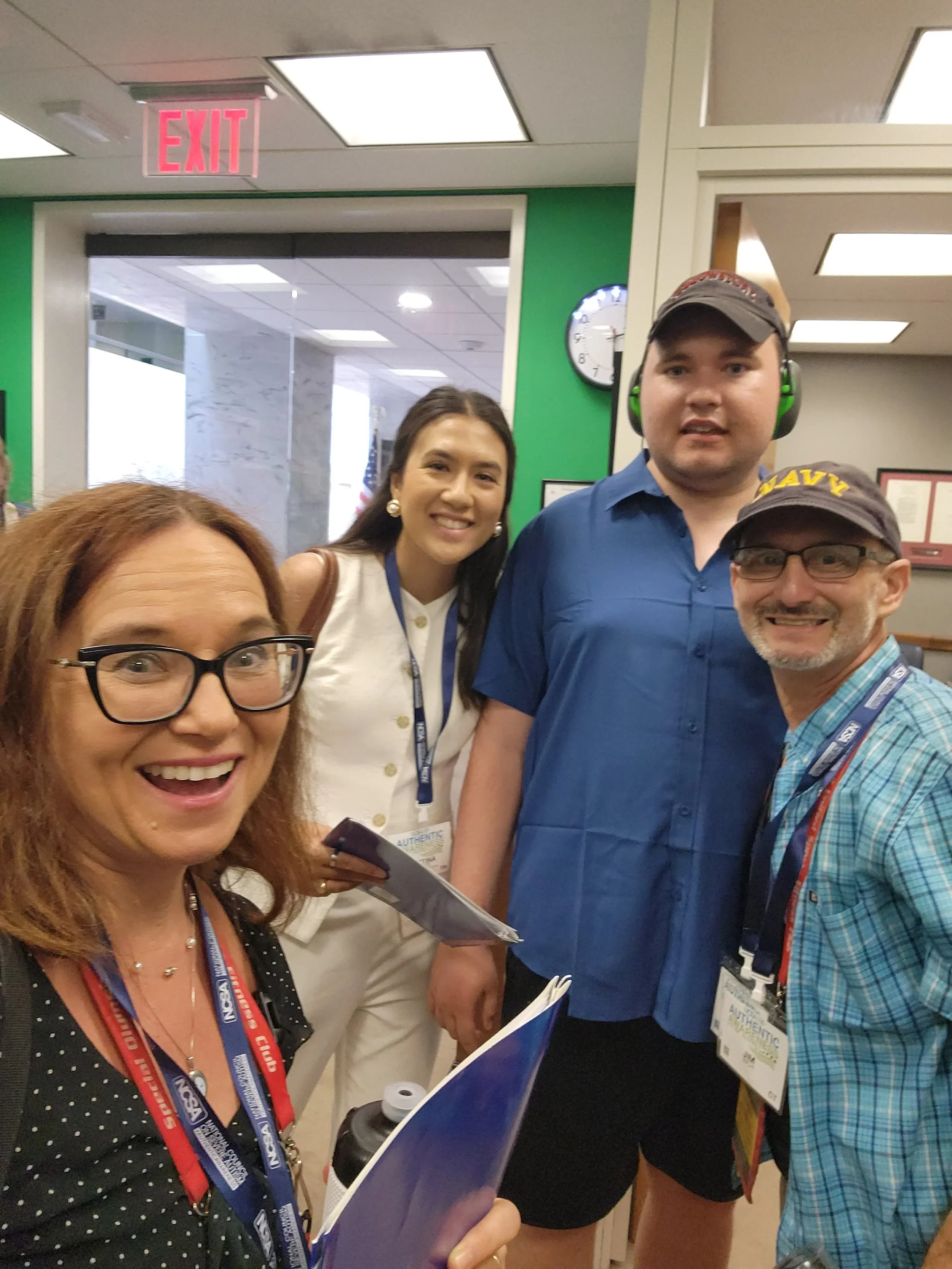
From left to right: Connecticut constituents Deb, Cristina, Zack, and Jim, preparing for what they thought would be their initial meeting in the Hart Senate Building.
At 2:30 p.m. last Wednesday, I entered Senator Chris Murphy’s Washington, D.C., office with a group of NCSA constituents from Connecticut. Among them were Jim and Deb, who had brought their son, Zack, to attend NCSA’s Authentic Awareness Autism assembly. After a full day of training on NCSA’s Medicaid reform and caregiver research priorities, they were prepared to share their family’s story with Senator Murphy’s staff and explain why those policy recommendations matter.
Zack is a 25-year-old man with severe autism. After 22 years of special education, he still has not mastered the most basic independent living skills. He is nonverbal, requires 24/7 supervision, and needs extraordinarily intensive behavioral and medical support. These symptoms are not fleeting or transient. He does not “go nonverbal.” He is like this all day, every day, requiring extremely intensive support with everything he does, everywhere he goes. Despite being approved for residential placement in July 2025, Zack has yet to be placed in a residential program, as there are no providers in the state that are able and willing to provide his level of support need. Traditional institutional settings like Southbury Training School, though equipped to provide the most intensive supports, have frozen their admissions; meanwhile newer Home and Community-Based Services lack the capability and scale to provide the 24/7 care that Zack requires.
As such, Jim and Deb do everything for him, providing the same level of care now that they did when he was a toddler. Because he cannot do so independently, Jim and Deb assist with toileting, prepare his meals, drive him, bathe him, administer his medications, get him dressed, put him to bed, manage his finances, create his schedule, and have fully redesigned their living space to minimize self-injury potential and ensure Zack is safe, loved, and treated with dignity.
With no appropriate support options in sight, they have no long-term plan for Zack’s future and intend to provide this extraordinary level of care for as long as they are able. The lack of appropriate services has taken an incalculable toll on their health, relationships, and finances.
Years ago, Jim and Deb, faced with an impossible situation, created an adoption plan for Zack’s newborn baby brother, as they knew that Zack’s extraordinary level of support need meant they would not be able to care for both children. Since then, Jim and Deb have drained their savings to pay off their home, only to be forced out of their neighborhood when Zack was met with threats of violence by vigilante neighbors. Up until recently, Deb, surviving on caffeine and antidepressants, was forced to work remotely from her minivan, as the lack of transportation to Zack’s day program meant that she had to drop him off every morning, with no time to return home before his day was over.
With policy pitch prepared and documents in tow, Zack, Jim, Deb and I made our way through the Hart Senate Office Building. When we reached the senator’s office, however, there was a change of plans. The conference room, a staffer informed us, was taken, and we would either need to reschedule our meeting or settle for a brief conversation in the hallway. Because Zack had not had lunch and already had been waiting an hour, Deb said that we would meet in the hall. We shared our stories with the staffer, who thanked us, and then we prepared to head back to the hotel.
But as we turned to leave, Zack became very agitated. He went back into the office and refused to budge from the foyer. As staffers began to move out of the way, Jim and Deb tried their best to coax him out of the office. Pressed for time and assuming that Zack would eventually head home, I dashed to another meeting that I had scheduled. An hour later, I called Deb to check in. The situation had to have calmed down by now, right? No. Come quickly, she said. Zack is in a crisis.
I zoomed to the Hart building and raced through the security checkpoint. My heart sank. From down the hall, at least 10 capitol police officers surrounded the office room, where Zack, clearly dysregulated, was aggressively banging on the glass double doors. The whole area had been evacuated and cordoned off. Jim and Deb, calm and collected despite the intensity of their surroundings, were whispering to Zack, trying to convince him to go. Jim’s hands were bloodied with scratches, as Zack’s escalating behavior had become physical since I left. But Zack would not budge.
I was terrified. Fearful of the million things that could go wrong. Awestruck at Jim and Deb for their bravery, collectedness, dedication and grace in standing by their son, whose profound disability and unique needs were alarming to everyone else on the Senate office floor.
Numb that once again, the lack of community support for people with severe and profound autism meant that police were being called in for what is not a law enforcement issue, but a healthcare and social services issue.
The stalemate continued for about 20 minutes, until a fellow NCSA advocate and BCBA arrived on the scene and made a suggestion. Zack had prepared himself for a specific setting and sequence, and when that promise suddenly disappeared, he could not simply reinterpret the situation the way everyone else could. Perhaps, she said, if we let him into the conference room (which by now was empty) and staged a meeting, he would be able to close the mental loop and move on with his routine. Hesitant and nervous, the lead staffer made a decision: she would allow us in.
The glass doors were unlocked. Jim, Deb, Zack, three staffers, and I filed into the foyer and turned into the conference room. Jim and Deb sat with their backs to the door, feeding Zack gummy bears and whispering to him, while capitol police filed in and stood posted in the doorway behind them. A journalist on the scene pointed a camera directly at me. Zack looked around pensively. The three terrified staffers sat at the head of the table and looked up. “Well, what do you want to discuss?”
The room began to spin. My heart broke for Jim and Deb. “We came...from the National Council on Severe Autism,” I said, as my face crumbled and tears began to flow. “Show us your papers,” said a staffer.
Suddenly, just like that, they were listening. Because the presentation was no longer abstract. They were sitting right across from Zack and his parents, seeing the stakes, the communication differences, the caregiving reality, and the consequences of systems that are not designed for people with profound autism.
So, through tears, with police in front of me and camera in my face, I delivered the full policy pitch, explaining the need for Medicaid reform, outlining the caregiver reality, describing how community integration cannot come at the cost of intensive, structured support—including regimented schedules, abuse monitoring, and inpatient care access—for those who need it to thrive. What could have ended as a frightening Capitol incident turned into the most honest possible demonstration of why the policy mattered. The staffers asked questions. We talked. We cried. And when the meeting was over, Jim and Deb nudged Zack that it was time to go. Without any fuss, he calmly walked out, past the capitol police, past the camera, down the hall to the exit.
Zack was one heck of a self-advocate that day. His behaviors are the only way of expressing thoughts, and without them, we likely would not have gotten a full, sit-down meeting. We should not assume that behaviors prove hidden, fully intact language capabilities. We should not romanticize a dangerous behavioral crisis, assign him words he did not use, or pretend that one striking episode proves capacities he has never otherwise demonstrated. Nothing about this episode demonstrates that he can spell complex thoughts, compose policy arguments, or communicate independently through a facilitator. But neither should we dismiss what happened.
The most ethical interpretation is a grounded one. Zack had been prepared for weeks to enter a conference room, sit through an important meeting, and hear his parents ask government officials for help. When the expected sequence was interrupted, he became profoundly distressed. When the meeting finally occurred, he settled, remained in the room, and left peacefully when it ended.
Zack communicated something real. Understanding and safely acting on that communication required the people who know him best: his caregivers and trained professionals.
Zack could not independently explain why he was distressed, negotiate a solution with staff, or ask for the specific policy reforms and services he needs. His parents, behavioral professionals, and policy advocates made it possible for the situation to safely de-escalate, and for needs and preferences to be recognized at all. Their voices did not compete with Zack’s voice, autonomy or intrinsic value as a human being.
Too often, disability policy is framed as though self-advocacy and caregiver advocacy are opposing forces. For people like Zack, they are inextricably linked.
A person may express comfort, distress, preference, attachment, refusal, or expectation without possessing the functional communication, judgment, or independent living capacity necessary to translate those signals into a policy position or crisis plan. Respecting that person requires listening to every form of communication available while also relying on the people who understand his medical history, behavioral patterns, daily needs, and safety risks. It requires caregivers and compassionate behavioral analysts to de-escalate conflict, and policy experts to compose coherent policy arguments and relay them to those in charge.
Because everyone served their role that day, the “fake” meeting became real. What began as a scheduling failure and escalated into a frightening standoff ultimately opened a path toward substantive action, as NCSA continues to work with CT officials to help families like Zack’s. From the bottom of our hearts, we extend gratitude to Senator Murphy’s office for their compassion, professionalism, listening ears, and dedication to making change.
The Capitol Police also deserve recognition for setting an example in handling a potentially dangerous situation. Zack is six feet four inches tall, weighs almost 300 pounds, and was physically dysregulated in a federal office building. Yet the officers remained measured, gave his parents and behavioral professionals space to intervene, and allowed a disability-informed solution to be attempted.
Any officer responding to a similar autism crisis should understand that immediate force is not the appropriate response to escalated autism-related behaviors. Slowing the encounter down, reducing stimulation, consulting caregivers, identifying disruptions in routine, and allowing trained professionals to guide de-escalation protects the autistic person, the family, the public, and the officers themselves.
Crisis, however, should not reach the halls of Congress before policymakers understand what they are asking for. Zack’s story is not an argument that every disruption should be accommodated exactly as he demanded, nor that unsafe behavior should be celebrated. It is an argument for systems capable of understanding why crises happen and preventing them before police intervention becomes necessary. It is an argument for residential programs equipped to serve people with the highest support needs. It is an argument for Medicaid data that reveals who is being denied care, reimbursement that reflects acuity, meaningful oversight, trained professionals, and a full continuum of care over a theoretical commitment to community placement without actual services.
Most of all, it is an argument for taking people with severe autism seriously without pretending their disabilities do not exist. Thank you, Zack.
Author’s Note
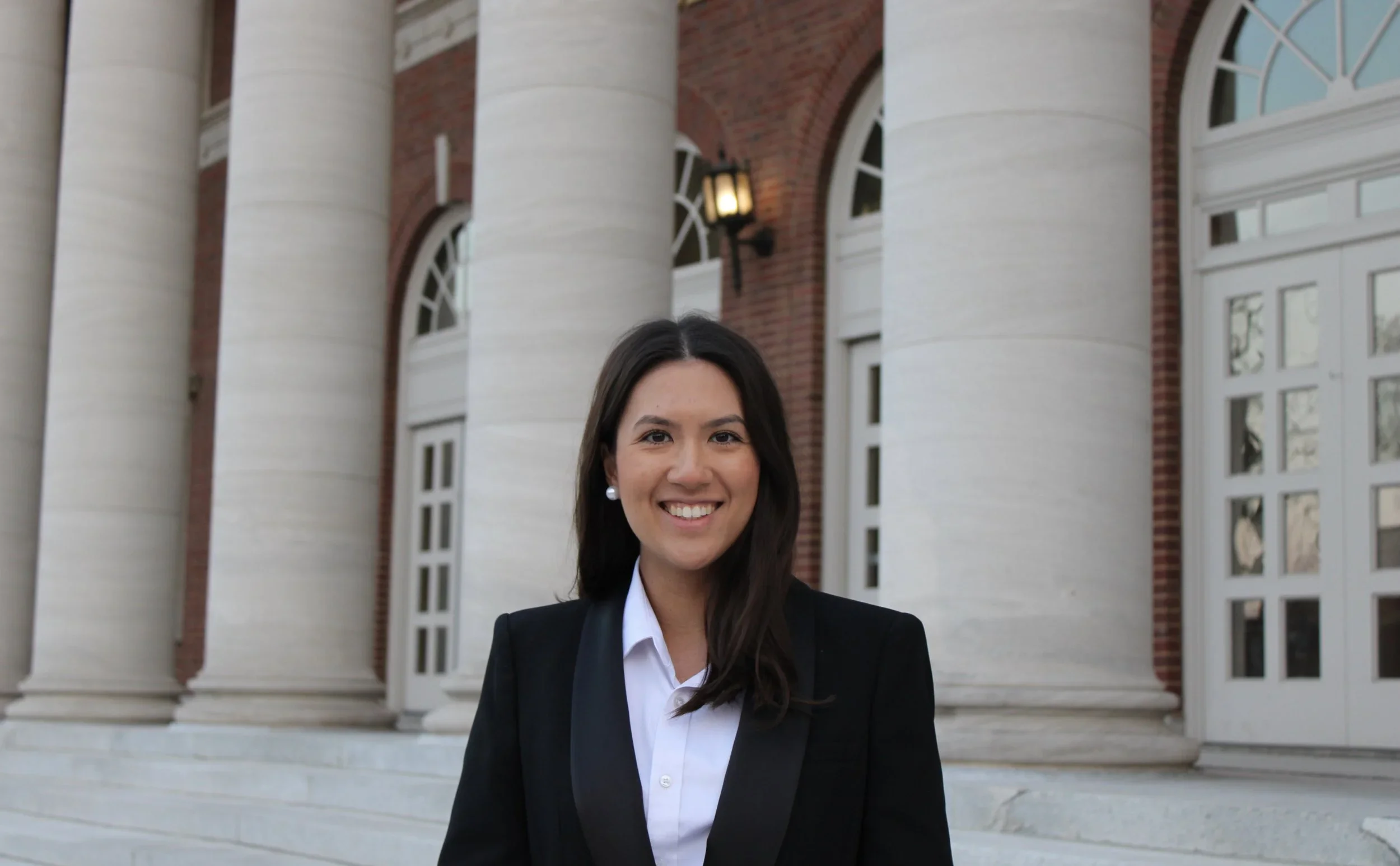
Cristina Gaudio is the Legal Policy and Advocacy Fellow at the National Council on Severe Autism. A JD/MPP candidate at Vanderbilt University and a proud autism sibling, Cristina is dedicated to advancing evidence-based policies that support individuals with severe and profound autism. Her work focuses on Medicaid reform, housing access, and meaningful services for profoundly affected individuals. She also serves as a U.S. Air Force Reserve Officer.