How Many People in the U.S. Have Autism?
By Jill Escher
I am often asked about data on the U.S. population with autism, or severe autism, or profound autism, or adults with autism. Surprisingly the data on these basic, and very consequential, questions are not readily available.
But it’s not difficult to use prevalence rates and population data to yield decent estimates.
Using a variety of sources — including CDC birth year autism prevalence estimates, birth year autism prevalence estimates from U.S. epidemiological studies, and Census data — I was able to cobble together a decent set of 2024 estimates for the following, based on autism (clinically defined, would not include self-dx) population estimates in each birth cohort:
-
Overall U.S. autism population, all ages, 2024: 2,700,000 / 2010: 1,167,000 / 2000: 478,000 / 1990: 162,000 / 1980: 41,000
-
U.S. autism population with Profound Autism: 750,000
-
U.S. autism population with Autism with Intellectual Disability: 960,000
-
U.S. autism population with Autism with Intellectual Disability and Borderline Intellectual Disability: 1,600,000
-
Adults 21+ with autism: 640,000 / with ID and borderline ID 21+: 400,000
-
Children < 21 with autism: 2,100,000 / with ID and borderline ID < 21: 1,200,000
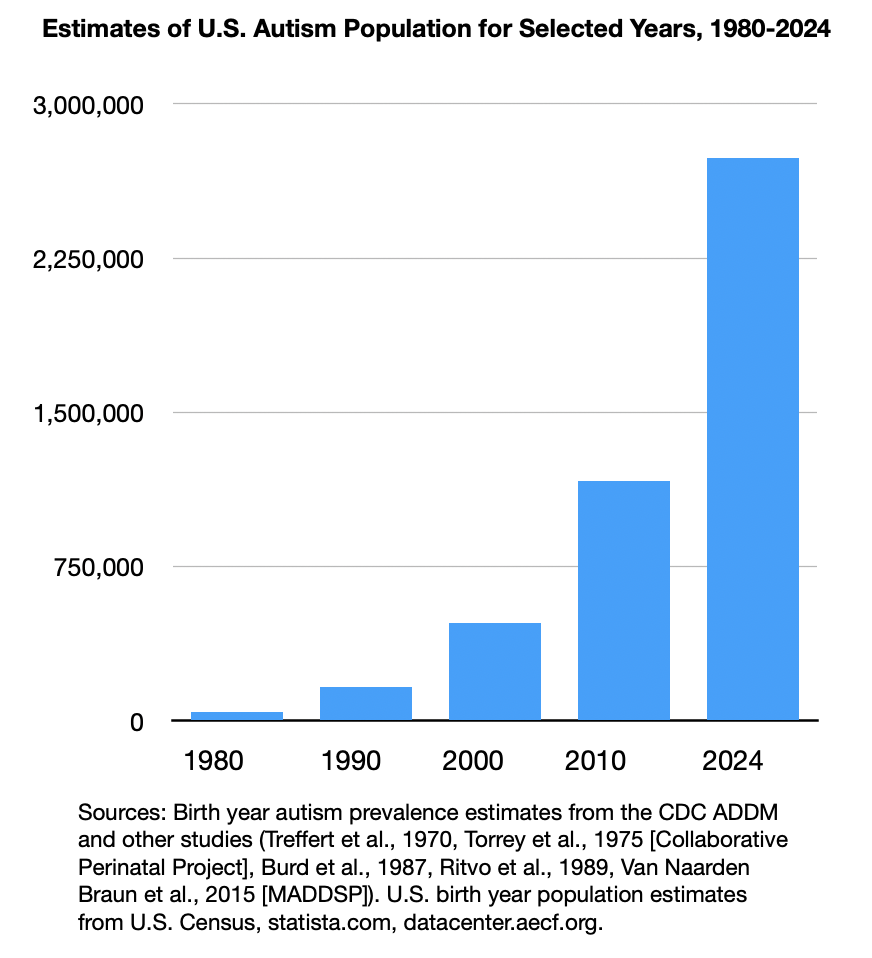
Here is the worksheet on which I base these estimates. What I present are rough estimates and all these data will benefit from further refinement in coming months.
Jill Escher is President of NCSA. Learn more at jillescher.com.