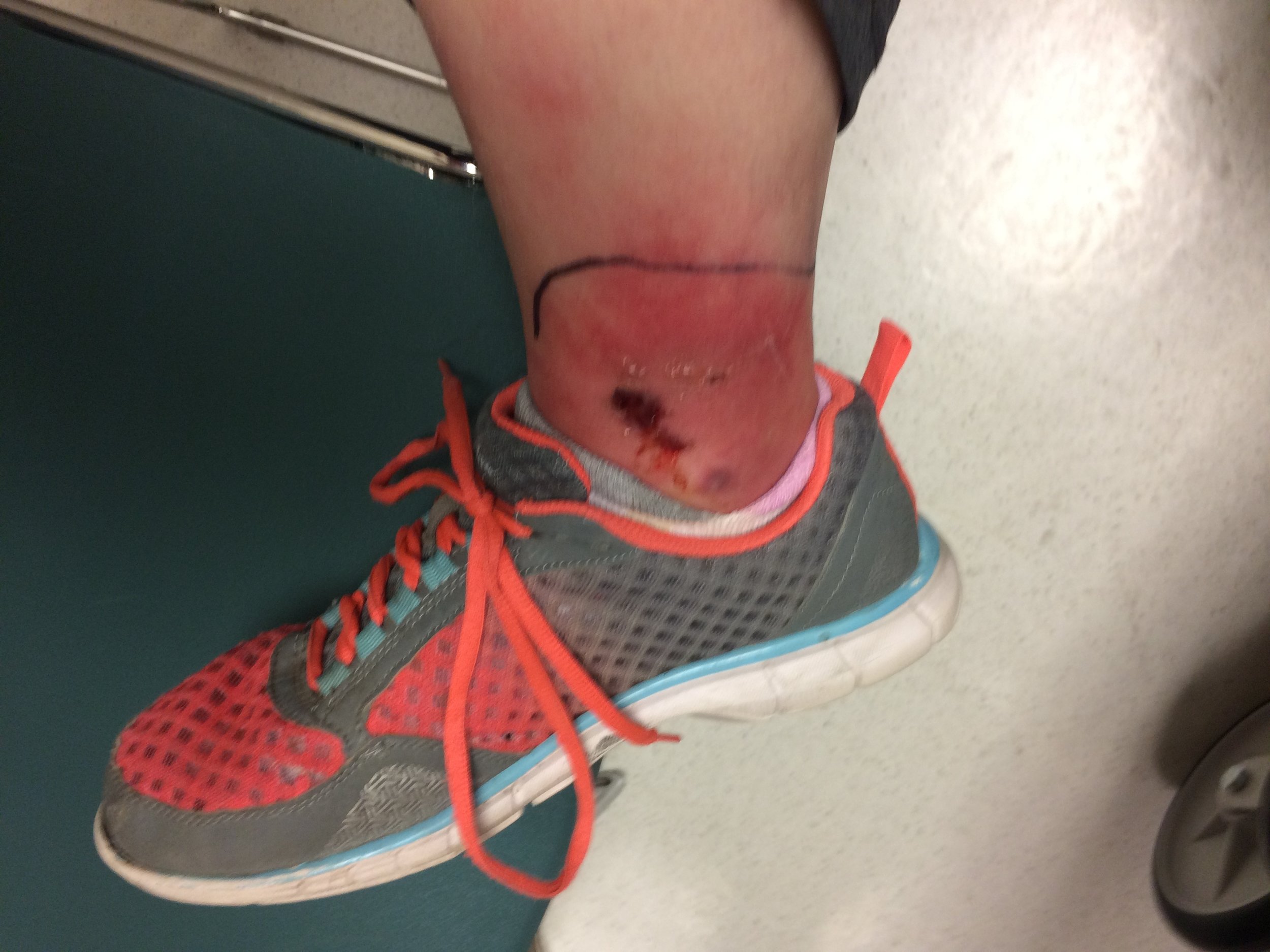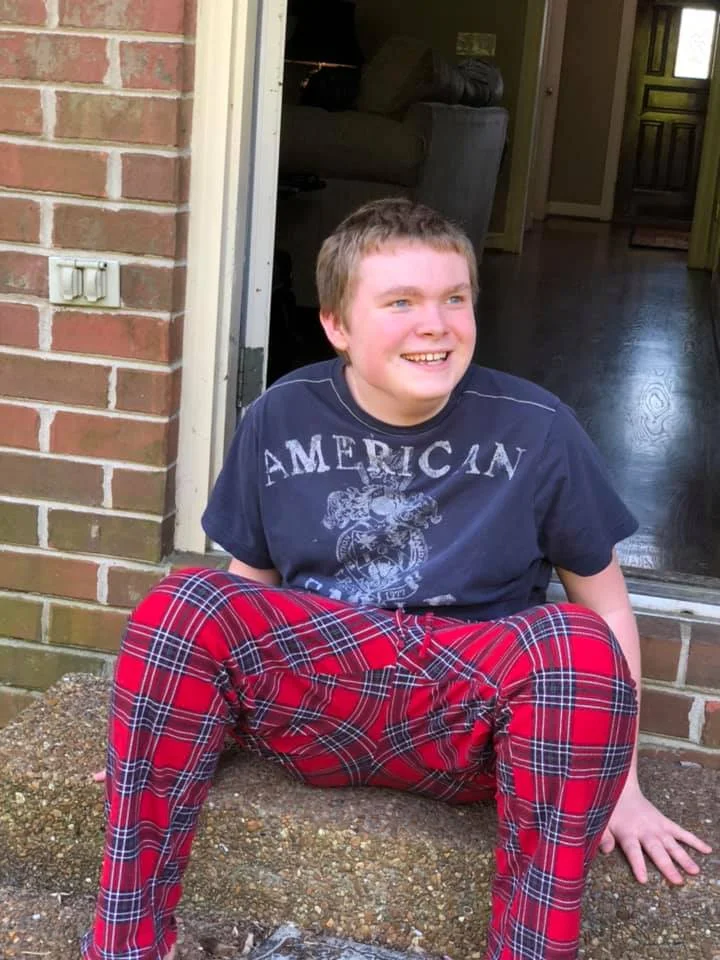
“I live in the real world. Not the fake Twitter world.”

An ode to no-nonsense autism dad @autismhoodjay

autism hood jay.jpg

By Jill Escher

As fairy tales about autism sweep across social media — autism is a “superpower,” autism is just a “type of normal brain” — I wish to express gratitude for one of my favorite tellers of autism truths, a single dad on Twitter who goes by the handle @autismhoodjay. Jay (really Jason) lives in the raw and ragged reality of autism, and fearlessly punches back at ivory tower ideology and online neuro-bullies. With tweets that burst with love for, and panic about, his 10 year-old son Seamus, Jay is a mix of funny, poetic, poignant, philosophical, and scathing.

As his profile says, ”I'm a single dad, my son is autistic, ADHD, epileptic, I tweet what I want when I want…”

Apart from the fact that his refreshingly blunt tweets inject sanity into my Twitter feed, I don’t know much about Jay. But I can glean that he has a job cleaning offices near his apartment, walks with Seamus 22 blocks to the pharmacy to pick up his epilepsy medication, sometimes struggles to pay the rent, and provides all the Paw Patrol paraphernalia an autistic boy could want. It’s an isolating and often exhausting life, haunted by a gnawing dread about the future. I think he speaks for most autism parents with this lament:

Screen Shot 2019-10-03 at 2.09.54 PM.png

But forget the long-term, today’s daily struggles can also be overwhelming. Jay is unafraid to say that autism life can hurt:

Screen Shot 2019-10-03 at 8.12.48 PM.png

When neurodiversity trolls castigate him for choosing to give Seamus therapy (not event ABA therapy, because “I can’t afford that shit, and insurance won’t pay”), Jay shoots back with a sentiment I know many of us have felt:

Screen Shot 2019-10-03 at 8.07.22 PM.png

He also points out the obvious: the trolls aren’t parenting kids with severe autism, and have never walked an inch in Jay’s shoes, or felt his dread.

In a recent video he explains his desperation to prevent all-too-possible disasters that befall autistic people who do not understand rules: https://twitter.com/autismhoodjay/status/1179750307703803904?s=20. He knows Seamus is liable to “end up in the detention hall, or jail or prison… or some rogue-ass cop (could) decide to blow his head off because he don’t understand the rules.” Those who dog-pile on him inhabit an autism fantasy world divorced from the sweat and tears of severe mental disorder, and have the cognitive luxury of trading barbs on social media. “I live in the real world, the real world, not the old fake-ass Twitter world,” he retorts.

Jay also explains to his detractors how his fears for his son are compounded by racism. “My son is mixed, he’s a kid of color. It will break my heart for my son to do something that he doesn’t think is wrong, and it obviously is, and get thrown into a detention hall with a bunch of dope boys or criminals, or some racist cop blows his head off…. This is the kind of shit I worry about, as a black man in America with a kid of color, this is the kind of thing I worry about every goddamn day. And that’s my reality. It might not be yours, but that’s my reality. There’s certain things in this world that this dude has to understand….. People out here have… no clue what autism is. All they just see is a little kid of color acting up doing shit, they don’t know he’s autistic, they don’t know, they just don’t.”

(By the way, expletives are part of the Jay way.)

And now for something else we to which we can all relate:

Screen Shot 2019-10-03 at 8.13.26 PM.png

Hahaha, took the words out of my mouth, but said much better!

You have to love Jay for calling BS on the over-broad autism spectrum, which throws together quirky and capable people with those clearly functionally disabled like his son.

Screen Shot 2019-10-04 at 9.29.14 AM.png

(smh = shaking my head). How many people here wish Jay served on a DSM-5 revision committee? Heck, we would be better off with him in charge than our disgraceful status quo.

Screen Shot 2019-10-04 at 9.11.20 AM.png

Jay knows exactly what’s a stake. A realistic societal understanding of autism that adjusts policies and funding to meet the very urgent needs:

Screen Shot 2019-10-04 at 9.12.13 AM.png

And he defends proper use of the English language to reflect, not obfuscate, reality… because his son is indeed low functioning and disabled. There’s much utility and no shame in using objectively accurate descriptors:

Screen Shot 2019-10-04 at 9.28.11 AM.png
Screen Shot 2019-10-04 at 9.27.48 AM.png

Jay scoffs at the idea that a person with autism can “mask” their impairments, since in the Autism Hood disability never takes a break:
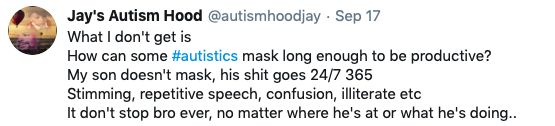
Screen Shot 2019-10-04 at 9.11.51 AM.png

When Seamus started having seizures two months ago, you could see all hell breaking loose in their already fragile lives:

Screen Shot 2019-10-04 at 2.15.21 PM.png

It felt like the trials of Job, autism style. Where will it end? What other shoe will drop? The Autism Hood may be a place of love, but things can get seriously rough, and sometimes you wish you could teleport over there to help him out.

Whether you want to pray for Jay, admire his anti-troll judo moves, or just bask in some refreshing, yet always affectionate, authenticity about autism, visit Jay’s Autism Hood here.

Jill Escher is president of National Council on Severe Autism. You can find her on Twitter at @jillescher.

Disclaimer.png

The Autism Acceptance Hoax

Pretending autism is just a difference instead of an incapacitating disability allows for de-funding of precious social programs, and ultimately the abandonment of our severely disabled.

By Rosanna Armendariz

I am an autistic adult and the parent of an 11 year-old son with moderate-severe autism and significant learning delays. Sadly, I am often reminded that despite the memes we see on pro-neurodiversity Facebook pages, “autism acceptance” and even “autism awareness” mostly apply to the high functioning and successful: the 6 year-old regional chess champion, the 10 year-old science fair winner, the tech wizard in Silicon Valley. One such reminder came a few months ago when my son and I were out for our evening stroll.  

My son often engages in stimming where he twists and contorts his fingers and hands into unusual positions as a means of self-regulation. He is doing this as we walk. An older man behind us chides me because he thinks my son is “flashing gang signs” learned from the “cholos” at school. (All parties are Hispanic or at least Hispanic-looking [I am multiracial], so this isn’t a case of a white person being racist towards brown people.)  

I explained I homeschool and provided assurance that my son has not been hanging around with “cholos” or gang members.  Then I attempt to explain that my son has autism and is merely stimming. He said his grandson has “one of those kids” in his class who is “a whiz at math.” He wondered if my son had similar exceptional abilities.

The author and her son.

The author and her son.

I am by now unsurprised that the average layperson has such an unrealistic view of autism. The representations of autism in the media and popular culture are increasingly skewed towards maximum achievers who are virtually indistinguishable from the non-autistic population. The fictional “Good Doctor” is ubiquitous. And I believe this is by design. If autism can be rebranded as not a serious disability but “a different ability” or even a “super power,” as teen climate activist Greta Thunberg asserts, then the perceived need for support is greatly diminished. Ultimately, I believe it’s all about the bottom line: think of the money we can save by de-funding critical disability services and programs and celebrating “inclusion” and “rights” instead.

Coupled with the rebranding of autism is the ridiculously wide diagnostic label of Autism Spectrum Disorder or ASD found in the DSM-5. I’m not a doctor but anyone can see the label is so wide as to be absurd. It includes celebrities with Asperger’s like Dan Aykroyd, Susan Boyle and Thunberg along with the severely autistic nonverbal 20 year-old in diapers who bites his arms and smears the carpet with feces. Increasingly the latter is pushed into the shadows and made invisible, while the former is celebrated as the real autism or “#ActuallyAutistic.”  

My son and I are both considered autistic, yet our challenges are very different. I have struggled all my life with significant sensory processing issues, motor coordination problems, and social communication impediments. As a result I am unable to drive a car, have been fired or forced to resign from numerous jobs, have difficulty maintaining relationships of any kind, can’t swim or ride a bike. Nevertheless, I am able to live independently, completed college and graduate school, married and had a child.

My son, on the other hand, while thankfully not at the most extreme severe end of the spectrum, is nevertheless unlikely to replicate my meager accomplishments. At 11 years old he still requires assistance with basic daily tasks like bathing, teeth brushing, and dressing. He can make requests and express preferences in simple four-word sentences. And while he can recite entire episodes of Blue’s Clues from memory, he can’t have a conversation. He can read and spell at a third-grade level but when in front of a keyboard types out lines from Blue’s Clues and not deep thoughts like prodigious nonverbal autistic Carly Fleischmann.  

My son will depend on social programs which are becoming increasingly scarce or nonexistent.

With my disastrous employment history and the fact that I’ve struggled financially my entire adult life, I doubt I’d meet the current bar of autistic excellence. My son never will. As a result, I have spent many sleepless nights worrying about his future, especially what will happen to him after I die. I’m not wealthy and can’t put millions of dollars into a trust fund to provide for his needs after I’m gone. My son will depend on social programs which are becoming increasingly scarce or nonexistent. I toss and turn at night imagining my sweet child living on the streets, dying of exposure to the elements, getting hit by a car or murdered by criminals.

As a society, we must not push the less glamorous manifestations of the disorder so far into the shadows that they are no longer recognized as autism.

Realistically many with autism will never obtain competitive employment or live independently (even some who are considered higher functioning). As a society, we must not push the less glamorous manifestations of the disorder so far into the shadows that they are no longer recognized as autism. My son’s life, and so many others, hang in the balance.      

Rosanna Armendariz was diagnosed with Asperger’s Disorder at age 40. She lives in El Paso, Texas where she homeschools her 11 year-old son with moderate-severe autism. 

To Escape My Autistic Son’s Violence I Ended Up Living in a Tent

“So I left. With no money and nowhere to go, I ended up living in a tent, afraid to return home to my autistic son.”

 
tent1.jpg
 

By Heidi Brown

My 21 year-old son, I’ll call him B, is about 6 feet tall and 220 pounds. Most of the time he is a sweetheart, but like the flick of a switch, he can start to rage, breaking everything in his path, including me.

The public face of autism is young and cute, but when our little boys grow up, with large muscles and no impulse control, they can be scary as hell. After all we have been through, I am not ashamed to say I am afraid of my own son. This is the story about how autism made me homeless, reduced to living in a tent.

B has a history of aggression that started as a child. For example I can recall him pulling his sister’s hair, and later trying to bash her head in with a rock. Of course we tried a variety of interventions and medications to help him, but face it, as our kids grow up, and if you have public-benefit insurance, good care is hard to find.

Last June, in response to a new medication, B started having really bad seizures along with vomiting, he was miserable. With my ex-husband living elsewhere and our daughter away at college, I lived alone with B in our apartment. I knew I was vulnerable but what choice did I have? One night he attacked me for four hours straight. Now, I have done 13 years of karate and know how to defend myself, but I couldn’t fend him off anymore. My hair was drenched in sweat, I was bloodied and bruised. B broke everything, I can still see the batteries flying out the phone, the pictures falling off their hooks, their glass shattering on the floor. I screamed out the window, “Help me! Please somebody call 911!”

About 20 firemen, paramedics and police ended up in my apartment, after they called for more people for help. My building’s elevator was broken, so they put B in a type of body bag to take him down the stairs, and I remember his head bashing against the railing. I wailed with anguish.

After the ER he was admitted to a nearby psychiatric hospital, which I can only describe as the pit of hell. It has the whole array of mental illness and drug use, and people like B don’t quite fit in this population; he is very sweet and angelic, when he’s not trying to kill me.

Early in the morning I went to the hospital to try to get B back. After a long wait finally B comes out jumping up and down smiling, looking like an angel. In his bag I noticed the discharge papers B had “signed” indicating he “understood” the doctor’s orders. Of course he lacks the cognitive ability to understand of word of it, it was a charade for the hospital.

I could not be part of the discharge process because he is a legal adult and I am not his conservator. One might ask why I have not conserved my son. Let me explain: I cannot take on a legal responsibility I have no ability to discharge. Of course I want more than anything to keep B and others safe. But I can’t. It’s not physically possible, and I don’t want to be held liable for violent acts I cannot possibly prevent.

There are other ways to get medical information and help make medical decisions, without the liabilities that come with conservatorship, so I’m pursuing those.

The longer I was alone caring for B, the more terrified I became and the less wind I had under my wings.

So after this, B and I were again living together in this apartment just doing the best we could. Obviously it was a fragile situation, but again, I had no options. I have tried every treatment and sought all manner of help for my son. I tried to give him a good life in that apartment, even when he would hurt me, for example in May when he cracked my head open with his cell phone. 

Some autism parents need to hide all the knives, but it’s not like that with B. He can’t premeditate, the rages are very all-of-a-sudden.

So let me be honest. I burned out. The longer I was alone caring for B, the more terrified I became and the less wind I had under my wings.

I took a two-week sanity break from B while his father moved in to watch him. When I moved back in, last month, my son indicated his toe hurt, and I could see he had an ingrown toenail. I took him to a podiatrist, the most compassionate doctor we have ever seen, who managed to remove the nail and give him antibiotics for the infection.

But unfortunately B had a terrible reaction to the antibiotics. In his misery he beat me up. There was blood everywhere, I had a black eye. Afraid to call 911 and go through the psych hospital nightmare again, I asked his father to come back, and I would again leave home.

So I left. With no money and nowhere to go, I ended up living in a tent, afraid to return home to my autistic son.

Just the other day I found an inexpensive room to rent, and after more than a month of being homeless it’s a relief to finally have a bathroom and a kitchen, and a roof over my head where I don't have to worry about freezing at night or how to eat with a cooler. But I am exhausted.

What happens next with me and my son, I don’t know. We are living day by day.

I am sharing my story not to ask for pity or sympathy, but because I want people to understand the terrible vulnerability of autism families, particularly those living with severe autism. They face unthinkably traumatic circumstances, through no fault of their own. To anyone who may judge us, I say please walk in our shoes, even for a day. 

Heidi Brown is the pseudonym of an autism mom who lives in the San Francisco Bay Area.

Editor’s note:

Excerpt from the Handbook for Conservators, 2016 Revised Edition, by the Judicial Council of California

4.9 Keeping the Conservatee from Causing Harm

It is your responsibility to take whatever reasonable steps you can to stop the conservatee from hurting someone or damaging someone else’s property. Your lawyer can suggest courses of action. 

For example, if the conservatee has a driver’s license, but you have seen the conservatee drive dangerously, you should do the following:

■ Let the conservatee’s doctor know so that he or she can provide the appropriate information to the Department of Motor Vehicles so that it can start the process of canceling the conservatee’s driver’s license.

■ Consider having the conservatee’s vehicle disabled so that he or she can’t use it. Consider also storing the vehicle where the conservatee can’t get it, or even selling it before it depreciates, if the conservatee will not be using it in the foreseeable future. Coordinate storage or sale with the conservator of the estate, if he or she is a separate per- son.

■ Arrange for another means of transportation, so the conservatee doesn’t need to drive. For example, you might buy a bus pass or taxi coupons for the conservatee or arrange for community van service, if it’s available.

If you don’t take all reasonable steps that you can to stop the conservatee from causing harm, you may have to pay out of your own pocket for the cost of any damage to people or property.

You or the conservator of the estate may be able to obtain insurance that will reduce the risk that you or the conservatee will have to pay out money for such harm. If you are worried that there is a serious risk that the conservatee may cause harm, check with your lawyer. 

"Everyone Is Employable," Except the Severely Disabled?

An enterprising autism mom creates a nonprofit to provide employment for those considered unemployable. But the future looks bleak for programs like hers.

Just because someone with a disability may have low productivity doesn’t mean they should be jobless for life.

Just because someone with a disability may have low productivity doesn’t mean they should be jobless for life.

By Kim Christensen

I’m mom to a 20 year-old daughter with severe autism. She has worked hard all of her life to acquire the limited skills that she now possesses. She is quickly approaching “the cliff,” the federal age limit of 22 when her school based support services will terminate. I see it rushing towards us like a speeding train and I question myself daily if I’m doing enough to prepare us both for it.

She is low-verbal, has a vision impairment, uncoordinated gait and her fine motor skills are pretty much non-existent. She also has behaviors and severe inflexibilities in her daily routines, but she possesses an infectious smile, and can hug her way into the good graces of perfect strangers.

Like all parents, I want her life to be meaningful, purpose-driven and for her to be a contributing member to society, in whatever way suits her. When I started researching adult services a few years ago, however, I saw few resources available, particularly for someone who is low-functioning with intense behaviors. But one day I had an “aha” moment when reading about a laundry service that employs adults with developmental disabilities. It seemed like the perfect match for her, and, given her obsession with washing machines, I knew it could be a dream job for her.

So two years ago I founded a nonprofit in the hopes of creating jobs for those who are considered unemployable. Our tagline and mission is simple: “Everyone is employable.” In our laundry business, my daughter and another developmentally disabled young woman now work side-by-side one day a week at a local laundromat, and then we all fold the linens together in my home. We have one corporate account, a sweet businesswoman who sees the beauty in what we are trying to achieve.

But what I dreamed of—a meaningful job and a paycheck—hasn’t panned out. The profit margin on the business is extremely low, and to the extent I could possibly grow the business, new federal bills, the Raise the Wage Act, and the Transformation to Competitive Employment Act, (Raise the Wage has already passed the house) would put an end to non-competitive employment, a change that would hit the severely disabled particularly hard. The reality is that despite the accommodations we have made (like a special folding table to help her) she still needs lots of assistance to fold anything. Under the new laws, I would have to pay all of our developmentally disabled workers minimum wage, whether it takes 15 minutes to finish, or in my daughter’s case, two hours. And that’s in addition to paying job coaches and supervisors (so far we’ve all been volunteers). It is simply not financially feasible to pay a person with low productivity minimum wage on such a low-margin business, even if she is my own daughter. That’s the heartbreaking reality.

Under the new bills, only the high-functioning would be employable, making a mockery of our tagline. Now our focus is to put our business income into starting an adult daycare center with some volunteer employment training focus. It’s not the shiny happy story I aspired to a few years ago.

Jobs without income can bring some benefits, like the feeling of accomplishing a task, being a part of a team, and having friends she looks forward to seeing. But it denies our children the right to real work, and to income that could help them and their businesses. Non-competitive employment must be a fully accepted and flourishing option for the severely disabled. It’s heartbreaking and nonsensical to crush the hope that “everyone is employable.”

Kim Christensen is the founder of Pathways to Employment, and lives in Granite Bay, CA.

Severe Autism: Trying to Cope When I'm Falling Apart

Far from her once-normal life, her world became IEPs, therapies, meltdowns, sleep deprivation, poop, door locks and barricades—and stress, loneliness and isolation.

 
“I will always love him desperately, but nothing can stop the pain and loss and fear for the future, both his and mine.”

“I will always love him desperately, but nothing can stop the pain and loss and fear for the future, both his and mine.”


By Claire Swainson

Yesterday, August 6th, my son Daniel turned 18 years old. Every year around Daniel's birthday I feel the same heartache. What should be an exciting day for my child means nothing more to him than any other. He doesn't care about presents or a party. He doesn't have friends. He likes the same things he liked when he was in preschool. Instead of giving him money—or whatever typical teens would want at that age—I’m shopping in the little tot section of the toy store or on a special needs website for "oral motor" stimulation toys.

I am about to say some things that many in my position wouldn't dare. If I am judged harshly for that, so be it. After all, it is only fair to tell the other side of the story. The one that doesn't appear to belong on the autism community websites and never makes headlines. The side that isn't about breakthroughs or savant talents. So here goes.

It is lonely and isolating to have a child like Daniel. This same routine, like a choreographed dance. 

When Daniel’s bus pulls up, it starts. He wants a "forest"... a stick. But only one off the tree in front of the house, and only the ones that are "just right" will do. And oh, that's right, the tree no longer has any that can be reached without a ladder. But you can't tell Daniel that because he doesn't "get it." So instead, he follows us around the house repeating "WANT FOREST!" for hours. Literally. 

Then he wants to "go for a ride." That is "Daniel-speak" for going to get fries at McDonald's. Again, he repeats "Want to go for a ride!" while following us around until we have either given in or mentally snapped from exasperation. We have had to nail the windows shut because he turned to climbing out the window and roaming naked when he couldn't get out of the locked doors. Now we are dealing with his newest and grossest fascination to date: smearing and playing with feces. He turned 18 years old yesterday, and I'm cleaning more poop than I did when my kids were babies. It is never-ending. Mind-numbing. Heart-breaking.

In this madhouse isolation, I don't recognize the person I've become. Sure, I have made a couple of failed attempts at returning to employment and a semblance of that life. But they are just that. Failed attempts. 

I can't relate to those with typical kids anymore, and most of my friends seemed to disappear within a few years of Daniel's autism diagnosis. My world became IEPs and therapies. Obsessions and meltdowns. Sleep deprivation and toileting accidents. Door locks and barricades to keep my nonverbal child from "eloping." Puberty with a child who still functions as a toddler. Doesn't converse or answer questions. Still watches Nick Jr. and PBS Kids. 

As autism parents, we are charged with responsibilities that far exceed any others. While I will continue this dance with Daniel for as long as I walk this earth, and I will love him desperately while doing it, nothing can stop the pain and loss and fear for the future, both his and mine. I miss my life, my friends, and honestly, I miss me.

Claire Swainson is a reluctant stay-at-home mom. She lives in Hendersonville, Tennessee with her husband and youngest son Daniel.


Disclaimer.png

Inside the Mind of an El Paso Autism Mom

The horror of a local mass shooting prompts ruminations on helplessness and vulnerability

By Rosanna Armendariz

On Saturday, August 3, 2019 my city El Paso, Texas experiences a horrific mass shooting that claims the lives of 22 people. My family is fortunate enough not to be at the Walmart or adjacent shopping mall where the attack occurs. So, on August 3, like many other spectators, I watch helplessly as the aftermath unfolds on every news network. However, unlike many others, I am an autistic adult with a child on the severe end of the autism spectrum and for both these reasons my thought process might differ from most.  

I watch people who manage to escape the shooter exit Cielo Vista Mall in a line with their hands up and I think about the hyper-vulnerability of those with autism. I wonder if my son would be able to exit in such a manner. If we were in a mall with a shooter on the opposite end and a 60-second window for escape, would my son be able to leave the building, get into line and walk across the parking lot with hands held above his head signaling to police that he is not armed? 

My son is only 10 but what if we find ourselves in this situation a few years from now? What happens if instead of walking in line with his hands above his head my son runs from the building screaming and flapping his arms? How does law enforcement react? Do they mistake him for the shooter? If my son and I are separated will law enforcement recognize that he has autism and provide him with extra assistance? If unattended will my son run from the scene and into traffic? What happens if an officer asks his name or some other routine question and instead of answering he begins loudly reciting from memory an entire episode of Blue’s Clues? On the scene of a mass shouting with adrenaline running high will harmless echolalia be seen as threatening? How does law enforcement react? 

Recently I have heard some discussion of police training to improve interactions with autistics, but I haven’t heard anything about how this training would play out on the scene of a mass shouting. So I sit glued to my television screen watching those lucky enough to escape a senseless death walk in a straight line to safety with their hands held high above their hands, and I can’t shake the dark creeping fear that in this situation my son with autism might escape the shooter only to be shot dead by the police.       

Rosanna Armendariz is a stay-at-home homeschooling mom. She lives with her family in El Paso, Texas.       

Disclaimer.png

Autism Housing: Today a Mirage, Tomorrow a Reality?

A report on the meeting of the Autism Housing Workgroup of the Interagency Autism Coordinating Committee

By Jill Escher

You are dying of thirst in the Sahara, dragging your parched body through the dune, and then you see it glimmering ahead: a lake atop the burning sand! But as adrenaline pushes you forward to salvation, you see the truth. It was all a mirage.

iacc+sign.jpg

Such was my impression of autism housing after participating in the Autism Housing Workgroup of the Interagency Autism Coordinating Committee (IACC), which met for a day of presentations on July 23 near Washington, DC.

Now, don’t get me wrong. It is great news that the IACC is spending time and effort to look into the autism housing crisis. Major kudos to Alison Singer, Samantha Crane, and other IACC members for pushing this urgent topic to the fore, and I was certainly pleased to serve on the group in my capacity as a scattered-site autism housing provider.

But the major take-away from the day was unmistakeable: we are facing an autism housing crisis of epic proportions, and while many promising models have been developed, the options fall dramatically short of what is needed, particularly for autistic adults with challenging behaviors.

Singer opened the meeting explaining this transient effort was not intended to solve our crisis, but instead to shine a light on the growing demand for housing and the emerging menu of models that can help serve the diverse population of adults with autism. Susan Daniels, director of the Office of Autism Research Coordination (OARC) stressed “this is a starting point for committee’s discussion of this topic.” A summary of the proceedings will be provided to the next iteration of the IACC if and when it is reauthorized by Congress (via Autism CARES Act funding).

Here are some not-necessarily-in-order commentary-strewn highlights of the meeting (pardon this short list, not enough time or space to reiterate everything).

Samantha Crane, Director of Public Policy at ASAN emphasized a point that pounds in the heart of autism parents and adults with autism alike — the need for affordability, community, and engagement and freedom from isolation, neglect and abuse. While we may quibble about how those ends may be achieved across our entire population, there is no question we share overlapping goals, and also the belief in person-centered planning and outcomes.

Eschenbacher explained that DD is defined by substantial functional limitations in 3 or more areas of major life activity.

Eschenbacher explained that DD is defined by substantial functional limitations in 3 or more areas of major life activity.

Heidi Eschenbacher, PhD, Institute on Community Integration at University of Minnesota, provided some background data. She estimates that 7.37 million in the U.S. have I/DD and  nearly 7% of U.S. children 0-17 have I/DD and DD (…a gigantic number!). In terms of those residing in state institutions, the peak was in 1967 with 194,650 living in institutions. As of 2015 the number is down to 19,502. Conversely, HCBS waiver utilization skyrocketed to 807,462 (2016), while ICF/IDs declined from 140,752 to 74,614 today. 

Desiree Kameka, Director of Community Education and Advocacy, Madison House Autism Foundation (and Autism Housing Network), emphasized a great number of shortcomings in our system, for example:

  • People do not understand their options, or how to navigate our extremely complex, fragmented system.

  • She frequently receives calls about autistic adults who are losing their primary caregiver (when a parent becomes infirm or dies). “This is happening more and more,” she said, and as someone who receives these desperate calls and emails all the time, I can vouch for the same.

  • Many adults disabled by autism fall through the cracks because their IQs are too high to be eligible.

  • Providers do not want to serve individuals with history of self-injury and aggression. Those individuals become isolated in the family home, and so are their caregivers.

  • Most adults with autism have NO CHOICE about housing because of the dearth of options and are forced to stay in family home.

  • Scattered site house is largely unaffordable.

  • Mate crime and abuse are rampant.

  • Institutional abuse and attitudes can happen in any setting. This is a cultural phenomenon: “The walls do no abuse people. People abuse people,” she says.

  • Autistic adults can thrive when they are given the opportunity to live their own life, but the status quo is not meeting the needs.

  • Kameka noted a decline in NIMBYism, but I’m not sure I’m inclined to agree. I regularly see community opposition to new DD housing projects.

  • She cited alarming statistics from some Colorado counties where 12.4k live with caregivers over age 60. Yet over the past 15 years fewer than 3,500 were given supports to move out of the family home.

  • In discussing autism housing, she stressed we need clarity about vocabulary, what we mean by provider controlled, consumer controlled, consumer directed, host family (provider controlled), shared living/roommates, and paid neighbors, for example.

  • Property types include, among others, accessory dwelling units (ADUs), bequeated family home, scattered site, owned homes cohousing, intentionally neurodiverse neighborhoods, planned communities.

  • The biggest barrier to community access if the lack of community skills of the autistic adult.

  • Person-centered planning is what matters most. The number of people in a setting is not a proxy for outcomes.

  • The amount of abuse suffered by adults with I/DD is “ridiculous” and we must do more to prevent abuse.

  • We need to consider the costs of not providing housing, because without efficient options, people end up in more costly settings.

  • We are facing a huge direct support provider (DSP) crisis, in terms of funding, training and career paths.

  • At what point are the states liable for lack of compliance with Olmstead (ADA) by failing to offer viable residential options for adults with I/DD?

  • We must focus on actual outcomes in service delivery models, not in abstractions.

Ivanova Smith, an adult on the autism spectrum commented that it’s important for adults with I/DD to move out of the family home and have an opportunity to grow up and become independent of their families.

Amy Lutz, member of the board of National Council on Severe Autism (NCSA), noted that there is no good data to compare rates of abuse and neglect among various settings and service models. Studies have been flawed, with policy decisions are based on values, not data. For example there is no data indicating that living in an apartment is safer than living in an intentional community. Lutz also stressed that most autism housing models exclude those with severe behaviors, such as aggression, self-injury and property damage. We need to explicitly offer models that include that sizable portion of the spectrum.

Jillian Copeland, co-founder of MainStreet Connect in Maryland, provided an oral public comment on her group’s 70-unit apartment building with 25% of units set aside for DD adults. It is a housing model and not a service provider, but the project includes a community center with 10,000 square feet of community space for social, educational, and recreational uses. They are a “BYOI” model — bring your own independence, since they are are not a service provider.

Susan Jennings, founder of Keeping Individuals with Intellectual Disability Safe (KIIDS) shared an oral public comment that her son is one of those who kicks down doors and elopes into traffic. He has been discharged from six different group homes, as none could manage his challenging behaviors. She cited systemic shortcomings to community group home, including severe abuse and toxic over-medication. His salvation was an ICF, and she laughed at the idea of “forced institutionalization” since “You can’t force your way” into an ICF since “they are closed or closing.” 

She said her son is far from an anomaly. About 40% of the autism population exhibits severe challenging behavior. Because of the lack of options, these adults often languish in psychiatric facilities, hospitals, or jails. The Olmstead Supreme Court decision recognizes that the ADA does not impel states to close institutions, and indeed that some individuals may need these setting for crisis periods or permanently. They must remain available, as they offer a superior form of care for a segment of the population, she said. There are very high costs to keep some adults “in the community” with too little assistance and supervision. “The state center is a bargain compared to the community,” and also provides her son a much greater degree of personal freedom. Also, unlike community settings, ICFs must meet rigorous standards to be certified. She drew attention to the direct service provider (DSP) shortage: “You are asking people to handle life-and-death emergencies at fast-food wages.” Finally she denounced the “cruel movement afoot” to defund out-of-home options. If parents do not have the ability to care for severely affected adults — who does? We must offer a full range of services.

A written commenter suggested a system of long-term care insurance, or an autism care fund to cover long-term care for adults with autism. Autism is treated the same as intellectual disability but is different it involves more intensive needs.

Jill Escher (moi) commented that there are two overarching issues in autism housing: quantity and quality. We must pay attention to quantity before nitpicking about qualities. The dramatic surge in autism has profound implications for expansion of our system, which is already at capacity. According to California data the adult autism population will quintuple over the next 20 years. Sharply increasing prevalence, combined with aging and inevitably dying parents portends a catastrophic crisis.

California DDS Autism Prevalence by Birth Year of Males and Females Born in the State

The autism tsunami, reflected here as prevalence in California, by birth year. Autism has become so prevalent that more than 2% of boys born in California in 2012 have ended up as autism cases in the Department of Developmental Services. The drop-of…

The autism tsunami, reflected here as prevalence in California, by birth year. Autism has become so prevalent that more than 2% of boys born in California in 2012 have ended up as autism cases in the Department of Developmental Services. The drop-off after 2012 births reflects the lag of cases entering the system, not a decrease in prevalence. (Source: California Department of Public Health, based on DDS data)

Max Barrows, a self advocate from Vermont, stated that a home should be not considered if more than four people live in it, that adults with autism should have the right to privacy and access to the community.

Dr Joshua Gordon, director of the NIMH and chair of the IACC, stated that there are lessons to be drawn across the full continuum of care, and given the urgent need to expand the number of units, we need scalable models that work for different needs.

Kim Musheno, VP of Policy at Autism Society, said that settings should depend on individuals’ desires and needs but that a big part of housing quality resides in the direct support professions. “We are not paying them enough to care for these clients.” Functional needs are critical to consider, not a diagnostic label.

Denise Resnik, co-founder of FirstPlace, AZ, stressed that no matter how you dice it, supported autism housing is very expensive and will require getting the private sector involved. Autism housing today is like where senior housing was decades ago, it’s an emerging marketplace.

Melissa Harris, Centers for Medicare and Medicaid Services (CMS) spoke by telephone about HCBS rules. She said waiver-funded services are “not a one-size-fits-all conversation.” It involves different needs, bringing a different idea of what community looks like. CMS is not looking “to inject a standardized way of living” but rather being driven by the person-centered plan. States have until March 2022 to achieve compliance, and the revised Guidance she hopes solidifies the idea that a variety of settings can meet the settings criteria. HCBS regulations are not meant to rid the country of a certain model or infringe on personal choice. It’s designed to say that the “individual-ness of the person” must be respected by the provider and the infrastructure.

Lori Ireland, incoming chair of the Autism Society of America, expressed concern that perhaps no other populations receiving CMS funding are subject to settings restrictions like those with disabilities. 

Then followed a succession of presentations about housing models. 

Denise Resnik wants housing and community options to be as bountiful for those with ASD as for everyone else. First Place is a residential private pay, private lease tuition program in Phoenix for those seeking to acquire skills to live independently. The residence has a 24/7, everyone has their own room, and the programs and residents are deeply connected to the broader community. The building hosts many autism-friendly amenities and features (my favorite were the auto turn-off stove and ovens). FirstPlace sees itself not only as a real estate developer but also as a community developer, creating community within a community but also a more autism-friendly region, including adding hundreds of employment opportunities . 

Krista Mason, founder of Benjamin’s Hope, Michigan, discussed being the mother of a large young man severely affected by autism. Over many years she helped develop Ben’s Hope, a residential property with many autism-friendly amenities and opportunities, based on a vision of community, engagement, or purpose. The farming element came from Ben and what’s important to him, and not from any interest Krista has in growing food. People often remark this development “feels different” — “it isn’t about the physical structures, it’s about our values” which focus on respect for the individual and purposeful engagement. Medicaid covers 75% of the costs of care.

Terry Hamlin, director at Center for Discovery in New York state, an agricultural college and continuous learning community that deeply engages with the local community. The Center serves some of the most challenging individuals in the state, including with severe aggressive, maladaptive behaviors. She showed some examples where the program successfully addressed health problems and anxieties and vastly improved quality of life for adults. Stress reduction—for the individual and the caregiver—is essential. 

Lindsay Johnson, from the Kelsey in San Jose, California, described this project which has not yet broken ground. This apartment complex will feature a range of incomes and abilities. She observed that “cities crave these projects,” which create inclusive options under the umbrella of affordable housing. She encourages housing advocates to work actively with housing developers who have the experience to get these projects done. “Developers need inclusion-minded individuals to help guide them."

Jim Whittaker, Arc of Jacksonville, Florida spoke on this 121-resident development, which serves those who can live independently with just enough support to get by. The Arc of Jacksonville village is walkable and transit-friendly. The residents live semi independently, with 5-8 hours a week of supported living coaching. It also has a 12,000 square foot community center, pool and other amenities. It offers very low rents but has a lengthy waitlist and almost no turnover. Eighty of the residents are employed in the community.

Matthew Osborne, of the Faison Center in Richmond, Virginia, a 45-unit complex with one-third of units set aside for adults with developmental disabilities said his residents have basic living skills but receive some supervision. 72% are employed, 83% receive a Medicaid waiver for supports.

Maedi Tanham Carney, Integrated Living Opportunities, Washington DC area. ILO is basically what we in California would call an “independent living services” agency. ILO does not provide real estate but instead a range of supports. About half the families use a waiver to pay for services. One goal is to create “long-term facilitation” for after parents pass away. I think this particular question — who will oversee care, act “in loco parentis,” after we parents die — deserves its own IACC meeting! It’s a giant question mark haunting countless thousands of autism families across the country.

Mary Anderson, ABLE, Inc North Dakota. This agency began in 1985 to help move residents of a state institution into group homes. Many were unhappy in the group homes, so they use a multi-family model. While choice is important, she notes that for all people “choice is limited to affordability.” She reality-checked the idea that scattered site housing is optimal by noting the sharply higher staffing costs involved.

Some of the housing advocates at the meeting (female edition?) were Alison Singer (IACC member), Desiree Kameka (Autism Housing Network), Amy Lutz (National Council on Severe Autism), Lori Ireland (Autism Society), Jill Escher (Claradon Properties) …

Some of the housing advocates at the meeting (female edition?) were Alison Singer (IACC member), Desiree Kameka (Autism Housing Network), Amy Lutz (National Council on Severe Autism), Lori Ireland (Autism Society), Jill Escher (Claradon Properties) and JaLynn Prince (Madison House Autism Foundation).

As Amy Lutz said toward the close, it was remarkable how few options serve those with severe and challenging behaviors. There was little to ”alleviate the panic” of families; we need a discussion that focuses directly on the needs of this population. Alison Singer said the IACC has some purview and can make some inroads to open doors to options for all members of the spectrum.

After the meeting several of us commiserated about the need for a national policy agenda on this urgent issue. It’s time to roll up our sleeves and start the long-overdue process of reform.