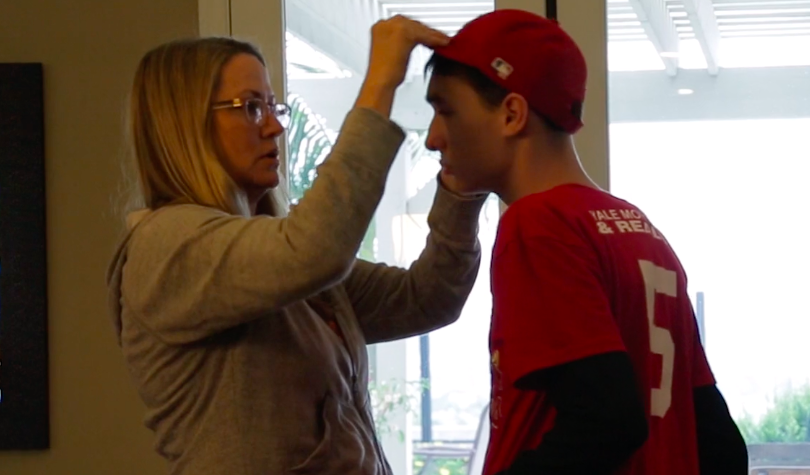
Disability Advocates Discriminate Against the Severely Disabled

A former civil rights enforcer knows that non-competitive employment for the severely disabled is a humane lifesaver, not discrimination.

[This commentary is based on a response to the above video, “Exploitation OR Lifesaving? The Controversy Around Disabled People Being Paid Pennies An Hour,” by Philip DeFranco.]

By Harris Capps

I strongly support the continuation of the subminimum wage authorized under the Federal Labor Standards Act, FLSA, section 14(c).

My intellectually and developmentally disabled son needs it. As much advocating as I have done on this topic, I was surprised to see this video for the first time. Phillip DeFranco did an EXCELLENT job of explaining the basics of this issue. Of course, as an advocate for the subminimum wage, I think some of the later-mentioned positions were given a bit more time than they should have.

I'd now like to address several points in the video. The National Council on Disabilities (NCD) has NEVER had a knowledgable representative membership to stand up for persons with SIGNIFICANT intellectual and developmental disabilities (IDD). In the video, NCD's Neil Romano took a position on 14(c). His rationale was completely flawed.

First, he indicated that the subminimum wage was "old-fashioned discrimination... that he never heard of anyone saying a different minority should receive subminimum wages until they learn how to work…." During the 1970s, the USA experienced such racial discrimination that the Department of Defense created Race Relations Instructors and Equal Opportunity Officers to investigate potential cases of discrimination. From 1973 until 1982, that was my job in the Air Force. I was also on the staff and faculty of the Defense Equal Opportunity Institute.

I can tell you that the subminimum wage is technically "discrimination" but that is not depriving persons of their civil rights. On the contrary, people with vision, back in 1938, created this wonderful program. Mr. Romano says that "people with disabilities are 2x more likely the be in poverty and 2x more likely to be unemployed." Mr. Romano casts a huge net; "people with disabilities"... are you kidding me. That would include a huge range of persons with disabilities that hardly affect their daily lives to persons like my son who has SIGNIFICANT intellectual and developmental disabilities (IDD).

If my son were able to seek competitive employment, then I as his parent and guardian would gladly push for that. But he is unable. That is why I am his guardian. My son cannot differentiate 75 cents from 75 dollars. He requires assistance in placing an order at McDonald's. I say "assistance"... but the assist is the placing of an order.

Mr. Romano suggests that if another minority were given a subminimum wage, people would be appalled. Using his words, let's say he meant a person who identifies as being Black or Native American, or Asian... really? The fact is that persons with severe intellectual and developmental disabilities come in all races, ages, sexes, etc. It is obvious that Mr. Romano has never investigated a case of discrimination or facilitated groups of our Armed Forces to eliminate discrimination. Several national-level councils representing people who are higher functioning, as well as numerous nonprofits who "support" persons having much less significant intellectual and developmental capabilities are indeed against the subminimum wage. They either do not understand what discrimination really is, or they speak for persons who, because they are higher functioning, can indeed be a part of competitive employment.

I ask these people, "Where will my son work when his Vocational Center vanishes because of possibly well-intentioned but largely ill-informed proponents of ridding the USA of the subminimum wage?" If this happens, you will be the ones who discriminate against more than 130,000 persons who had work, work they enjoyed, and now may be relegated to watching TV all day, thereby increasing behavioral disabilities, and more. You will have victimized the defenseless.  It is indeed illogical that Congressman Bobby Scott, a racial minority member himself is the main sponsor for a bill that would cause so much damage to another minority.

Harris Capps is a former civil rights enforcement professional and the father of a son with significant intellectual and developmental disability.

Tell the ACL: We Need Realistic Solutions for the Growing Population of Adults with Severe Autism, Deadline Is Monday

Disability advocacy groups attack our grown children’s viable options, and offer no alternatives. Tell the ACL your severe autism story. 

My son with a broken eye socket and 33 stitches, after suffering abuse and neglect in a “community” setting.

My son with a broken eye socket and 33 stitches, after suffering abuse and neglect in a “community” setting.

By Susan Jennings

The Pennsylvania Council of Developmental Disabilities is ignorant about the realities of the needs of my severely autistic son and thousands like him. It states: “While we do not deny the importance of medical treatment and medical need, we are more sympathetic to understandings of disability as a social construct imposed on people with disability labels rather than as a quality inherent in the person with a disability.”

Our disabled children suffer from devastating neurodevelopmental disorders, not from any "social construct." The PA DD Council calls for the elimination of the only care facilities appropriate for many in the severe population.

Community placements work for some, but in the case of my son it was unmitigated disaster. He suffered for 4 years in 6 different community waiver houses that discharged him into 5 different psychiatric wards. He spent up to 6 months at a time living in the psychiatric ward. He was never more isolated and segregated than in his one-person "group homes.” He was exposed to pornography, suffered a broken eye socket, was toxically overmedicated with powerful psychotropics that made his challenging behaviors worse and left him with horrific side effects, including Serotonin syndrome, disfiguring female breasts, Parkinsonian tremors in his hands, intractable insomnia and psychotic breaks with reality.

The community waiver system is not up to the task of taking care of the profoundly behaviorally challenged and no amount of money can remediate the community system. My son found safety and a quality of life in an intermediate care facility (ICF) with its on-site multi-disciplinary team of professionals and a stable, justly compensated, well trained staff. In addition, the facility has the safety furniture, thick walls and specialized accomodations that waiver housing almost universally lacks.

Joey has found the care and companionship he needs at a Pennsylvania ICF. The state, is threatening to close these desperately needed placements.

Joey has found the care and companionship he needs at a Pennsylvania ICF. The state, is threatening to close these desperately needed placements.

The "community" rejects him and without the ICFs, which our state is now threatening to close, thanks to the disability “advocates,” he will end up in jails and/or psychiatric wards. Putting my innocent son and others like him into jail cells for disruptive behaviors is like throwing lambs to the wolves. This is what the disability advocates seem to want for our kids.

The disability landscape has drastically changed over the years. When deinstitutionalization began in the 1960s, the rate of autism was one in 10,000 births, today the rate is one in 59 births, or by the latest numbers, more like 1 in 40. Eighty percent of the present autism caseload is younger than 18, but are coming of age in the next 10 years. Roughly 10-50% of those children will be as severely impacted neurologically as my son as adults. We face a catastrophic shortage of residential services, and the anemic and inadequate "in-home services and supports" are costly, unworkable, and unrealistic for many in this population.

Multiple media exposés and the federal HHS’s own 2018 study finding group home beneficiaries at risk of serious harm reveal that the community waiver housing system is amassing a record of abuse, neglect and death as significant as the psychiatric asylums of a generation ago.

The PA DD Council and others are willing to sacrifice human life on their philosophical altar. The value of congregate care for the severely behaviorally disabled needs to be recognized and have a place in the full continuum of disabilities services.

CALL TO ACTION

Please submit letters to the Administration for Community Living (ACL) by Monday, January 13, 2020 11.59pm EST on the proposed data collection for the Development Disabilities State Plan. Each State Developmental Disabilities Council must prepare and submit, and have in effect, a State Plan — don’t let them continue to neglect the needs of the severely disabled. Fight for the FULL continuum of care. Language from the ACL website is below. Send comments to:  

Sara Newell-Perez
Administration for Community Living
Washington, DC 20201, 202-795-7413
sara.newell-perez@acl.hhs.gov

Susan Jennings is the mother and co-guardian of Joey Jennings. She lives in Mansfield, Pennsylvania.

[FROM ACL WEBSITE]

ACL seeks public input on the proposed data collection for the Development Disabilities State Plan in the following:

Federal Register Notice

The State Councils on Developmental Disabilities (Councils) are authorized in Subtitle B, of the Developmental Disabilities Assistance and Bill of Rights Act of 2000 (DD Act), as amended. The Councils are required to submit a five-year State plan, any State desiring to receive assistance under this subtitle shall submit to the Secretary, and obtain approval of, a 5-year strategic State plan under this section. The requirement for a State plan is also further emphasized in the regulations in: (a) In order to receive Federal financial assistance under this subpart, each State Developmental Disabilities Council must prepare and submit to the Secretary, and have in effect, a State Plan which meets the requirements of sections 122 and 124 of the Act and these regulations.

Additionally, data is collected in the State Plan and submitted to Administration on Intellectual and Developmental Disabilities (AIDD) for compliance with the GPRA Modernization Act of 2010 (GPRAMA). In the State Plans, the Councils provide to AIDD future year targets for outcome performance measures. These targets are reported to Congress under GPRAMA.

As required by the statute, the Council is responsible for the development and submission of the State plan, and is then responsible for implementation of the activities described in the plan. Further, the Council updates the Plan annually during the five years. The State plan provides information on individuals with developmental disabilities in the State, and a description of the services available to them and their families. The plan further sets forth the goals and specific objectives to be achieved by the State in pursuing systems change and capacity building in order to more effectively meet the service needs of this population. It describes State priorities, strategies, and actions, and the allocation of funds to meet these goals and objectives.

The State Plan is used in three ways. First, it is used by the individual Council as a planning document to guide it's planning and execution processes. Secondly, it provides a mechanism in the State whereby individual citizens, as well as the State government, are made aware of the goals and objectives of the Council and have an opportunity to provide comments on them during its development. Finally, the State plan provides to the Department a stewardship tool; the staff of the Department provides some technical assistance to Councils and monitor compliance with Subtitle B of the DD Act, as an adjunct to on-site monitoring. The stewardship role of the State plan is useful both for providing technical assistance during the planning process, during the execution process, and also during program site visits.

Documents:

DDC State Plan Template

DDC State Plan-Annual Work Plan

Comments on the collection of information must be submitted electronically by 11:59 p.m. (EST) or postmarked by Monday, January 13, 2020.

Submit electronic comments on the collection of information to Sara Newell-Perez. Submit written comments on the collection of information to Administration for Community Living, Washington, DC 20201, Attention: Sara Newell-Perez.

sara.newell-perez@acl.hhs.gov

2019: A Terrible Year in Review

A Louisiana autism family faces ever-escalating trauma, but finds no relief.

“As his mental state, mood and anger got worse we found ourselves having to strong-arm our son down to the mat three times a day so that he wouldn’t mortally wound himself with his own fists.”

“As his mental state, mood and anger got worse we found ourselves having to strong-arm our son down to the mat three times a day so that he wouldn’t mortally wound himself with his own fists.”

By Robyn Smith Tweedy

If I had to pick the hardest year of my life I’d have to say that it was definitely 2019, and believe me when I say that that is saying a lot.

I have never written publicly about our 17 year-old autistic son’s struggles but since it’s a new year and a new start I thought I would tell a little about the past year (although kinda cryptically here because no one should hear every gory detail) and also in this post I want to pray and look for hope in the new year.

My husband and I have been very alone and isolated from the world but very grateful that we have each other (as well as my mom and our incredible three older kids who are amazing with him as well). Together, alone, we have dealt with not only nonverbal self-injurious autism in our precious son (as if that wasn’t difficult enough for him) BUT just when we thought it couldn’t get any worse for him or for us it did. 

Our Shannon, when he went into puberty (late 2017 at 15), began to spiral into multiple severe mental illnesses the combination of which we have learned in a year of trying 20 different powerful meds that there really is no easy fix for what he presents with.

We have zero help and had zero help when the worst of these mental illnesses all came on at the same time with a vengeance. (We’ve tried PCA companies but all send only untrained low-paid workers that had no training in “Shannon syndrome” and were often too small and shouldn’t work with him anyway.) 

All three of our big kids were away at college or living elsewhere. We thought it was just teen stuff, autism style. We thought, we’ve handled the last 15 years, we can certainly handle this. Well nope. Not even close.

The other realization we came to early 2019 is that NO ONE (strike that, no two) should EVER have to handle this alone especially with no big dudes on hand and no professional support to help us understand what is happening in this insane world of puberty, mental illness and nonverbal autism.

So into 2019 things got absolutely horrific. He was getting bigger and stronger every day. And sadly he was also becoming more mentally ill every day as well.

Not that autism was a cakewalk before that, because it wasn’t, but things started to get much more serious. As his mental state, mood and anger got worse we found ourselves having to strong-arm our son down to the mat three times a day so that he wouldn’t mortally wound himself with his own fists. We were, every waking moment, desperately trying to help him in any way we could fight his way out of the serious mental illnesses and disorders that were coming on like the green hulk in our sweet little boy. 

What he began to have was a complex mess of disorders and mental illnesses all at the same time. This includes a panic disorder, severe OCD with obsessions, compulsions, irrational fears, assurance seeking, an awful awful mood disorder, and mind blowingly loud AND incessant Tourrettes and tics (we now have PTSD and tinnitus, both of us and my mom) also he has schizoaffective disorder (a mix of bipolar and schizophrenia) and all of this is in one young person who is still under 18 years old and has the mind of a toddler. 

What we found early on in this insanity is that there is no defined road map that society has mapped out for kids with our son’s particular issues. There is no help for us because he has AUTISM with all of these mental illnesses and disorders. 

In our state there are no resources or societal solutions. Everyone we have gone to for help basically gives us a blank stare. When they see Shannon in action and when we describe what is going on they look scared and helpless.

So the no-help and the no-solutions leaves you just to retreat back into your home, trying not to let any neighbors hear the insanity going on in your house and just pray that it gets better. The problem is that it doesn’t get better.

Dealing with it physically not only takes its toll on both parents, but we have no trained workers to relieve us. Ever. Jim often will have to fight Shannon to keep him from seriously hurting himself, stand up from the mayhem, and go back to work. Jim works from home but it’s miraculous that he ever even gets work done. When neither of you are allowed to work it’s fatal financially. This child requires undivided attention every waking moment. Every family with a child like Shannon is forced into certain poverty.

We all love this young man and we will do everything and will never ever give up trying to get him the help he needs. We will continue to work on meds but some even caused him to have MUCH worse problems. But we continue to try, hoping we will find the magic combo. Aside from medications, if we can’t find what will calm his mind and help him grow and be happier, then God willing we will try to create help for our son and for us. Our only goal is that Shannon can have peace in his mind so that we too can have peace of mind in our life.

I believe that severe autism like Shannon’s should have its own separate diagnosis and definitely its own focus from our governments at all levels. There needs to be a new movement to bring awareness and help to this specific subpopulation. There needs to be specific research, help and resources for this dual diagnosis population AND for their families.

So since 2019 was my worst year ever, I am praying that my 2020 and YOUR 2020 are vastly different and much better for you and of course for your precious special kiddos. I’m praying for all of you out there, my kindred spirit parents and sole carers who understand exactly what this post is all about. I am also praying for the nuclear as well as the extended families who love us who are dealing with this but who are powerless to help in any way.

Robyn Smith Tweedy is the mother of four, including a son with a severe form of autism, who lives in Louisiana.

What the Autism World Needs Now Is Truth, Sweet Truth

Despite some serious flaws, The Politics of Autism provides a needed reality check of an autism world awash in nonsense.

Siegel and the cover of her latest book.

Siegel and the cover of her latest book.

By Jill Escher

Over the past three decades the mental disabilities collectively known as autism—once barely a blip on anyone’s radar—have risen to become a preeminent societal issue. The staggering increase in neurodevelopmental pathology has prompted an explosion in research, interventions, and services, all in the name of — fingers crossed — better understanding the mysterious conditions and improved outcomes in those affected.

Perhaps after so much frantic effort it’s time for a reflective break, a frank re-evaluation of dogmas and assumptions that have driven our patchwork of priorities. Enter Bryna Siegel, a developmental psychologist formerly based at University of California San Francisco, who takes a stab at that goal with her new book, “The Politics of Autism.”

With 40 years of experience in autism behind her, Siegel is justifiably frustrated on many fronts: by the research priorities that have resulted in little insight or meaningful benefit for individuals and families living with autism; by an education system based more on wishful thinking than functional realities; by costly early intervention programs that produce few results; by the lack of social policy directed at supporting intensive lifespan needs; by the sugar-coaters who portray autism as a gift; by the charlatans who ensnare vulnerable families; and more. Few areas are spared her critical eye.

Those truth bombs are important contributions to today's heated discourse about autism, but before discussing them I fear I must detour to point out some serious problems in the book. Most notably, Siegel sinks into snideness and sloppiness in her treatment of the dramatic spike in prevalence. While she never comes out and explicitly denies the increase, indeed, she calls it “poorly understood,” Siegel wastes nearly an entire chapter on innuendo, speculation, and pure anecdotal dreck to try to paint of picture of an autism population that has been exploding due to… social factors. Without offering data to back up her flimsy claims, she essentially blames the stupendous numbers of young people diagnosed with autism today on a torrent of false positives.

This is, of course, preposterous. To illustrate, let’s do something she conspicuously fails to do, and look at data. In the San Francisco Bay Area, where both Siegel and I live and work, our state Department of Developmental Services (DDS) ascertained 650 autism cases in 1990. Today that number has soared to 13,501 Bay Area autism cases (Fig. 1), an increase of 20-fold in less than 30 years. Similarly, statewide DDS autism numbers have risen from about 4,000 to 120,000 over about 30 years, all in a system limited to developmental disability-type cases involving serious functional deficits. From a prevalence perspective, DDS autism soared from 1 case per 1,000 to more than 13 cases per 1,000 between birth years 1990 and 2012, and below you can see the prevalence of male births now exceeds 2% (Fig. 2), a disaster that is utterly unprecedented. Further, Siegel must be aware that several examinations of the DDS data have concluded diagnostic shift, broadening of criteria, and immigration could not account for the increased prevalence. And of course there is no evidence of a vast lost tribe of seriously developmentally disabled autistic adults undetected by our robust developmental services system.

Screen+Shot+2019-12-19+at+8.05.00+PM.jpg
Screen Shot 2019-12-20 at 9.01.26 AM.png

Because our region and state have so clearly experienced an unprecedented deluge of seriously disabling autism cases, I nearly choked on my breakfast when Siegel recycled tired old tropes to explain the increase. She blames service-seeking “squeaky wheel” parents, clinicians who “diagnose for dollars,” and awareness campaigns making us “autism sensitized.” “Seek and ye shall find,” she quips, as if detecting heartbreaking, disabling derailed brain development was like an Easter egg hunt. She blames practitioners mistaking a screening instrument for a diagnostic workup, the educational definition of autism being broader than the DSM, access to the internet, the ABA industry desperately seeking subjects, Renee Russo’s cleavage (yup), and even Big Pharma. 

Her flippant discussion of this devastating topic, so heartbreakingly devoid of alarm or data-based analysis, is an insult to the crisis-crushed autism community. The autism surge has ballooned into one of the greatest public health and social services crises of our time, yet reading this bizarre chapter, the author seems to suggest our bursting-at-the-seams autism system is merely the product of mass delusion. 

Another weakness, somewhat related to the first, is Siegel’s tendency toward snarky condescension toward autism parents. She insinuates we exaggerate benign developmental delays as autism, cheat the system, and advocate to the point where we’re somehow causing artificial inflation of autism numbers. In one breath she says we do too much for our children, and in the next that we don’t do enough for them. (If our autistic 27 year-old hygiene-challenged son has no friends and no job perhaps it’s because we “infantilized” him or “waited too long” to access vocational training. Give me a break.)

The book also suffers from structural defects. It’s long winded and often painfully repetitive, so much so that it seems to have escaped the discerning gaze of an editor. Finally, let’s talk about the title. Considering that political science professor and political commentator Jack Pitney published a book under the same title in 2015, you would think she could spare a few minutes concocting something fresh. Hers could have been more appropriately called something like “Reality Checking Autism: A Better Path Forward,” or “Something Rotten in the State of Autism: Fixing our Broken System.” 

Enough of that. Back to the t-bombs.

I appreciated Siegel’s mission to spotlight the “misguided priorities that have left behind the real needs of most individuals and families living with autism.” We absolutely need people in the trenches to question our unacceptable status quo and elevate the public dialogue about how we can serve urgent needs.

One area of focus is the very definition of “autism.” Siegel wisely suggests the DSM, the diagnostic manual used to diagnose mental disorders, over-lumps too many clinically diverse phenotypes under a single category of “autism spectrum disorder.” While her presentation of what clinical presentation she considers “autism” is difficult to discern, she invokes four rough groups as she discusses diagnosis, intervention and programs: Aspergers (intellectually capable but with executive function deficits and social disability); high functioning autism (which she notes is not actually high functioning at all, only in comparison to the more challenged groups); moderate autism (a pretty severe disorder but with intellectual disability and some capacity for communication and self-care); and low functioning autism (more severe intellectual disability and functional impairments). It would be useful to see subtypes like these reflected in the diagnostic manuals.

After diagnosis, what comes next? Siegel is on the mark when she likens the current clinical norm to “diagnose and adios.” Practitioners may draw blood to rule out rare conditions, or perform neuroimaging to spot a rare abnormality, but “[o]therwise, there is nothing further.” There is little in the way of follow-up care, even as clinicians side-step heart-wrenching questions about prognosis early in the process (remaining tight-lipped even when “any truth teller could see this child will never get to the point of functioning independently”). Instead of adios, she wants more truthiness from diagnosticians followed by a continuum of re-evaluations to help guide ongoing treatment and intervention. For example, by age 5 or 6 a clinician can revise treatment recommendations depending on whether a patient is responding robustly to intensive intervention or not. A reassessment at age 10 could determine if a child has a severe developmental disability, and if so, whether the child should more reasonably be assigned to a daily living skills track in school. These are common-sense recommendations, but insurance will need to pay and clinicians will need better tools to meaningfully guide treatment.

Most young children diagnosed with autism enter early intervention programs, typically based on applied behavior analysis, or ABA. Siegel is a proponent of early intervention, but only to a point. She sees it too often over-promises and under-delivers, particularly for those with intellectual disability, and can be a “costly charade” premised on faulty or exaggerated research. In the end, treatments can be more of a “palliative for the parents than [] an actual treatment for the child.” Harsh, but fair—despite hype and good intentions, autism has proven remarkably hard-wired and notoriously resistant to intervention. At a recent ABA convention I spoke on a panel about how ABA agencies should ideally not be ABA agencies at all, but instead be more like “Autism Family Support Agencies” offering a variety of cost-effective tools to support therapeutic, lifespan care and consultation needs for affected families over the course of a lifetime, seemingly quite a Siegelian idea. 

Siegel also seeks an honest dialogue about special education, which she says can be wasteful while not supporting the best future for children with autism. For those who are moderately or severely autistic, she is particularly concerned with curriculum “aimed at learning the alphabet, spelling, basic writing, and doing rote math,” rather than skills of daily living. While I think she is over-stating the problem, as most classes tend to veer toward pragmatics and away from academics over time, she is not incorrect that we need more emphasis on preparation for daily life. She also critiques inclusion, for which she says there is virtually no evidence of furthering long-term goals in many cases. Regarding disputes over a child’s educational program she would like to see expert arbitration used in lieu of today’s stressful and costly adversarial process, an idea that seems worth further discussion.

With respect to building employability and long-term residential options for adults, Siegel decries the lack of services when students “fall off the services cliff” at age 18 or 22. Realistic job programs are few and far between, while our nation’s current answer to the autism housing crisis is to not offer an answer. We close institutions but de-fund alternative programs. So, as parents age and grow infirm, where will adult children with autism live? With epic understatement, Siegel says there is “nothing even near the number of options or the number of placements there need to be.” She correctly notes that capable siblings, should there be any, tend not to willingly accept such overwhelming responsibility. She clearly would like to see the proliferation of an abundance of options, including supported communities coordinated with work or day programs. Regarding the sickening fashion among disability rights advocates to disparage congregate programs serving the most severely disabled, she astutely says the current vogue for calling live-work communities “institutions” is a “ridiculous position.” Indeed her common-sense thinking on this subject is one of the highlights of the book. The book touches on the need for new sources of funding and tax breaks to unleash a variety of new projects, but unfortunately does not elaborate.

A considerable amount of ink is devoted to decrying the autism world’s omnipresent nonsense — drugs, diets, supplements, auditory and sensory integration training, and other schemes for which there is little or no empirical evidence of efficacy. With respect to the myth-that-will-not-die vaccine hypothesis, Siegel covers territory recently trod by other books such as In a Different Key by John Donvan and Caren Zucker, and I'm not sure contributes anything new.

The sugar-coated vocabulary adopted by some advocates is the target of some of her best truth bombs. Neurodiversity, for example, is a term that “obfuscates the real difficulties with which people with some strengths and some inherent, autistic weaknesses struggle.” She says the concept “can only be described as classical Orwellian doublespeak, that being handicapped by whatever handicaps them as an Aspie is actually not a handicap but a beneficial endowment.” 

Her final target is the bulk of autism research, primarily genetics and neuroscience, which she says bluntly “is unlikely to help any child with autism alive today.” This research, while important to a degree, has sucked up the bulk of autism research funding while yielding “very little of clinical significance or that is actionable,” which is too tragically true. She laments the essential futility of her work: “I have spent my career doing what is essentially palliative care…. I am pretty sure what I do will never come to the point of significantly alleviating most signs of autism in most individuals that have them." She wants to see research priorities that better benefit autistic people, their families and their caregivers. She’s hardly the first person to say this, but nevertheless amen to that.

It’s time for a change—indeed, a total overhaul—in how we address autism. Though Siegel’s book misfires in places, it offers many pragmatic recommendations that should be taken seriously, particularly with respect to school-age children. For adults, she passively observes the obvious and escalating crisis without offering viable recommendations. But in the end, her truth-bombing courage to call out so much BS in the autism world is a healthy and badly needed step toward reform.

Jill Escher is president of the National Council on Severe Autism. An earlier version of this book review was first published in November 2018 at the sfautismsociety.org blog.

Disclaimer.png

Disco Hamster Wishes You Happy Autism Holidays!

This post is for autism parents whose kids’ closets are bursting with holiday gifts they had no interest in.

Screen Shot 2019-12-17 at 9.37.00 AM.png

By Amy Lutz

This post is for everyone whose kids’ closets are bursting with all the Hanukkah/Christmas/birthday gifts you agonized over and they had no interest in.

Here’s a partial list from my son Jonah’s closet: a lava lamp, a handheld massager, Spirograph, Twister. A vintage Fisher Price Sesame Street playset that was the culmination of my six-week Ebay obsession. Fidget spinners, a plasma ball, a puppet theater. A bingo cage. A set of rubber suction cups that could be connected and then pulled apart with a satisfying pop. A flashing top, several puzzles, a remote-controlled rat. Newton’s Cradle – one of those hypnotizing “perpetual motion machines” that you start by drawing back a metal ball and letting it crash into a line of other metal balls. A stuffed hamster wearing a gi that shimmies and shakes his numchucks to the tune of “Kung Fu Fighting” when you press his paw.

Of course, individuals with severe autism have notoriously restricted areas of interest, and there’s nothing wrong with encouraging them to try something new – or even something very slightly different from their preferred activities. I’m sure I’ll go to my grave with one eye open for that magical something that Jonah might, just one time, choose over his iPad.

But what I’ve tried to let go of in recent years is the desperate need for parity – the fear that if I didn’t throw Jonah the same themed birthday parties as his four siblings, if I didn’t give him the same number of Hanukkah presents, or spend the equivalent of an X-Box, a miniature doll house, or a 1000-piece Lego set, that meant I didn’t love him as much as the other kids, that somehow I valued him less. Compounding this guilt was an almost torturous certainty that if I had only pursued 40 hours of ABA a week when Jonah was three, or persisted with the verbal behavior program we abandoned, or hired Stanley Greenspan as our play therapist, Jonah would absolutely love playing Twister or staging puppet shows.

Now that he’s almost 21, I’ve come to peace with Jonah’s complete disinterest in gifts. This year, he’s getting a package of markers – really the only present he has ever liked – and he’ll likely get another one for his birthday in January. Maybe I’ll also wrap a box of Mike & Ikes, his favorite candy. But this shift doesn’t feel like giving up. It actually feels so much more sane. I could spend all my time and money buying Hanukkah presents for Jonah and none of them would excite him as much as a plate of latkes – as long as we replace the traditional apple sauce and sour cream with ketchup. The important part is that we try to make the holiday special for Jonah, not that we force him through rituals that are important to us.

And honestly, aren’t the holidays hard enough for severe autism families without adding more stress? The endless unstructured time, the demands of extended family who just don’t get it, the constant splitting up so maybe the siblings can enjoy a party or a performance or a ski trip. I’m not going to tell you what to do, but this is what I’m doing: lowering everybody’s expectations. Respecting Jonah’s preferences. Explicitly asking family members to consider gift certificates to Wendy’s or Outback for him, even if they think gift certificates are too impersonal. And celebrating an occasion, maybe the only time the entire year, that we can both stay in our pajamas all day.

Amy Lutz is an autism advocate and mom who lives in Pennsylvania. She is on the board of NCSA.

Solidarity: Ending the Emotional Isolation of Parents of Children with the Most Severe Forms of Autism

Bruised and bitten, these autism parents are hidden inside homes equipped with helmets, arm pads, and mats. They are traumatized and need help.

The author and Santiago. Her new group’s focus is to provide parents with validation, healing and engagement, so they feel empowered to keep taking on the daily battles to fight for their children.

The author and Santiago. Her new group’s focus is to provide parents with validation, healing and engagement, so they feel empowered to keep taking on the daily battles to fight for their children.

By Maria Diaz-Myers 

I am the mom of a beautiful 10 year-old boy named Santiago (Santi), who suffers from severe autism and bipolar disorder. Because of his extreme self-injurious behaviors (SIBs) and aggression towards others, Santi has been hospitalized at the Kennedy Krieger Institute (KKI) in Baltimore, Maryland for the last 17 months. Prior to this, he had three psychiatric admissions in Ohio where we live. Thankfully, in September he started electroconvulsive therapy (ECT) at Johns Hopkins and due to his great response, he is expected to come home on January 3, 2020. 

As with many of the kids at the very end of the autism spectrum, Santiago is a non-responder /poor responder to most psychiatric medications and he is also labeled behavioral intervention resistant. Before ECT, Santi would hit his forehead against hard surfaces (e.g., floor, kitchen counter, bathtubs, sidewalks, and especially his knee) many times per hour. He had two permanent big calluses on the top of his head that would open, bleed and close just to be re-opened again in a matter of hours, or days if we were lucky. 

Santi also would become extremely aggressive towards anyone who tried to block his SIBs, and sadly, a few times, he did attack his little sister pulling chunks of hair and biting her face. Property destruction and elopement were constant themes in our lives. 

The author’s son in a padded therapy room at an Ohio psychiatric unit, and on Halloween with an aide wearing pads to protect from his bites.

The author’s son in a padded therapy room at an Ohio psychiatric unit, and on Halloween with an aide wearing pads to protect from his bites.

Despite having received early intervention therapies at school and at home since the age of two and working with one of the best psychiatric and behavioral teams in Ohio, such was the terrible state of our lives when Santi was admitted to KKI. It took almost a whole year of relentless work by some of the most brilliant minds in child psychiatry and pediatric psychology in the country to figure out that Santiago had a severe underlying mood disorder.

Last July, the Psychiatry Team told us about ECT noting that it was the last option they had to help our son. After many battles due to his young age (he was 9 at the time), the treatment was approved. Today, after 4 months of ECT and intense behavioral work, we now have our sweet boy back, but don’t get me wrong, Santiago is still a severely autistic, non-verbal child who requires constant one-on-one supervision.

Though it might appear differently, the main reason for this post is not to tell you about our son’s journey, KKI or ECT. My fundamental need for writing this article is to talk about US: the exhausted, loving parents of that small 7% percentage of kids in the spectrum, whose aggression is so severe that we have gone through multiple inpatient hospitalizations around the country and remain in crisis. 

During all the months that I have spent in Baltimore, I have seen many families come and go, and I can tell you with 100% certainty that absolutely all of them have endured many years of chaos and trauma; they have navigated many health, special education, and Developmental Disability systems before reaching KKI’s doors. Yet, most of the organizations that help our children have provided US with little to no emotional support all these years. 

While I have heard repeatedly that the focus of these institutions is to help our children and not the parents, I can’t help but wonder: if the parents are in so much distress and exhaustion that they can barely eat, sleep or function who will then take care of the kids? Worse, how can they make effective decisions for their child(ren) after years of living in constant turmoil? And how can they be expected to meet their child’s extreme needs while keeping their careers and working at their jobs efficiently? 

I mean, how is it possible that most children’s hospitals provide support groups for parents of kids with cancer, NICU babies, or children on transplant lists, but not to US? Is the pain of the parents of the most severely autistic invisible? 

It is true, as some have pointed out to me, that there are multiple autism parent support groups that I could join. However, I found myself unable to relate to the autism parents whose kids, despite having hard setbacks and challenging meltdowns, would eventually make progress thanks to behavioral therapies and/or psychiatric medicine, while my child would always regress. It was heart-breaking to see their concern, and at times, scared faces after hearing about one of the many violent outbursts that we have endured with Santi. 

Logo of the author’s new support network.

Logo of the author’s new support network.

Autism as portrayed on TV is nothing but a fairytale to US. The parents I belong to are hidden behind hospital walls, or inside homes equipped with helmets, arm pads, mats, and 1-to-1 or even 2-to-1 behavioral support (if they are lucky to find it). We are always in a hyper-vigilant state of fear. We fear our child or somebody near him could get badly hurt if he’s is triggered by something we did not see coming. We are truly isolated. It is not that we voluntary opt out of participating in all the wonderful autism events held by so many great autism organizations; we just cannot afford the risk of destabilization and injuries.

For the first time in six years since Santiago’s SIBs became extreme, I met mothers and families just like ours, who understand exactly what living life with this level of autism is, and their friendship is a true blessing for my heart, my soul and my mind. It is a direct result of the strength I found with them that two months ago, and knowing that Santi’s discharge was approaching, a small group of KKI moms and I decided to create “Solidarity” (https://www.solidarityp2p.org), a parent-to-parent support group that transcends the walls of KKI and reaches out to any parent/ caregiver whose child has gone through hospitalization due to severe aggression. 

Our goal is to end the isolation caused by severe autism by personally connecting parents who are experiencing the same type of challenges or who are interested in the same topics. We do this by keeping a database of each member with their location and any other information that they are willing to share. We provide support for each other, and we transfer the knowledge we accumulated in our journeys. We promote individual and tangible relationships in-person, whenever possible, or via phone, text or email (whatever the families prefer). 

Although we have a community Facebook page, it is mainly to inform news of the group and/or sharing interesting articles about the severe autism world. We purposely refrain from social media support for two reasons: 1) to ensure that the parents that we connect are not both in crisis, and 2) to complement and not overlap with the wonderful work that Facebook groups such as: A Voice for Joshua, Support Group for Parents of Severely Autistic with LD, and KKI NBU Impatient Families already do. 

In other words, we have a proactive and personal approach to support. We are the group that when you are too tired/sad or depressed to open your Facebook, we’ll reach out to you just to say hi and see how you are doing. We are the group that when you need to lay down because your autism crisis has left you paralyzed, (and only with your permission) will keep knocking on doors, gathering resources and brainstorming until you are ready to fight again.

Finally, we are not an advocacy or autism grassroots group per se. Our focus is to provide parents with a real place to find validation, healing and engagement, so they feel empowered to keep taking on the daily battles to fight for their children’s rights, including advocacy efforts.

Part of our vision statement reads: “This is your safe place, nothing that you say will make us think that you failed as a parent or that your situation is too crazy, sad, dangerous or impossible to be real. There are no judgements…. Here you can truly say how you are feeling or what you are thinking. No need to hold it together so people (even -or especially- loved ones) don’t get upset, scared, down or desperate. This is a space we created only for YOU, for US. You finally found your tribe!”

Would you do us the honor of joining us?

Contact

Email: solidarityp2p@gmail.com

Web: www.solidarityp2p.org

Phone: (614) 547-3480

Facebook: here

Maria Myers is the mother of a boy with severe autism. She lives in Columbus, Ohio.

“Mentally Incompetent to Vote” — How Adults with Severe Autism Are Systematically Disenfranchised

“To my mind, we must do better than deny our most severely disabled citizens the ballot and call it a day. “

Screen Shot 2019-12-10 at 2.56.14 PM.png

By Jill Escher

When my son Jonathan was evaluated by a court investigator as part of the conservatorship process shortly before he turned 18, she probed for evidence that he might be competent to vote.

In California, the bar is actually pretty minimal. The court presumes that a person subject to a conservatorship (what you would call a guardianship in other states) is competent to vote. But this person may be declared “mentally incompetent” and therefore disqualified if the court, or in rare cases, a jury, finds by clear and convincing evidence that the person cannot communicate, with or without reasonable accommodations, a desire to participate in voting.

But Jonny has a form of autism so severe that in truth, he cannot communicate any desire to participate in voting — through words, AAC, signs, gestures, or even grunts. Although it’s impossible to know what thoughts might be popping in the deep recesses of the mysterious Jonny mind, there is no evidence he has any comprehension of any concepts relating to government, voting or democracy. Jonny’s measurable cognitive level is all of about 18 months, on a good day.

A Probate Court investigator probes for my son’s abilities, including the right to exercise the vote.

So when the court investigator found Jonny to be “nonresponsive,” she was not incorrect. She recommended that the court find him ineligible to vote. (You can see a snippet posted at right). And at the conservatorship hearing I did not contest the recommendation—to have told the judge that I had evidence Jonny had a desire to vote would have amounted to perjury.

So while many adults with autism, particularly those who are verbal and cognitively blessed, will no doubt retain their right to vote, those on the severe end of the spectrum risk having that right stripped away.

To my mind, we must do better than deny our most severely disabled citizens the ballot and call it a day. Yes, I know, I have 100 much more urgent worries than whether Jonny would vote in favor of this school bond or that state high-speed rail proposition, or this council candidate or that presidential hopeful. But he is still an American, he still lives in a political system that depends on the will of the people to enact policies on local, state and national levels.

And I would say that perhaps no other group needs robust, informed political representation more than the severely autistic. For it is this hyper-vulnerable population — unable to care for themselves or earn a living, unable to create a family, possessed of complicated behaviors and cognitive limitations — beyond almost all other disability groups, whose lives depend on good government policy. For them, government policy is about survival.

Now, if the disenfranchised group were small, perhaps I wouldn’t care much. But this developmentally disabled autistic population is exploding. In California, fully 2% of all males born in the state now end up as autism cases in the Developmental Services system. About 120,000 Californians now qualify as having Developmental Services-eligible autism, up from about 3,000 in three decades ago. These are massive (and, alarmingly, ever-growing!) numbers that matter, voices that collectively can make a critical difference in policy matters. (Side note that the autism explosion, likely our most urgent public health and social services crisis today, has hardly made a blip in any presidential debate—this inexcusable apathy alone should jar our slumbering selves to push for autism suffrage.)

So I think the answer here is not to pretend that adults like Jonny know the difference between Donald Trump and Bernie Sanders—a trip to the ballot box with Jonny would be a Ouija board mockery of the democratic process — but rather, to create a system for proxy voting that uses the same principles as Conservatorship proceedings. The proxy (usually the conservator, if a loving family member), would need to be entrusted by the court to vote in the best interests of the autistic adult. Already the law legally mandates conservators to act in the best interests of the conservatee, a duty that from what I can tell, family conservators take extremely seriously. So this would hardly be a big step.

Now, I suppose a proxy could abuse the power to essentially use the vote for his or her own purposes, but this small risk I think would be outweighed by the value of adding the severe autism vote to the electorate. It would be an imperfect solution to a complicated flaw in our imperfect democracy.

Jill Escher is President of National Council on Severe Autism, President of Autism Society San Francisco Bay Area, a housing provider to adults with autism and developmental disabilities, a research philanthropist, and the mother of two children with nonverbal forms of autism.