Homeschooling, with Autism

While certainly not for everybody, some autism parents choose to homeschool. One mom explains why she does it.

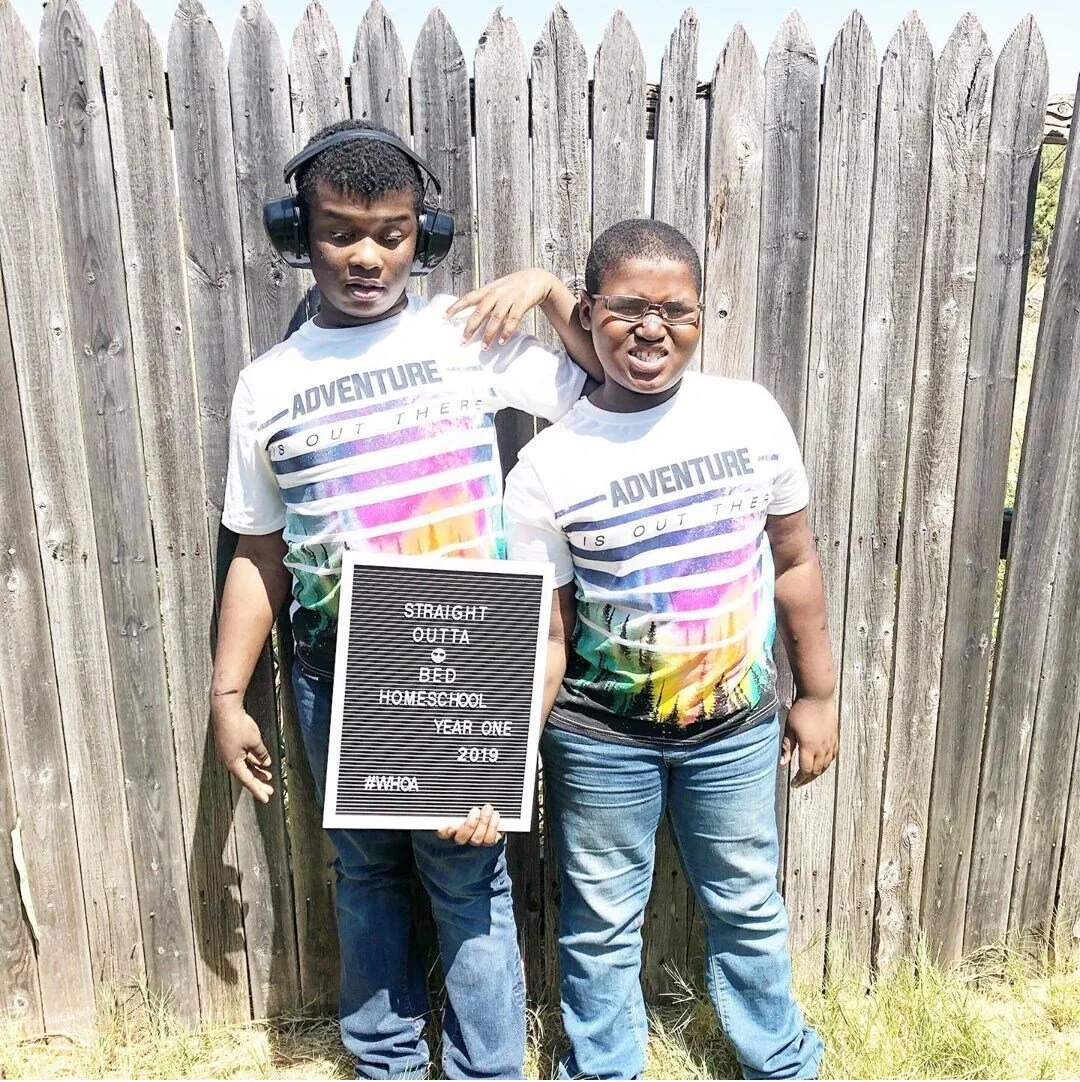
The author’s sons Aidan and Josiah (Jojo) marking the first year of “Straight Outta Bed Homeschool.”

The author’s sons Aidan and Josiah (Jojo) marking the first year of “Straight Outta Bed Homeschool.”

By Tiffany Hammond

If you follow me, you already know of our decision to homeschool our littles. If you don’t already follow me, what are you doing with your life? Get on that. Like now. I mean, right after you finish reading this post. 

Back to why you’re here. 

I always knew that homeschool was going to be where I eventually landed. I have two boys with autism, one who is speaking and one who is not, and as they have grown older, and as I became more involved with advocacy, my frustration with the public school system only magnified. The plan was to finish my Master’s and then start homeschooling the following school year. Well, degree accomplished (yay me!), so now it’s time to take on homeschooling. 

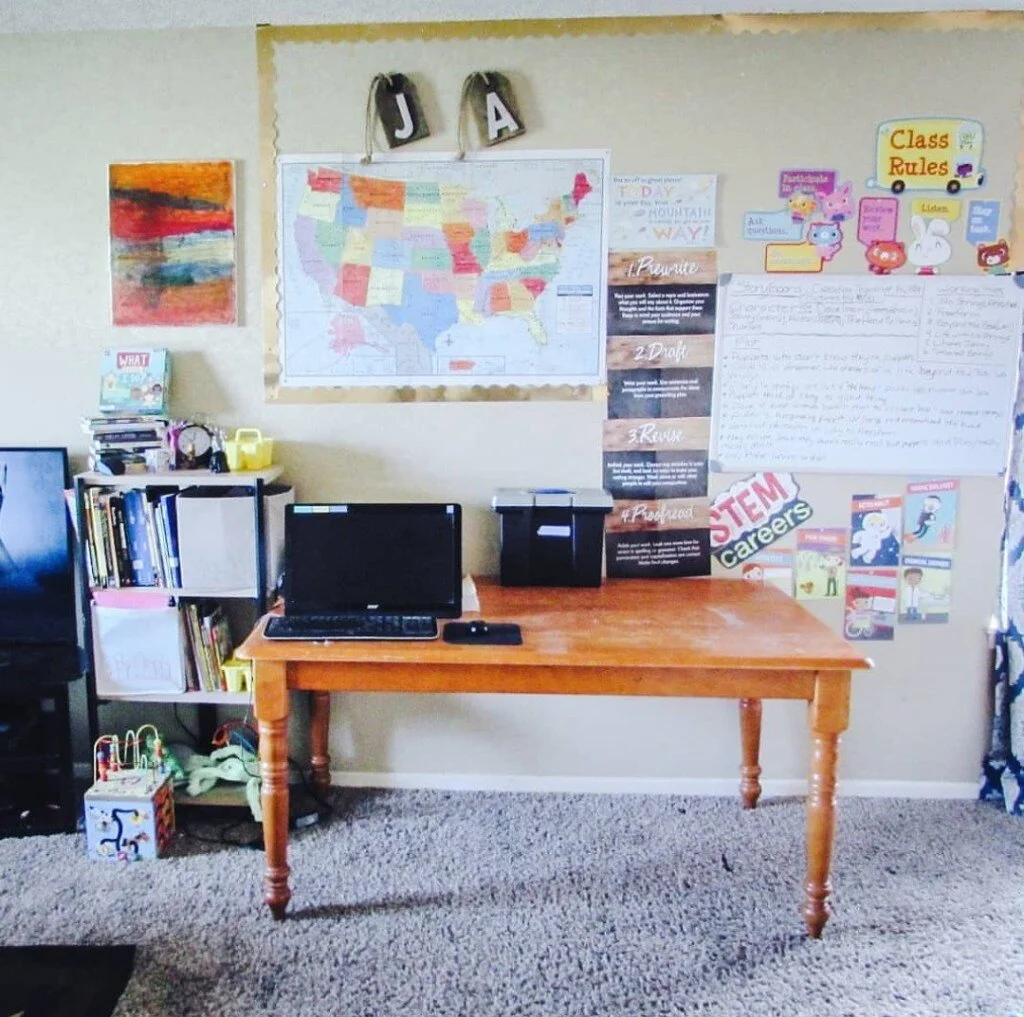
I was worried about our small living space, but we make this little homeschool area work for us.

I was worried about our small living space, but we make this little homeschool area work for us.

There was a lot that went on into our decision, but what mostly held me back from doing so was doubting my abilities as an educator. I simply didn’t think I was qualified enough to prepare my children for their future and adulthood. But I realized that the progress they have made was because I was the one teaching them “behind the scenes,” before and after school, and between therapy sessions. 

I was the one who was attending every Autism and Special Needs seminar and conference, reading every book, and who conversed with every “professional,” trying to learn all I could to help my boys. I was far more qualified than I had given myself credit for, and chances are, so are you. 

But let’s get into the specifics… here are seven reasons why I have become the boss of Straight Outta Bed Homeschool:

1. Flexibility

You are free to homeschool when you want, for however long you want, and teach how you want. This is important for our children who often have periods of the day when they are the most engaged. Typical school is often overwhelming for our children with the long hours and constantly being forced to engage in a manner that isn’t comfortable to them. And then they come home and “explode.” It’s because they’ve spent the entire day keeping their true selves bottled up that when they come home, they unload it all as home is their safe space and you are their person. You understand them and you’ll know what to do. 

You’re able to assess where your child is and their engagement level and determine if only a few hours a day are necessary. And most often it is. Your child doesn’t need 8 hours of instruction, they’ll often become bored or disengaged or overwhelmed, hell, you too. A few hours of meaningful instruction per day that caters to your child’s specific needs will be enough. 

Right now I teach four days per week and our Fridays are off-days or days I’ve reserved for field trips. Oh, that’s another thing, you can field trip whenever and wherever. Awesome, right? 

2. You’re the boss. Literally. You are the District, School Board, etc

You are in charge of their curriculum. The homeschool laws vary from state to state but from what I gather, parents are still feel to choose whatever curriculum they want, even creating their own. Here, in Texas, we simply have to teach five subjects the state deemed necessary, have a curriculum, and use the proper materials. Basically, there needs to be some sort of plan we’re following, have some actual materials they would use for learning, and make sure we at least taught the subjects they want us to teach. Your state might be a little different. Be sure to check with your state’s homeschool laws. 

There are so many different curriculums out there, it’s overwhelming. Many cost money, some are free. You can find some at bookstores, online, and curriculum swaps/sales at local co-ops. I have even found some good workbooks at Wal-Mart or Dollar Tree. Because of our boys’ needs, and this being our first year, I have mixed and matched different curriculums and material. I’ve taken Easy Peasy (a free online curriculum), used it as a foundation, so I can get an idea of what a year of planning looks like and I then expanded upon it, changed some things, bringing in different resources, materials, and other things to learn.

3. As the Boss, you choose how and what they learn 

Being in charge of what they learn and how they learn it is incredibly important. We know our kids, and we know what they need. With the schools, they focus primarily on the academics; as they should, given they are a school. But where they fail our children is that oftentimes our children need more functional learning than academic. 

Our family is choosing to place a lot of emphasis on life skills for our boys, integrating their mandatory subjects in with meaningful skills they would need in the future for independent living. For example, in Texas there is a math requirement. One son has a firm grasp on math skills and the other has no real concept of math (yet). Both struggle in many areas that prevent living on their own one day. My youngest who understands math also learns couponing, how to shop, creating a budget, etc. These are life skills, and it’s also math. My oldest who doesn’t really understand math is a little more difficult. He is learning to clip coupons and use scissors, but we have that falling under ‘Art,’ it’s a life skill, but simply clipping them isn’t math. Right now, with him we are working on recognizing numbers. 

For our kids it’s important they learn academic subjects but it’s equally, if not more, important they learn functional life skills. Homeschooling provides the opportunity to focus on these. 

4. Community learning

I touched on this earlier with the field trips, but if your children are anything like mine, and they are if they have an Autism diagnosis, they struggle with social interaction and/or being in public. With homeschooling you can create opportunities for your child to be in the community learning how to interact with the world. There’s not much of that in the public school, even in special education. If anything, the school liked to hide my children or keep them away from the others. I am now able to go to the zoo, museum, restaurants, etc. during school/work hours and while these places are not entirely dead zones, there’s FAR less people there than would be if we went on a weekend or after school or during holiday breaks. This allows my children to get out in the community and build up their tolerance. I have my speaking son say “hello” to at least 3 people there and my nonspeaking one I’ll have him do the same with his device. 

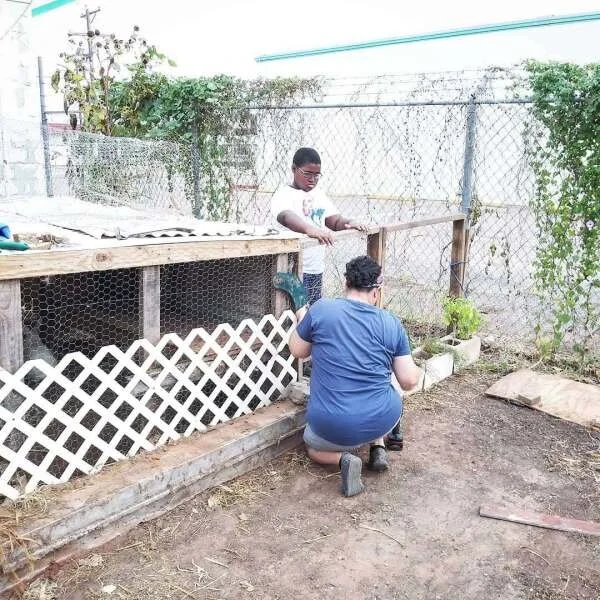
Jojo at one of his co-ops where he is helping to build a fence for the garden.

Jojo at one of his co-ops where he is helping to build a fence for the garden.

There are homeschool co-ops, which are communities of other homeschooling families that get together to teach each other’s children, play with one another, go on field trips, and more. These have been amazing for us. There are several co-op groups where i live and we take advantage of each. The classes they have are smaller than those in the school setting and the teaching is individualized. My boys thrive in these environments. Our children with Autism need to learn the skills necessary to interact with the world, school just overwhelmed my kids. With homeschool I’m able to control their exposure, basing it off their needs, strengths, and weaknesses. 

5. Everything can be a teachable moment

I have found myself using any and everything around me to teach my boys something. I like to think i did that before i started homeschool, and I probably did but now I’m on overdrive. I guess because I’m doing the teaching, I’m inspired by our environment. Their chores are now more than chores, they are life skills. I treat them as such because they’ll need them to be more independent in the future. Sorting laundry isn’t just because you need clean clothes, it’s recognizing colors, it’s measuring detergent (math), following directions, time management when you start a load and go work on something else… everything we do at home is purposeful. It has to mean something for their future or we don’t do it. 

6. No standardized testing

At least not for those in Texas homeschools. Check your state’s laws. 

For our kids, every single thing they learn needs to matter, it needs to have a purpose. Their lives depend on it.

I loathe state assessments. Teachers are teaching to a test. My kids’ public school would spend roughly two months going over material to pass a state test. They weren’t learning anything else. They we’re doing times tables…in Science class. My boys were taking adaptive tests for the state. They too, were learning things they didn’t need to be learning, all for a test. For our kids, every single thing they learn needs to matter, it needs to have a purpose. Their lives depend on it. Literally. It takes more effort on our part to prepare our children for a world without their parents or guardians. Schools consistently drop the ball here. 

7. Freedom

It’s true freedom when you homeschool. Most of the reasons I mentioned all highlight the most important aspect of homeschool, freedom. You aren’t bound by the system to teach your child material they don’t need nor understand (yet). You can go as fast or as slow as you want. You can do one subject per day, per week. If you want to only teach three days a week, go for it. If you want to take a trip to an Amazon Fulfillment Center (which is definitely a thing, check that out), on a Tuesday, go ahead. 

The freedom to teach a few hours a day or a few days a week has its benefits for therapy purposes as well. I don’t know about you, but in my experience most of the therapy times tend to be booked up around the late afternoon/after school hours. With homeschool, you get your pick of any slot during the day, your schedule is that free.

Homeschool is freedom. Pure and simple. You are in full control of what your child learns, how your child learns it, and how they are to be assessed on their retention of the material. 

Aidan enjoying some early morning sun helping out at the co-op.

Aidan enjoying some early morning sun helping out at the co-op.

And there you have it… my reasons for homeschooling my littles with autism.  I have received so many messages about why I have chosen to do so, what made me make the decision, etc. so I felt I needed to let you have a comprehensive list of “why.”  I will soon blog about “how” I’m actually doing it. That one will be a bit more challenging to write as I’m still trying to find my footing with scheduling, curriculum, therapy, life skills, appointments, etc. But that will be a much needed post. The HOW is just as important as the WHY.  Especially when you factor in the costs associated with homeschooling (it isn’t totally free) and that many of our Autism families are one-income, adding an additional challenge. Also, so many of the parents in this community are single, and that will make homeschooling exceptionally challenging. 

There is also the big question of stress. Many parents understandably need the daily break that school provides, or need it because they work, or need the help of professionals who may be better equipped to teach behavior management, life skills, communication, or other things we often find overwhelming. I understand that. I’ve been there. But some school districts can provide part-time staff to help, and speech, occupational and other therapists, and some financial support so that it’s not totally on you all the time. It’s easy to burn out, but some of our kids can do this, and it may be worth considering if it might work for you.

XOXO

Tiffy

Tiffany Hammond is the mother of two sons with autism. She describes herself as “that Autism mom who is always laughing. Always smiling. Always happy. I’m always helping others and I always have an answer. Or at least that’s how it seems on the surface.” She and her family live in Texas. Find Tiffany: Facebook & Instagram.

The Torrential Surge in Autism Continues Unabated

Defying experts’ expectations, rates have yet to plateau, portending nothing short of catastrophe for families and our besieged social services systems.

Deluge: our schools, disability services systems, and community programs have been flooded by ever-growing numbers of disabling autism cases. The data solidly point to a very real, if inexplicable, increase in autism over the past three decades. (St…

Deluge: our schools, disability services systems, and community programs have been flooded by ever-growing numbers of disabling autism cases. The data solidly point to a very real, if inexplicable, increase in autism over the past three decades. (Stock photo)

By Jill Escher

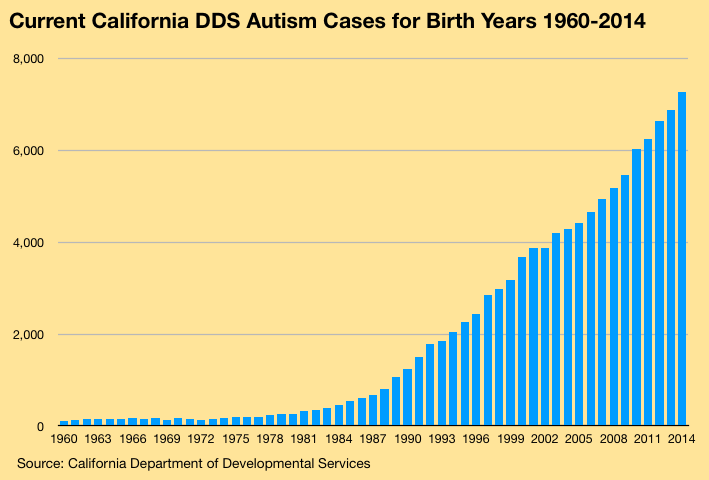
Current California Department of Developmental Services autism cases for birth years 1960-2014. The system now sees more than 300 additional autism cases per birth year over the prior birth year. Overall, California counted about 3,000 developmental…

Current California Department of Developmental Services autism cases for birth years 1960-2014. The system now sees more than 300 additional autism cases per birth year over the prior birth year. Overall, California counted about 3,000 developmental disability-type autism cases in the mid 1980s. Today the number exceeds 122,000. (Rates for 2015-2019 births dip, consistent with the usual delay in entering the DDS system, not indicative of any slowing of growth.)
Source: California Department of Developmental Services, January 2020 data.

A decade ago in autism research circles it was commonly assumed that autism rates, which had mysteriously skyrocketed between 1980 and 2010, would quickly plateau. But the opposite is occurring: rates are accelerating.

Data from the California Department of Developmental Services, which tracks only developmental-disability type autism cases, shows 451 autism cases from birth year 1984 (those who turn 36 this year), compared to 7,273 cases for birth year 2014 (those who turn 6 this year), with hundreds more born in 2014 expected to seek admittance. The yellow graph illustrates the data.

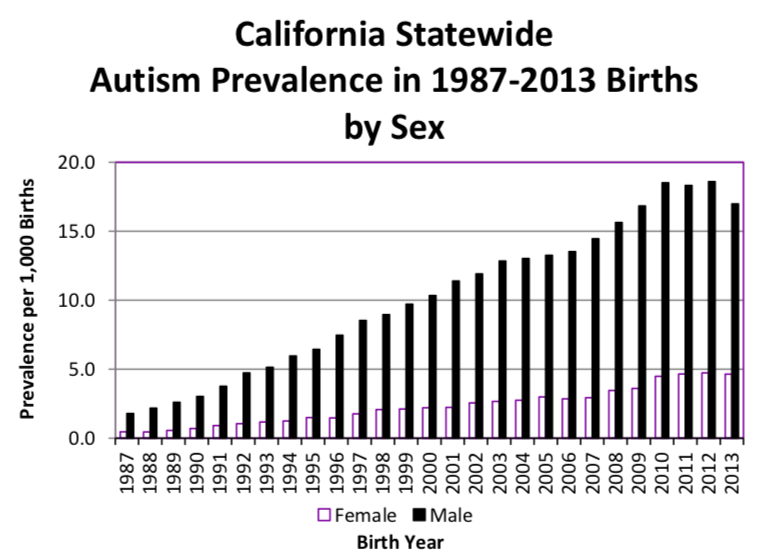
Prevalence of DDS-eligible autism, 1987-2013, for males and females born in the state to California resident mothers. (The drop-off in 2011-2013 is attributable to the usual lag in case entry into the DDS system.) Source: California Department of Pu…

Prevalence of DDS-eligible autism, 1987-2013, for males and females born in the state to California resident mothers. (The drop-off in 2011-2013 is attributable to the usual lag in case entry into the DDS system.)
Source: California Department of Public Health based on 2018 DDS.data.

The pace of growth is accelerating: whereas for births in the 2000s we were adding about 230 DDS autism cases each year over the prior birth year, we are now adding about 400 for births in the 2010s. From a total caseload point of view, DDS counted about 3,000 autism cases in 1987, whereas today the number exceeds 122,000, a more than 40-fold caseload increase over 30 years. To put this massive number into perspective, the DDS was in shock when its autism cases spiked from about 4,000 in 1987 to about 13,000 cases in 1998, and now the number is nearly ten times that.

Dispelling any notion that population growth is driving the autism increase, in analyzing prevalence of DDS autism among those live-born in the state, the California Department of Public Health has found a 10-fold increase from 1.1 cases per 1,000 births in 1987 to 11.0 cases per 1,000 births in 2013 (see figure at left). Unpublished prevalence data from the department shows that as of 2012 births more than 2% of all males born in the state end up as DDS autism cases, a situation for which the state has no precedent.

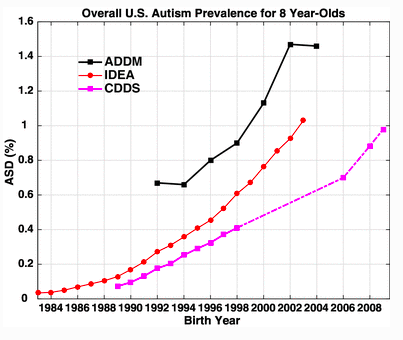
Comparison of increasing autism prevalence from 2004-2010 among 8 year-olds from the national IDEA (red), ADDM network (black), and California DDS (pink). Whether autism is defined restrictively (DDS) or more broadly,, the trends are similar. Source…

Comparison of increasing autism prevalence from 2004-2010 among 8 year-olds from the national IDEA (red), ADDM network (black), and California DDS (pink). Whether autism is defined restrictively (DDS) or more broadly,, the trends are similar. Source: Graph from Nevison et al. 2018.

California is our most populous state, with about 40 million residents, which is larger than the entire country of Canada, and it is renowned for maintaining the best records on developmental disability-type autism. Autism in the DDS system represents just a portion of the state’s overall autism cases, encompassing only those who have sought entry into the system and who were then deemed eligible due to substantial impairment in at least three areas of basic functioning such as learning, language, self-care and capacity for independent living. Higher functioning autism cases are largely excluded from the system. There has been no broadening of autism diagnoses in DDS—to the contrary, the state enacted more stringent eligibility criteria in 2003. In short, what you see in California DDS is generally an apples-to-apples comparison, or even more narrowed in recent years.

California Special Ed Autism 1990 v 2018.png

Moreover, multiple reports investigating the nature of the DDS autism rise have found no evidence for diagnostic shifts, general population growth, or immigration explaining the increase (see Appendix). Additionally, there is not an iota of evidence that DDS and its statewide network of regional centers, which have been charged with an affirmative duty of autism case-finding under our state’s Lanterman Act, have missed a football stadium’s worth of developmentally disabled autistic adults. It’s hard to overlook these cases, as they typically necessitate supervision to address daily needs, such as making food, getting dressed, paying a bill, working (if capable), communicating, attending to hygiene and health needs, and traveling in the community. And often they exhibit challenging behaviors. These individuals would have been diagnosed with something in the developmental disability orbit, and many would have been institutionalized. But at its peak in the 1960s California institutionalized just 16,000 people, only a small fraction of whom had autism.

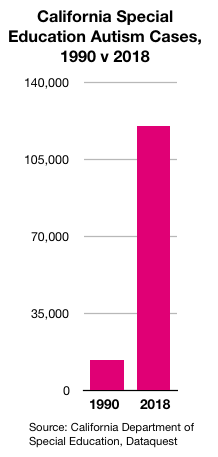
In the California schools, which adhere to a broader definition of autism, autism cases in Special Education have also skyrocketed, from 14,038 cases in 1990 to 120,089 in 2018, an 855% increase (figure at left). Special education budgets have spiraled, with the biggest increase driven by the proportion of children diagnosed with autism, rising from 1 in 600 students in 1997-98 to 1 in 50 students in 2017-18, a 12-fold increase.

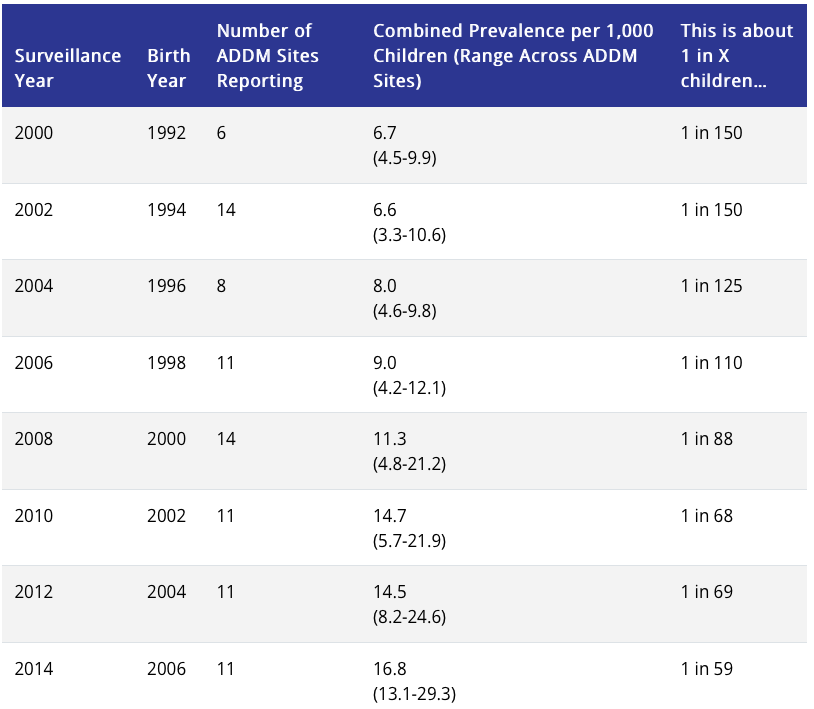
California trends, though stretching back further than national data, seem consistent with data from the national monitoring network run by the Centers for Disease Control (CDC). The CDC’s Autism and Developmental Disabilities Monitoring (ADDM) network estimates that in 2014 about 1 in 59 eight year-olds had autism, or 16.8 per 1,000. This is considerably higher than the 11.0 per 1,000 prevalence reported by the California Department of Public Health, but keep in mind that the California numbers are limited to more impairing forms of autism. See this study for a detailed view.

Over just 14 years we have seen national prevalence grow from 1 in 150 to 1 in 59, a 2.5-fold increase. Recently published studies indicate that national prevalence is likely even higher. According to the National Survey of Children’s Health, and the 2016 National Health Interview Survey, about 1 in 40 children in the United States has autism. In addition, a recent study found that 25% of children with autism younger than age 8 in the ADDM sites were not yet diagnosed. In sum, autism rates both in California and nationally show no signs of leveling off. The CDC summarizes its ADDM findings of 14 years of increasing autism prevalence in the figure below.

Source: https://www.cdc.gov/ncbddd/autism/data.html

Source: https://www.cdc.gov/ncbddd/autism/data.html

Outside of the US, autism rates seem to vary considerably, but a recent report from Denmark showed that its population’s autism trends are consistent with US data, revealing no plateau in more recent birth years, suggesting that ASD prevalence by birth year has not stabilized. “The ongoing increases at young ages in more recent cohorts suggest that future cumulative incidence could exceed 2.8%,” report the authors. Similarly, in Northern Ireland, a recent report indicated the prevalence of childhood autism nearly trebled to about 3.3 percent from about 1.2 percent ten years ago.

Catastrophic long-term implications

Collectively, the data paint a devastating picture: despite prognostications to the contrary, the autism numbers continue to climb with no signs of abating. At the most recent International Society for Autism Research conference I found that epidemiologists in attendance generally thought that prevalence among children in developed countries was nearing 3%, a number consistent with the most recent data.

Meanwhile, this relentless upsurge is going largely ignored at a time when we desperately need a national autism plan, not to mention viable treatments to improve functional outcomes, and research that will finally identify the roots of this devastating epidemic. Reporters, having largely bought the “epidemic of awareness” and “neurodiversity” fictions, won’t touch it. Researchers like Eric Fombonne in Oregon and Terry Brugha in the UK notoriously twist data into pretzels to downplay it (possibly for fear of stoking dangerous anti-vaccine sentiments). And policymakers are in something of a state of confused shock, reeling from the need to continually boost stretched-thin budgets for ever-more, and very costly, autism classrooms and services.

Unfortunately, public and private expenditures are likely to surge as ever-growing populations age out of the school system and into the adult system. National costs of autism are projected to reach $461 billion for 2025, with costs far exceeding those of diabetes and ADHD. Worse, even a conservative reading of the California DDS data suggests that in 20 years the number of developmentally disabled autistic adults will more than quadruple. And worse, an increasing portion of their parents, who will be 20 years older than they are today, will be infirm or deceased. The older adult autism population is currently so small that the number with elderly or deceased parents is fairly negligible. Yet this double-whammy that should be driving the national autism conversation—the exploding adult autism numbers and the inevitable decrepitude of aging parents—is almost entirely absent. To illustrate what lies around the corner for our system, there are currently only 829 DDS autism cases over the age of 60; in 20 years there will be about 4,000, based on the aging of the current cases. In 40 years, more than 60,000. Almost no research is devoted to refining these urgently needed projections or defining the policy changes that will be necessary to address the inevitable explosion in demand for housing and long-term care.

And even more terrifying, based on current trends, the onslaught of autism we have already experienced may be a mere prelude to a far more catastrophic future: it is entirely conceivable that before long, fully 5% of American children will be disabled by autism. We certainly cannot cope now, how will we cope then?

Before I close, this must be said: vaccines do not cause autism (please, vaccinate your children)

Americans have been watching with alarm as their families, neighborhoods, and schools have been swept up in autism’s tide. And with no explanation for why their local school districts now have 400 kids with obviously disabling autism, as opposed to just a dozen 30 years ago, they turn to various half-baked theories to try to make sense of it. Part of me can hardly blame them—Americans deserve answers about the roots of the autism epidemic, and science has failed to deliver them.

Tragically, the vaccine hypothesis has rushed in to fill this void. I will not repeat what other commenters have already explained (Wikipedia actually provides a decent summary), but, briefly, science has delivered at least some answers about autism and they solidly refute the idea, for example:
• The neurological pathologies of autism have origins in the early wiring of the brain, before administration of vaccines.
• A multitude of robust epidemiological studies could find no link between vaccines and autism.
• Autism is strongly heritable, that is, rooted in the sperm/egg of the parents (and this may include new glitches, not necessarily any ancestral code).
• Autism rates have continued to climb sharply despite a stable vaccine schedule, removal of thimerosal, and decreasing vaccination rates.
• If anything, vaccines are strongly protective against brain damage that could be caused by childhood infections such as rubella or meningitis.

Yes, we desperately need research that finally pinpoints the causes of autism’s dysregulated brain development, but in the meantime, one thing is clear: vaccines do not cause autism. To responsibly address our nation’s autism emergency we must come out of the scientific closet and openly admit we face a devastating epidemic without fear of emboldening a disproved theory.

Jill Escher is an autism research philanthropist with the Escher Fund for Autism, president of National Council on Severe Autism, a housing provider to adults with autism and developmental disabilities, immediate past president of Autism Society San Francisco Bay Area, and the mother of two children with nonverbal forms of autism. She would like to thank Autism Society San Francisco Bay Area for sharing its data. Jill is known for unapologetically speaking her mind and the foregoing is her personal commentary which does not necessarily reflect the views of any autism organization with which she is affiliated. She can be reached at jill.escher@gmail.com.

Appendix: Reports on California Autism Data

1999 Report
• In March 1999, alarmed by the unexpectedly sharp increase in the autism caseload since the 1980s, California DDS issued a report summarizing the rise in DDS-eligible autism between end of the year for years 1987 and 1998 (“1999 Report”).
• The 1999 Report concluded that the number of persons entering the system with autism had increased dramatically between 1987 and 1998 relative to the other developmental disabilities.
• The 1999 Report showed that at end of 1987, there were 3,902 persons with DDS autism, or 4.85% of the entire DDS caseload. By the end of 1998, there were 12,780 such individuals, representing 9.37% of the overall DDS caseload.
• The 1999 Report found that the rate of the autism increase was more than four times as great as the other diagnostic categories.
• The 1999 Report found that in 1998, there were 1,685 persons with autism enrolled in the DDS system, a “number of persons far exceed[ing] the expected number determined by traditional incidence rates.”
• The 1999 Report cautioned, “If present rates of intake continue, there will be a need for: (1) greater emphasis on long range planning to develop suitable methods of delivering services, [and] (2) strategies for development of new and abundant resources.”
• The 1999 Report documented the birth dates of Regional Center eligible persons with autism, and reflected that the increase in autism births began slowly in about 1980, spiking sharply by 1990.
• The data shown in the 1999 Report also reflected that from about 1960 through about 1977 there were 200 or fewer autism births per year comprising the California DDS population.

2002 Study
• The State commissioned a study, published in 2002, to examine whether expanded diagnosis, immigration, or other factors could have caused the sharp spike in autism cases (“2002 Study”).
• The 2002 Study stated: “It is natural to discount that which we do not understand or force it to fit a paradigm with which we are comfortable. This study has been an attempt to determine whether or not the increased numbers are due to a real epidemic, or if the rise in autism cases can be explained by factors that have artificially created that increase.”
• The 2002 Study stated: “Has there been a loosening in the criteria used to diagnose autism, qualifying more children for Regional Center services and increasing the number of autism cases? We did not find this to be the case.”
• The 2002 Study stated: “Has the increase in cases of autism been created artificially by having ‘missed’ the diagnosis in the past, and instead reporting autistic children as ‘mentally retarded?’ This explanation was not supported by our data.”
• The 2002 Study stated: “Without evidence for an artificial increase in autism cases, we conclude that some, if not all, of the observed increase represents a true increase in cases of autism in California, and the number of cases presenting to the Regional Center system is not an overestimation of the number of children with autism in California.”
• The 2002 Study summarized as major findings the following:
—”The observed increase in autism cases cannot be explained by a loosening in the criteria used to make the diagnosis.”
—”Some children reported by the Regional Centers with mental retardation and not autism did meet criteria for autism, but this misclassification does not appear to have changed over time.”
—”Children served by the State's Regional Centers are largely native born and there has been no major migration of children into California that would explain the increase in autism.”

2003 Report
• In 2003, DDS issued another report, called “Autistic Spectrum Disorders, Changes In The California Caseload, An Update: 1999 Through 2002,” published April 2003 (“2003 Report”),
• The 2003 Report found that the number of persons with autism entering the system continues to increase dramatically, and that, “In fact, the rate first documented in the 1999 Report has accelerated in the last four years. Autism is and will most probably continue to be the fastest growing disability served by the regional center system.”
• The 2003 Report stated that the DDS autism population had grown to 20,377 as of December 2002.

2007 Report
• In 2007, DDS issued a report called, “Autistic Spectrum Disorders, Changes in the California Caseload An Update: June 1987 – June 2007” (“2007 Report”).
• The 2007 Report found that from June 1987 through June 2007, California experienced a 12-fold increase in individuals with autistic disorder being served by DDS.and that this number did not include those on the autism spectrum subject to a broader definition.
• The 2007 Report found that, “Currently there are more than 38,000 people in California receiving services for ASD, growth that has averaged 13.4 percent annually since 2002.”
• Regarding adults with autism, the 2007 Report found that “Currently, approximately 6,000 adults with a diagnosis of autism receive services from DDS,” and that by 2018, “the number of adults with autism being served by DDS will triple, to more than 19,000.”
• The 2007 Report found that between 1990 and 2000, “the number of persons with autism being served by regional centers rose 26 times faster than that of the general California population.”
• The 2007 Report found that “The ratio of males to females with autism in the DDS system is 4.6 to 1, consistent across all counties and with the scientific literature.”
• The 2007 Report concluded: “This document represents 20 years of longitudinal data about people with ASD who are served by the state’s DDS through care coordinated by 21 nonprofit regional centers. During this time in California, unprecedented growth occurred in the number of people with this neurodevelopmental disorder. Currently, nearly 39,000 people in California receive services from DDS for ASD. Many findings emerged during these two decades, including a decline in the average age of people with autism, a sizeable age wave of youth approaching adulthood, an increasing proportion of males who have ASD, and a diagnostic stability over time.”

2009 Study
A 2009 study showed the shift from DSM-III to DSM-IV and the inclusion of less severely affected individuals, together with the younger age at diagnosis, could explain only a fraction, less than one-third, of the steady rise across 13 birth cohorts (1990-2002). This paper reported on the effect of age at diagnosis counting only to age 5, not age 10 as in the rest of the paper. It remains possible that counting cumulative incidence to age 10 would show little effect of age at diagnosis, making the effect of the DSM III to IV (and IV TR) shifts almost negligible in the DDS data.

2018 Study
A 2018 study found many considerations arguing against changing diagnostic criteria as the primary cause of the increasing prevalence including the “significant functional disability” criteria, and that although some milder cases may enter as very young children, the annual to triannual reviews screen later them out.

One Year of NCSA: A Brief Report From the Board

Dear Friends,

One year has passed since NCSA launched in January 2019. And while we are just off the starting block we wanted to report on some of our accomplishments from last 12 months, and look a bit into the future. Over the past year, we:

  • Launched a website, ncsautism.org, which has seen more than a quarter-million visitors

  • Created NCSA Position Statements emphasizing the need for realistic solutions for individuals and families affected by severe autism

  • Had multiple contacts with agencies educating about the needs of the severe autism population (eg, non-competitive employment, housing choices, research funding) and partnered with other organizations in meeting directly with administrators and lawmakers 

  • Attended multiple national and local conferences and meetings involving outreach and speaking engagements (eg, INSAR, Autism Law Summit, Autism New Jersey, IACC Housing Workshop)

  • Hosted an active blog with many dozens of posts from all over the country

  • Created a popular Facebook presence, with nearly 7,000 follows

  • Through our online presence, provided a national forum to highlight innovative approaches for day and vocational programs and housing for people with severe autism

  • Formed the NCSA Leadership Council, which have helped us draft letters and blogs and engage in local advocacy

  • Thanks to hundreds of you who spontaneously and generously donated to support our efforts, we successfully fund-raised to cover our costs 

  • Most importantly, we have changed the conversation about autism: severe autism is no longer in the closet and our growing national crisis is gaining the attention it clearly deserves.

Of course, this is just a start. We are facing a long-term support and housing crisis of epic proportions, and we need momentum to pioneer new solutions and unleash more capacity. Waitlists are growing and families are panicking. 

Among the challenges ahead: dispelling the absurd, damaging myth there has been no true increase in autism; separating the autisms into meaningful subgroups for the betterment of science and policy; pushing for treatments that reduce dangerous behaviors and improve quality of life; and pioneering innovative policy to expand access to long-term care. We will continue to be a voice for severe autism, because we know that hiding in the shadows will never advance our cause.

There are many ways to support us, you might consider:

We are grateful for the outpouring of support we received during our first year and look forward to doing more to help address our nation's mounting severe autism crisis in 2020.
—The NCSA Board of Directors

Disability Advocates Discriminate Against the Severely Disabled

A former civil rights enforcer knows that non-competitive employment for the severely disabled is a humane lifesaver, not discrimination.

[This commentary is based on a response to the above video, “Exploitation OR Lifesaving? The Controversy Around Disabled People Being Paid Pennies An Hour,” by Philip DeFranco.]

By Harris Capps

I strongly support the continuation of the subminimum wage authorized under the Federal Labor Standards Act, FLSA, section 14(c).

My intellectually and developmentally disabled son needs it. As much advocating as I have done on this topic, I was surprised to see this video for the first time. Phillip DeFranco did an EXCELLENT job of explaining the basics of this issue. Of course, as an advocate for the subminimum wage, I think some of the later-mentioned positions were given a bit more time than they should have.

I'd now like to address several points in the video. The National Council on Disabilities (NCD) has NEVER had a knowledgable representative membership to stand up for persons with SIGNIFICANT intellectual and developmental disabilities (IDD). In the video, NCD's Neil Romano took a position on 14(c). His rationale was completely flawed.

First, he indicated that the subminimum wage was "old-fashioned discrimination... that he never heard of anyone saying a different minority should receive subminimum wages until they learn how to work…." During the 1970s, the USA experienced such racial discrimination that the Department of Defense created Race Relations Instructors and Equal Opportunity Officers to investigate potential cases of discrimination. From 1973 until 1982, that was my job in the Air Force. I was also on the staff and faculty of the Defense Equal Opportunity Institute.

I can tell you that the subminimum wage is technically "discrimination" but that is not depriving persons of their civil rights. On the contrary, people with vision, back in 1938, created this wonderful program. Mr. Romano says that "people with disabilities are 2x more likely the be in poverty and 2x more likely to be unemployed." Mr. Romano casts a huge net; "people with disabilities"... are you kidding me. That would include a huge range of persons with disabilities that hardly affect their daily lives to persons like my son who has SIGNIFICANT intellectual and developmental disabilities (IDD).

If my son were able to seek competitive employment, then I as his parent and guardian would gladly push for that. But he is unable. That is why I am his guardian. My son cannot differentiate 75 cents from 75 dollars. He requires assistance in placing an order at McDonald's. I say "assistance"... but the assist is the placing of an order.

Mr. Romano suggests that if another minority were given a subminimum wage, people would be appalled. Using his words, let's say he meant a person who identifies as being Black or Native American, or Asian... really? The fact is that persons with severe intellectual and developmental disabilities come in all races, ages, sexes, etc. It is obvious that Mr. Romano has never investigated a case of discrimination or facilitated groups of our Armed Forces to eliminate discrimination. Several national-level councils representing people who are higher functioning, as well as numerous nonprofits who "support" persons having much less significant intellectual and developmental capabilities are indeed against the subminimum wage. They either do not understand what discrimination really is, or they speak for persons who, because they are higher functioning, can indeed be a part of competitive employment.

I ask these people, "Where will my son work when his Vocational Center vanishes because of possibly well-intentioned but largely ill-informed proponents of ridding the USA of the subminimum wage?" If this happens, you will be the ones who discriminate against more than 130,000 persons who had work, work they enjoyed, and now may be relegated to watching TV all day, thereby increasing behavioral disabilities, and more. You will have victimized the defenseless.  It is indeed illogical that Congressman Bobby Scott, a racial minority member himself is the main sponsor for a bill that would cause so much damage to another minority.

Harris Capps is a former civil rights enforcement professional and the father of a son with significant intellectual and developmental disability.

Tell the ACL: We Need Realistic Solutions for the Growing Population of Adults with Severe Autism, Deadline Is Monday

Disability advocacy groups attack our grown children’s viable options, and offer no alternatives. Tell the ACL your severe autism story. 

My son with a broken eye socket and 33 stitches, after suffering abuse and neglect in a “community” setting.

My son with a broken eye socket and 33 stitches, after suffering abuse and neglect in a “community” setting.

By Susan Jennings

The Pennsylvania Council of Developmental Disabilities is ignorant about the realities of the needs of my severely autistic son and thousands like him. It states: “While we do not deny the importance of medical treatment and medical need, we are more sympathetic to understandings of disability as a social construct imposed on people with disability labels rather than as a quality inherent in the person with a disability.”

Our disabled children suffer from devastating neurodevelopmental disorders, not from any "social construct." The PA DD Council calls for the elimination of the only care facilities appropriate for many in the severe population.

Community placements work for some, but in the case of my son it was unmitigated disaster. He suffered for 4 years in 6 different community waiver houses that discharged him into 5 different psychiatric wards. He spent up to 6 months at a time living in the psychiatric ward. He was never more isolated and segregated than in his one-person "group homes.” He was exposed to pornography, suffered a broken eye socket, was toxically overmedicated with powerful psychotropics that made his challenging behaviors worse and left him with horrific side effects, including Serotonin syndrome, disfiguring female breasts, Parkinsonian tremors in his hands, intractable insomnia and psychotic breaks with reality.

The community waiver system is not up to the task of taking care of the profoundly behaviorally challenged and no amount of money can remediate the community system. My son found safety and a quality of life in an intermediate care facility (ICF) with its on-site multi-disciplinary team of professionals and a stable, justly compensated, well trained staff. In addition, the facility has the safety furniture, thick walls and specialized accomodations that waiver housing almost universally lacks.

Joey has found the care and companionship he needs at a Pennsylvania ICF. The state, is threatening to close these desperately needed placements.

Joey has found the care and companionship he needs at a Pennsylvania ICF. The state, is threatening to close these desperately needed placements.

The "community" rejects him and without the ICFs, which our state is now threatening to close, thanks to the disability “advocates,” he will end up in jails and/or psychiatric wards. Putting my innocent son and others like him into jail cells for disruptive behaviors is like throwing lambs to the wolves. This is what the disability advocates seem to want for our kids.

The disability landscape has drastically changed over the years. When deinstitutionalization began in the 1960s, the rate of autism was one in 10,000 births, today the rate is one in 59 births, or by the latest numbers, more like 1 in 40. Eighty percent of the present autism caseload is younger than 18, but are coming of age in the next 10 years. Roughly 10-50% of those children will be as severely impacted neurologically as my son as adults. We face a catastrophic shortage of residential services, and the anemic and inadequate "in-home services and supports" are costly, unworkable, and unrealistic for many in this population.

Multiple media exposés and the federal HHS’s own 2018 study finding group home beneficiaries at risk of serious harm reveal that the community waiver housing system is amassing a record of abuse, neglect and death as significant as the psychiatric asylums of a generation ago.

The PA DD Council and others are willing to sacrifice human life on their philosophical altar. The value of congregate care for the severely behaviorally disabled needs to be recognized and have a place in the full continuum of disabilities services.

CALL TO ACTION

Please submit letters to the Administration for Community Living (ACL) by Monday, January 13, 2020 11.59pm EST on the proposed data collection for the Development Disabilities State Plan. Each State Developmental Disabilities Council must prepare and submit, and have in effect, a State Plan — don’t let them continue to neglect the needs of the severely disabled. Fight for the FULL continuum of care. Language from the ACL website is below. Send comments to:  

Sara Newell-Perez
Administration for Community Living
Washington, DC 20201, 202-795-7413
sara.newell-perez@acl.hhs.gov

Susan Jennings is the mother and co-guardian of Joey Jennings. She lives in Mansfield, Pennsylvania.

[FROM ACL WEBSITE]

ACL seeks public input on the proposed data collection for the Development Disabilities State Plan in the following:

Federal Register Notice

The State Councils on Developmental Disabilities (Councils) are authorized in Subtitle B, of the Developmental Disabilities Assistance and Bill of Rights Act of 2000 (DD Act), as amended. The Councils are required to submit a five-year State plan, any State desiring to receive assistance under this subtitle shall submit to the Secretary, and obtain approval of, a 5-year strategic State plan under this section. The requirement for a State plan is also further emphasized in the regulations in: (a) In order to receive Federal financial assistance under this subpart, each State Developmental Disabilities Council must prepare and submit to the Secretary, and have in effect, a State Plan which meets the requirements of sections 122 and 124 of the Act and these regulations.

Additionally, data is collected in the State Plan and submitted to Administration on Intellectual and Developmental Disabilities (AIDD) for compliance with the GPRA Modernization Act of 2010 (GPRAMA). In the State Plans, the Councils provide to AIDD future year targets for outcome performance measures. These targets are reported to Congress under GPRAMA.

As required by the statute, the Council is responsible for the development and submission of the State plan, and is then responsible for implementation of the activities described in the plan. Further, the Council updates the Plan annually during the five years. The State plan provides information on individuals with developmental disabilities in the State, and a description of the services available to them and their families. The plan further sets forth the goals and specific objectives to be achieved by the State in pursuing systems change and capacity building in order to more effectively meet the service needs of this population. It describes State priorities, strategies, and actions, and the allocation of funds to meet these goals and objectives.

The State Plan is used in three ways. First, it is used by the individual Council as a planning document to guide it's planning and execution processes. Secondly, it provides a mechanism in the State whereby individual citizens, as well as the State government, are made aware of the goals and objectives of the Council and have an opportunity to provide comments on them during its development. Finally, the State plan provides to the Department a stewardship tool; the staff of the Department provides some technical assistance to Councils and monitor compliance with Subtitle B of the DD Act, as an adjunct to on-site monitoring. The stewardship role of the State plan is useful both for providing technical assistance during the planning process, during the execution process, and also during program site visits.

Documents:

DDC State Plan Template

DDC State Plan-Annual Work Plan

Comments on the collection of information must be submitted electronically by 11:59 p.m. (EST) or postmarked by Monday, January 13, 2020.

Submit electronic comments on the collection of information to Sara Newell-Perez. Submit written comments on the collection of information to Administration for Community Living, Washington, DC 20201, Attention: Sara Newell-Perez.

sara.newell-perez@acl.hhs.gov

2019: A Terrible Year in Review

A Louisiana autism family faces ever-escalating trauma, but finds no relief.

“As his mental state, mood and anger got worse we found ourselves having to strong-arm our son down to the mat three times a day so that he wouldn’t mortally wound himself with his own fists.”

“As his mental state, mood and anger got worse we found ourselves having to strong-arm our son down to the mat three times a day so that he wouldn’t mortally wound himself with his own fists.”

By Robyn Smith Tweedy

If I had to pick the hardest year of my life I’d have to say that it was definitely 2019, and believe me when I say that that is saying a lot.

I have never written publicly about our 17 year-old autistic son’s struggles but since it’s a new year and a new start I thought I would tell a little about the past year (although kinda cryptically here because no one should hear every gory detail) and also in this post I want to pray and look for hope in the new year.

My husband and I have been very alone and isolated from the world but very grateful that we have each other (as well as my mom and our incredible three older kids who are amazing with him as well). Together, alone, we have dealt with not only nonverbal self-injurious autism in our precious son (as if that wasn’t difficult enough for him) BUT just when we thought it couldn’t get any worse for him or for us it did. 

Our Shannon, when he went into puberty (late 2017 at 15), began to spiral into multiple severe mental illnesses the combination of which we have learned in a year of trying 20 different powerful meds that there really is no easy fix for what he presents with.

We have zero help and had zero help when the worst of these mental illnesses all came on at the same time with a vengeance. (We’ve tried PCA companies but all send only untrained low-paid workers that had no training in “Shannon syndrome” and were often too small and shouldn’t work with him anyway.) 

All three of our big kids were away at college or living elsewhere. We thought it was just teen stuff, autism style. We thought, we’ve handled the last 15 years, we can certainly handle this. Well nope. Not even close.

The other realization we came to early 2019 is that NO ONE (strike that, no two) should EVER have to handle this alone especially with no big dudes on hand and no professional support to help us understand what is happening in this insane world of puberty, mental illness and nonverbal autism.

So into 2019 things got absolutely horrific. He was getting bigger and stronger every day. And sadly he was also becoming more mentally ill every day as well.

Not that autism was a cakewalk before that, because it wasn’t, but things started to get much more serious. As his mental state, mood and anger got worse we found ourselves having to strong-arm our son down to the mat three times a day so that he wouldn’t mortally wound himself with his own fists. We were, every waking moment, desperately trying to help him in any way we could fight his way out of the serious mental illnesses and disorders that were coming on like the green hulk in our sweet little boy. 

What he began to have was a complex mess of disorders and mental illnesses all at the same time. This includes a panic disorder, severe OCD with obsessions, compulsions, irrational fears, assurance seeking, an awful awful mood disorder, and mind blowingly loud AND incessant Tourrettes and tics (we now have PTSD and tinnitus, both of us and my mom) also he has schizoaffective disorder (a mix of bipolar and schizophrenia) and all of this is in one young person who is still under 18 years old and has the mind of a toddler. 

What we found early on in this insanity is that there is no defined road map that society has mapped out for kids with our son’s particular issues. There is no help for us because he has AUTISM with all of these mental illnesses and disorders. 

In our state there are no resources or societal solutions. Everyone we have gone to for help basically gives us a blank stare. When they see Shannon in action and when we describe what is going on they look scared and helpless.

So the no-help and the no-solutions leaves you just to retreat back into your home, trying not to let any neighbors hear the insanity going on in your house and just pray that it gets better. The problem is that it doesn’t get better.

Dealing with it physically not only takes its toll on both parents, but we have no trained workers to relieve us. Ever. Jim often will have to fight Shannon to keep him from seriously hurting himself, stand up from the mayhem, and go back to work. Jim works from home but it’s miraculous that he ever even gets work done. When neither of you are allowed to work it’s fatal financially. This child requires undivided attention every waking moment. Every family with a child like Shannon is forced into certain poverty.

We all love this young man and we will do everything and will never ever give up trying to get him the help he needs. We will continue to work on meds but some even caused him to have MUCH worse problems. But we continue to try, hoping we will find the magic combo. Aside from medications, if we can’t find what will calm his mind and help him grow and be happier, then God willing we will try to create help for our son and for us. Our only goal is that Shannon can have peace in his mind so that we too can have peace of mind in our life.

I believe that severe autism like Shannon’s should have its own separate diagnosis and definitely its own focus from our governments at all levels. There needs to be a new movement to bring awareness and help to this specific subpopulation. There needs to be specific research, help and resources for this dual diagnosis population AND for their families.

So since 2019 was my worst year ever, I am praying that my 2020 and YOUR 2020 are vastly different and much better for you and of course for your precious special kiddos. I’m praying for all of you out there, my kindred spirit parents and sole carers who understand exactly what this post is all about. I am also praying for the nuclear as well as the extended families who love us who are dealing with this but who are powerless to help in any way.

Robyn Smith Tweedy is the mother of four, including a son with a severe form of autism, who lives in Louisiana.