Is the U.S. autism surge real or a mirage? There’s an easy way to find out.

A massive U.S. study rooted in the 1960s found a classic autism rate of about .066%. Today, rates for severe autism are about 10-fold higher, and 28-fold higher for all ASD. Revisiting the study’s original data would reveal the truth about autism’s increasing prevalence.

Was autism just as prevalent in the 1960s as today? The author explains that there’s an easy way to find out. (Stock photo)

Was autism just as prevalent in the 1960s as today? The author explains that there’s an easy way to find out. (Stock photo)

By Jill Escher

Debates over autism prevalence continue to rage. Has the rate of objectively measurable neurodevelopmental disability been increasing, or has the autism explosion been entirely subjective, as a mere matter of perception or artifact of shifting diagnostics and awareness? In other words, have 1 in 54 U.S. children always suffered the impairments of autism spectrum disorder as defined today, or were earlier generations in fact neurodevelopmentally healthier?

Believe it or not, there’s an easy way to settle this dispute. The method lies in a trove of data, mostly from the 1960s, collected by a massive U.S. government funded research project called The Collaborative Perinatal Project, or CPP. 

As the nation mourned JFK and the Beatles played Shea Stadium, CPP researchers were busy gathering data for one of the largest and broadest epidemiological studies in American history. It was conceived in the 1950s as a way to better understand the causes of cerebral palsy and intellectual disability, though it also examined anatomical birth defects and other endpoints. 

The CPP enrolled 55,000 pregnant mothers at 12 university-affiliated hospitals across the U.S. from 1959 to 1965. It compiled exhaustive amounts of data about the mothers and their pregnancies, and also, for 30,000 of the offspring, the health and developmental outcomes — with particular attention to thorough psychological and neurological assessment — at multiple timepoints across childhood. Altogether about 4,000 pieces of information were collected on each pregnancy and its outcome.

For the 30,000 children, researchers noted when children were meeting the criteria at the time for various developmental, behavioral and neurological conditions, and also less severe or suspected cases of these conditions. The CPP was particularly thorough in finding even subtle cases that the educational and medical systems would not have captured.

The following criteria were used for assigning a child with the label of infantile autism. Though many say the criteria for autism were restrictive in the 1960s, I find them remarkably similar to the criteria used when my own two children were diagnosed with DSM-IV Autistic Disorder many decades later. They included the presence of the following characteristics by age three:

  1. Abnormal responses to external stimuli: a pattern of marked under- or over-responsiveness noted by outside observers;

  2. Stereotyped or automatic behaviors: hand-flapping, rocking, head-banging, masturbation, twirling, spinning of objects, nose-picking/lip-chewing;

  3. Abnormal affective human contact: marked bizarreness in relating, including poor eye contact, preference for objects over people, extreme withdrawal from people; and 

  4. Abnormal language development: echolalia, use of unconnected words and phrases, irrelevant speech, perseveration, adoption of jargon, making bizarre sounds, clang associations.* (*Editor’s note: clang associations = groups of words chosen because of the catchy way they sound, not because of what they mean.)

From Torrey et al. Journal of Autism and Childhood Schizophrenia, 5(4):288-297 (1975). 

Based on the CPP’s thorough developmental assessments, what was the rate of identified autism cases? According to the paper by Torrey and colleagues, at age 7, the rate for infantile autism was .0466%, reflecting 14 of 30,000 children who were followed up, or 1 out of 2,143 children, which was consistent with numbers from UK studies at that time. The sex ratio was 4 to 1 males to females, consistent with ratios seen then, and today. Half the children were black, five were white, and one from Puerto Rico and one from India, a rate comparable to the overall study population, which was more heavily black and less white than the U.S. population as a whole.

Of the 14 autistic children, at age 7, three had IQ scores above 70 (71, 72, 73), four had scores below 70 (37, 45, 50 and 50), and seven were considered untestable. Therefore, by today’s standards for intellectual disability (IQ of 70 or less), only 11 children in the CPP cohort had autism with ID, or .0366% of the population. But let’s stick with the full 14 for the sake of being conservative when comparing to today’s rates of autism with ID.

Now, the Torrey paper also identified six additional CPP children who were labeled as severely disturbed, apparently psychotic, childhood schizophrenic or possibly autistic. Four had abnormal language development and abnormal affective human contact when younger, but at age 7 had normal neurological development. The other two children were said to be obviously abnormal. The IQs in this group were 54, 67, 78, 82, and two were not testable. So, for the sake of constructing an even more conservative comparison to autism today, let’s add all those into the CPP autism pile, for a total of 20 children out of 30,000, or a rate of .066% cases of classic autism

Torrey et al. admitted that they may not have captured every case of what we today would call classic autism, but they stated they believed most of the autistic children were identified.

I hope it is plain to all readers that the rate of classic or severe autism is much, much higher than .066% today.

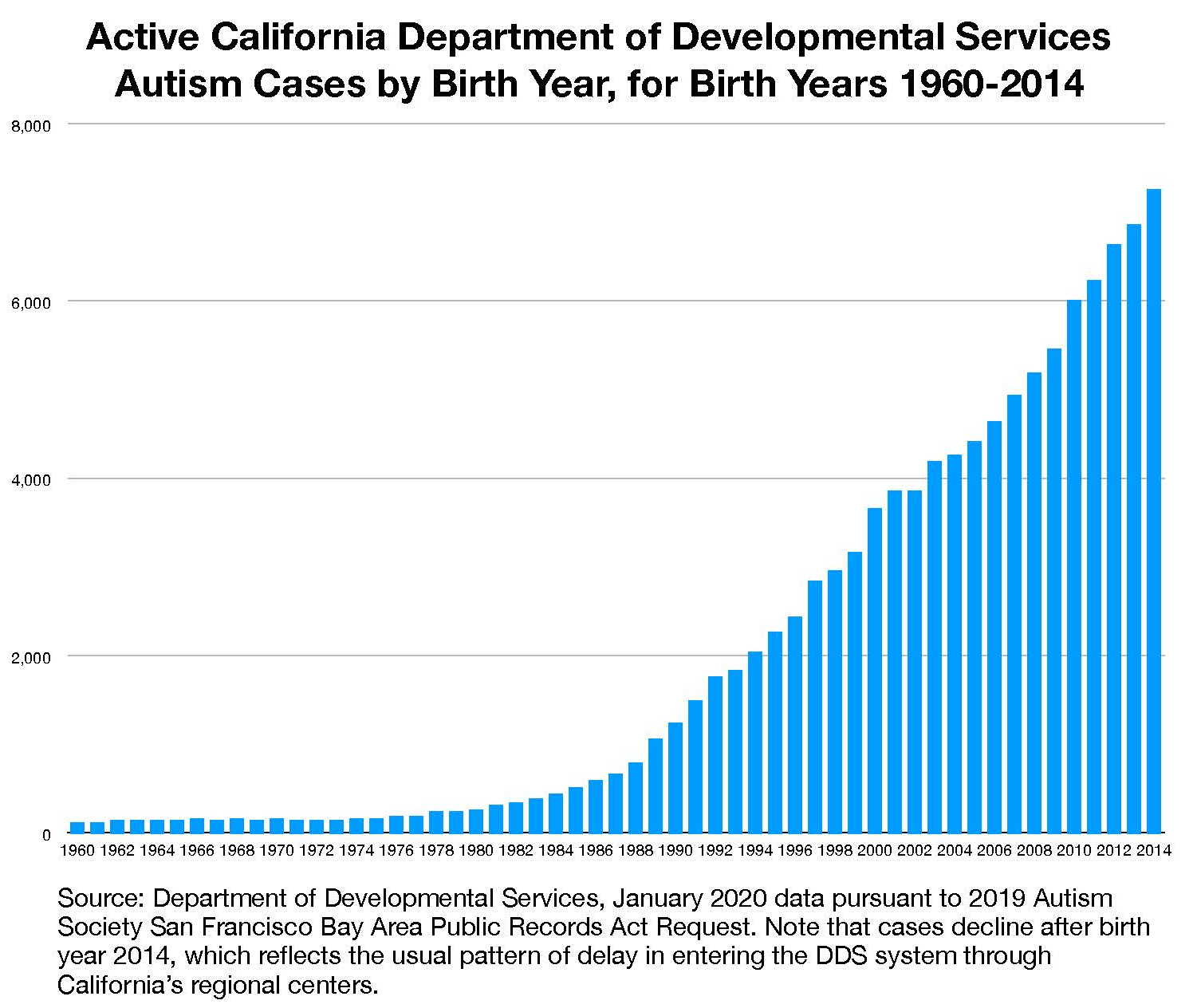
As one point of comparison, let’s look at California Department of Developmental Services (DDS) autism cases, which is limited to more severe forms of autism, involving intellectual disability and functional impairments. Most of these cases would meet the Torrey criteria. The prevalence of DDS-eligible autism has recently surged past a shocking 1% of all children born in the state, which is 15-fold higher than the CPP’s .066%. 

Did the researchers who so thoroughly evaluated the CPP children miss about 300 cases of classic autism (that is, 20 identified cases x 15)? I find that difficult to believe — how did the CPP classify the missing 300 cases? Simply as intellectual disability? There is no indication of this. In fact, at age 7, the CPP rate of severe intellectual disability (then called mental retardation) was 0.6%, which as I understand it, meant approximately IQ 70 and under (in the CPP, the values differed depending on sex and race). This is about the same rate seen in CDC autism cases today — but the CPP’s .6% encompassed ALL cases of low IQ —not just autism, but also chromosomal and genetic disorders such as Down Syndrome, all hypoxia at birth, all encephalitis, all brain injuries, etc. Therefore, it seems impossible that the rate of autism with ID was the same as today.

A comparison to U.S. Centers for Disease Control autism data is also in order. According to the CDC’s ADDM network, of the approximately 1 in 54 U.S. children with ASD today, 33% have intellectual disability, with low IQ ≤ 70. (In addition, 24% have borderline intellectual disability, with IQs of 71-85, and 42% have IQs above 85.) (Maenner et al. 2020). 

A review of data from the CPP archives would enable us to fill in the knowledge gaps about the magnitude of the autism increase over the past five decades, even if limited to an apples-to-apples review of obvious cases of classic autism.

A review of data from the CPP archives would enable us to fill in the knowledge gaps about the magnitude of the autism increase over the past five decades, even if limited to an apples-to-apples review of obvious cases of classic autism.

That means about .61% of U.S. children today have autism with significant ID. Even limiting autism to a narrow low-IQ definition, the rate today is still 9.2-fold higher than in the .066% autism rate of CPP era (which included IQs higher than 70). Using the full 1 in 54 rate, the U.S. autism rate is 28-fold higher than the CPP autism. 

Now referencing only the rate in the CDC’s autism with low-IQ subset, did the researchers who so thoroughly evaluated the CPP children miss about 180 cases of autism (that is, 20 identified cases x 9.2)? Again, per the discussion above I find that difficult to believe.

Furthermore, of the 40,000 CPP children for whom there is this data, only about 125 children were institutionalized, for total of .31% of children. This would have included many with Down Syndrome, CP, epilepsy, brain injury, and rare genetic disorders, in addition to autism. While many argue that autism was “hidden” in previous generations due to mass institutionalization, the CPP data does not bear this out.

A moral imperative: Ascertaining autism cases in the CPP

Now, I am not an epidemiologist, and I admit that my analysis here is a back-of-the-envelope approximation attempting to compare apples to apples between children of the 1960s and today. But combing through the detailed CPP data any reasonably skilled epidemiologist or clinician could determine past autism rates by today’s standards. And if that might be difficult for high-functioning autism, it’s at least possible with regard to the more clearly impaired subset. This objective comparison would require knowing intellectual, social, behavioral and adaptive functioning of the children — and that data exists, in spades.

An analysis should eschew any fixation about labels and instead focus on objective, qualitative measures, such as that for adaptive functioning. Measurement of skills needed in normal daily living is, after all, the essential nub of the autism crisis today — our concern is for the growing ranks of mentally disabled children who will never be able to care for themselves (no matter what the diagnostic label). There are also ways to objectively measure intellectual skills, communication and language skills, capacity for abstract thought, and social skills, among others.

“We have the moral duty to discover the truth about the decline in mental functioning among U.S. children.”

Have we in fact been experiencing a significant decline in mental functioning among our children? If so, this implies dramatic shifts in research priorities and long-term care policy and funding. America, we have the ability, and the moral duty, to discover the truth once and for all. Let’s do this.

[I must add my constant refrain when discussing these rising rates — vaccines do not cause autism. Please vaccinate your children.]

Jill Escher is an autism research philanthropist and president of the National Council on Severe Autism. She is also the parent of two children with nonverbal forms of autism.

Disclaimer: Blogposts on the NCSA blog represent the opinions of the individual authors and not necessarily the views or positions of the NCSA or its board of directors.

What leads to severe behaviors in autism?

More details: https://www.simonsfoundation.org/event/lecture-on-autism-research-with-matthew-siegel-m-d/

Meltdowns, outbursts, aggressions, and self-injurious behaviors are major contributors to poor quality of life for those with autism, and also create tremendous caregiver stress. In this 2018 lecture from the Simons Foundation lecture series, Matthew Siegel, MD, looks behind what causes these often dangerous and disruptive behaviors. “We are like prisoners held hostage to his aggression,” he quotes one parent as saying, noting this was not unusual. So how do you treat challenging behaviors?

Behavior in autism is typically looked at as “serving a function,” but Dr. Siegel stresses evidence for that is limited and there are other ways to look at severe behaviors, including impairments in regulating physiologic arousal and emotional regulation.

Dr. Siegel draws upon the Autism Inpatient Collection data, a Simons-funded project, to offer preliminary insights into the relationships between physiologic arousal, emotion dysregulation and the occurrence of challenging behaviors. Physiologic arousal may be a biomarker of distress — and an opportunity to predict the onset of challenging behavior in real time, an urgent need for parents and caregivers. The unpredictability of dangerous behaviors that causes the greatest problems, and he discusses a biosensor-based method to pro-actively predict aggressive behavior, one that seems to work with 80% accuracy.

  • Also discussed:
    —Severe autism is sorely under-represented in research.
    —Risk factors for psychiatric hospitalization in ASD: low adaptive functioning, higher ASD symptom severity, mood disorder, single-parent household, and sleep problems.
    —Most common medications: antipsychotics, stimulants and sleep aids.

Center of Excellence in Autism and Developmental Disorders Virtual groundbreaking Wednesday, June 17 at noon ET

Screen Shot 2020-06-15 at 9.34.18 AM.png

An expansion of Dr. Siegel’s center in Maine is having virtual groundbreaking this Wednesday, June 17 at noon ET, please find more information here. The Center of Excellence campaign aims to build a home for the many needed services for Maine people with Autism and Developmental Disorders. New and expanded services made possible through our building campaign will include:

  • Child and adult outpatient clinics 

  • Preschool and early intervention in-home services

  • Child day treatment

  • Child and adult intensive outpatient treatment programs

(Video is 54 minutes, please note this lecture is fairly academic, delivered to an audience of researchers)

About Dr Siegel:

Siegel is an associate professor of psychiatry and pediatrics at Tufts University School of Medicine, the vice president for medical affairs, developmental disorders service at Maine Behavioral Healthcare, and a faculty scientist at the Maine Medical Center Research Institute.  He attended Amherst College, Stanford Medical School and trained at Brown University in child psychiatry, psychiatry, and pediatrics. Siegel is the principal investigator of the Autism Inpatient Collection and is an expert in the inpatient treatment of challenging behaviors in individuals with autism and other developmental disorders.

https://www.youtube.com/watch?v=ZExLwFIPvrI

A Primer on the Abnormal Neurobiology of Autism

That autism is a disorder of early brain development is no longer a matter of debate. In particular, studies point to errors in the way young neurons are born, migrate and make crucial connections.

By Jill Escher

Neurodiversity advocates often speak of autism as a sort of benign cognitive difference, but let’s be clear: research does not support this romanticized view. To the contrary, studies increasingly reveal how autism is rooted in abnormal brain physiology and function, and in particular, critical errors in the way the brain wires up during early development.

Autism, at least the disabling autism affecting my children and others like them, is, quite frankly, a birth defect. Just one that’s hidden in mini-structural patterns beneath the skull, and not detectable at birth.

This article offers an overview of what research is teaching us about faulty brain-building and functioning in the genesis of autism, leading to characteristic impairments in thinking, executive function, sensory processing, behavior and social communication. While without question much more awaits to be discovered, neuroscience has advanced to the point where many biological foundations of autism have come into focus and should inform how we understand this increasingly prevalent, and often profoundly disabling, disorder.

HOW THE BRAIN IS MADE

It is helpful to start with a basic understanding of how a human brain, a 3-pound fatty blob of unfathomable complexity, is made. The process starts in the embryo, soon after fertilization. At this stage, the nervous system consists of a hollow tube running along the top of the embryo. The inner surface of this tube is lined with neural stem cells that divide to generate vast numbers of immature neurons, which then migrate en masse towards the outer surface. This happens at different rates (try to imagine a quarter of a million every minute!) along the length of the tube, so that one end forms the brain, and the other forms the spinal cord. 

At the front end of the tube, the different regions of the brain are formed, and immature neurons migrate in successive waves to form the six layers of the cerebral cortex — the outer “shell” of the brain, and the part most strongly implicated in autism. To form the cortex each subsequent wave of young neurons migrates past the one before it, a process guided by cells called glia. This process of neuronal generation and migration is largely complete by 5-6 months of gestation. 

Schematic of neural migration to form the cortex in the early brain. Glia cells are depicted in green. Neurons (blue) are born in the ventricular zone (VZ) and migrate along the glia fibers. The cortex is formed in an inside-out fashion such that la…

Schematic of neural migration to form the cortex in the early brain. Glia cells are depicted in green. Neurons (blue) are born in the ventricular zone (VZ) and migrate along the glia fibers. The cortex is formed in an inside-out fashion such that later-born neurons pass through earlier-born neurons in deeper layers (lighter blue shading). In autism, the complex process of neural migration, placement, alignment and connection is impaired.(Diagram from Gilbert and Man, Front. Cell. Neurosci., 2017)

Once a young neuron has reached its final destination, it sprouts extensions called axons and dendrites that extend towards, then begin to form connections with, other neurons. Dendrites from just one neuron can have thousands of spines, with each spine forming a synaptic connection upon maturing. The number of spines and connections are fine-tuned in early development.

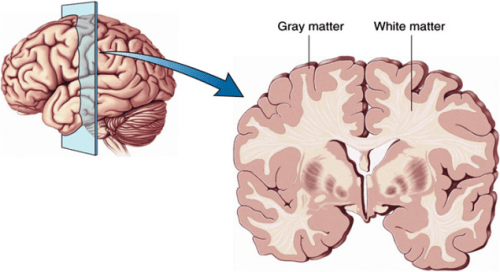
Diagram of grey and white matter of the cortex.

Diagram of grey and white matter of the cortex.

Though just a few millimeters thick, the cortex comprises six layers, and in normal brains, the cells are arranged uniformly in each layer, like well connected microprocessors. Complex thought and behaviors depend on precise organization and robust connectivity of these cortical cells. During months 6-7, the cortex folds, tripling in area, becoming the largest structure in the human brain. Neurons continue the process of connecting with each other both within and across brain regions through the early postnatal period. The sections of neurons within the cortex are known as grey matter, and the deeper tissues, or white matter, is composed of axons extending from the neurons to other parts of the brain.

In all, an estimated 86 billion neurons must proliferate, grow and migrate to the correct locations, and then connect robustly with other neurons, with 100s of trillions of connections. Then even after the organ takes its basic shape, the neurons and their neurotransmitters, which send signals across the synapses, must have the capacity to function properly as well.

In addition, neurons are not the only type of brain cells, and certainly not the only brain cells involved in autism. Glial cells, including microglia, astrocytes, and oligodendrocytes constitute a large fraction of the human brain. The microglia, to describe one, are the brain's 'housekeeping' cells, which constantly patrol the organ and migrate to sites of injury and infection, where they engulf cellular debris and microbes. They also gobble up unwanted synaptic connections, a function that is crucial for sculpting developing brain circuits, and for maintaining mature circuits. The size of the brain doubles in the first year of life, not because new neurons are formed, but because of the expanding glial cell network.

ABNORMALITIES IN THE AUTISM BRAIN

So how does neural development deviate from the norm in autism brains? Let’s first acknowledge that one cannot simply biopsy the brains of people with autism to find these answers. Because brain tissues are inaccessible, scientists use indirect techniques, including analysis of post-mortem autism brains, neuroimaging techniques such as functional magnetic resonance imaging (fMRI), in vitro (think petri dish) studies where neurons may be programmed from patients’ other cells such as blood or skin cells, and animal models, for example, looking at brains of mice with certain autism-related mutations.

Studies using various versions of these techniques have found strong and consistent evidence that critical processes of cortical development, including cell birth, migration, and/or synaptogenesis are disrupted, resulting in abnormalities including impaired micro-structural development and failure of proper connectivity. Neurons get stuck in migration, or don’t file into proper position, or fail to sprout or lose connections. The excitatory and inhibitory functions of neurons are unbalanced. Strong evidence also supports the role of synaptic dysfunction. The end result is that multiple stages of neuronal development are disrupted, including those in the cortex, with neurons less able to coordinate their actions with other cells in their surroundings.

Dendritic impairments. A simple schematic showing decreased dendtric spines in a pyramidal neuron in an autism brain. (From Zoghbim Science 3003)

Dendritic impairments. A simple schematic showing decreased dendtric spines in a pyramidal neuron in an autism brain. (From Zoghbim Science 3003)

These developmental failures can have profound consequences. For example, the frontal lobe of the cortex performs complex mental functions such as reasoning and decision-making, and also contains the motor areas, which plan and execute voluntary movements. The prefrontal cortex is tied to executive functioning (the process guiding goal-directed actions and the ability to handle novel situations), attention, mental flexibility, problem-solving, verbal reasoning, working memory and the ability to switch back and forth between different tasks. When the cortical neurons are not properly connected, these all-important processes, which are deficient in autism cases, are compromised.

Another important risk is abnormal circuit function arising from improper balance of the activity between excitatory and inhibitory neurons. When projection neurons become overactive where there is not enough inhibition, epileptic seizures can result.

Of course the story does not end there. Macrocephaly, or oversized head, occurs in about 15% of autism cases, a phenomenon seen by 18 months of age, often before the onset of symptoms. Microcephaly, or abnormally small head, is seen in about 20% of cases. The big brain of autism seems to result from a pathological overabundance of neurons resulting from disturbed processes of neurogenesis in utero, followed by aberrant dendrite growth, branching, and pruning into the toddler years. Many other brain structures and processes are also implicated in autism, including the amygdala, cerebellum, corpus callosum, and left postcentral gyrus, to name some. Just as there are “many autisms” there is diversity in the brain pathology of those who exhibit autism symptoms.

But if there is a central theme from neuroscience it is that abnormal connectivity patterns — both over-connectivity and under-connectivity — compared with typically developing individuals, precedes the impairments in communication, abstract thought, sensory processing, social attention, repetitive behaviors and learning seen in autism.

BUT WHAT CAUSES BRAIN DEVELOPMENT TO GO AWRY IN AUTISM?

So what causes these mishaps in brain development? These failures do not happen out of the blue; rather, research strongly suggests they are driven by dysregulated expression of the genomic code. While some cases of autism may involve direct insults like certain in utero drug exposures like valproic acid, or perinatal complications like prematurity, by and large the neurodevelopmental pathologies of autism arise due to faulty instructions from the child’s genome. This is not to say that these cases are “genetic” in the classic sense — in fact only a small fraction fit that pattern. But how brain development and function genes are read and put to work is widely seen to deviate from the norm. Most of the autisms may not be genetic per se, but they are innate, rooted in how the genome directs the form and function of brain cells. 

The genome can be thought of as an instruction book for how and when to synthesize proteins and differentiate to the end product, be it a brain cell, skin cell, or liver cell. The instruction-book has many parts. Protein-coding genes are the 1-2% of DNA that are transcribed into messenger RNA, which are then translated into polypeptide chains to make proteins. Non-coding DNA does not provide instructions for making proteins, but some of it helps control gene activity, determining when and where genes are turned on and off. Chromatin is the name for the overall physical structure of the chromosome itself, including its protein scaffolding. It helps control what the DNA does—including what DNA is accessible for protein synthesis. The epigenome includes many molecules that attach to DNA and its structure, or influence how genes are transcribed into proteins. All of these elements work together to craft the neurons and determine where and when they are born, migrate and connect up. And all of these processes have been implicated in autism.

Studies of protein-coding, or “exome,” genes have, by a wide margin, received the most attention and funding in autism research. However, this hunt for autism genes has been rather a formidable failure. No “genes for autism” have been found (see Myers et al. AHJG, 2020), and the dozens of exome genes and deletions linked with autism, are, for the most part, causative of multi-dimensional syndromes that most people do not think of as autism: for example, Fragile X, Pitt Hopkins Syndrome, Phelan-McDermid Syndrome, Angelman Syndrome, and Rett syndrome. In some instances the genes are inherited, as with Fragile X, but the majority of the time a mutation arises anew, or “de novo,” in a parent’s sperm or egg or in the conceptus, or during the earliest stages of embryonic development (called somatic mosaicism). 

Most autism-linked mutations are extremely rare, occurring in far less than 1% of the autism population, and so far, taken together, these DNA sequence errors can be detected in only about 10% of cases. Nevertheless, these genes are instructive: they typically play important roles in brain development —for example, regulation of neurogenesis or synaptogenesis, whereby connections between newborn cells are formed. For example, some autism-related genetic mutations cause defects in stem cell division, leading to an overproduction of immature neurons, which alters the migration patterns of the cells and disturbs the formation of layers in the developing cortex. Others cause defects in the function of microglial cells, leading to a failure to remove unwanted synapses in the developing neural circuits. 

In recent years, researchers have also discovered autism-associated mutations in non-coding sections of the genome. For example, deletions in chromosome region Xp22.11 are sometimes found in males with autism — in non-coding regions, reducing activation of the NMDA receptor, a cell-surface protein that is critical for signaling in the brain, and that plays important roles in learning and memory.

However, in the vast majority of cases, autism causes are unknown, and by my reading of the literature, finding the molecular factors disrupting the proper expression of brain development genes stands as the greatest puzzle in autism research today. Since autism is strongly heritable, the factors likely reside somewhere in the germ cells of the parents — but based on extensive evidence over two decades of research, likely not within the DNA sequence.

But wherever the faults may lie, somehow gene networks highly expressed during fetal brain development are indeed perturbed, impacting crucial signaling pathways for brain-building. This was most recently seen in a study of neurons cultured from blood cells of young children with autism, finding consistent dysregulation in a number of neural pathways. Further, the degree of dysregulation of gene expression correlated with the severity of ASD symptoms in children. Additionally, post-mortem studies have also found striking changes in gene expression in autism brains. For example, a 2016 study examining 48 post-mortem autism brains revealed that transcription levels of 584 genes were elevated in the brains of the autistic individuals compared to those of controls, whereas the levels of another 558 were reduced. Many of the dysregulated genes are expressed in microglia or neurons in the cerebral cortex. Another recent study detected almost 700 differences in gene activity in samples from 15 post mortem autism brains. The biggest differences were found in genes expressed in cells called inhibitory interneurons, which control local circuit activity, in 'projection' neurons in the upper layers of the cortex, which send fibers to neighboring regions of the brain, and in microglial cells. Dysregulation of specific sets of genes in projection neurons and microglia was associated with the severity of autism symptoms.

SUMMING UP

“In sum, while generally speaking autism is not a genetic disorder, it is a disorder of regulation of genes critical for brain development.”

In sum, while generally speaking autism is not a genetic disorder, it is a disorder of regulation of genes critical for brain development. The dysregulation disrupts successive stages of development, including cell birth, migration, dendritic growth, synapse maturation, and the assembly of circuits in the developing cerebral cortex, ultimately leading to the cognitive and behavioral dysfunctions we label as autism. Atypical gene activity is linked to the degree of autistic impairments, with those who are most impaired showing the most atypical activity. 

Why does this matter? Understanding the true pathophysiology of autism should have major implications across research, medicine, and social services. For example, knowing the forces that disturb the key gene networks could lead to measures for prevention. Instead of throwing darts at costly and ineffective medical and behavioral treatments, we could more precisely and meaningfully target intervention. We could stop hitting our heads against the wall with nonsense causation theories. But most importantly, by knowing that behavior is the outgrowth of biological short-circuits (which were no one’s fault!) we could more fully understand and support all those who are disabled by autism.

brainnet.jpg

And now, a plea. Autism BrainNet accelerates brain research by fostering the collection and sharing of the rare resource of human brain tissue. Please sign up here to be a participant in the Autism BrainNet Registry. You will receive information on the value of making a brain donation to support research on autism. This is not a consent form and you are under no obligation to ever make a donation. Thank you.

Jill Escher is the president of the National Council on Severe Autism, an autism research philanthropist (Escher Fund for Autism), and the mother of two children with nonverbal forms of autism. With thanks to neuroscientist and writer Moheb Costandi for providing helpful background information.

Another rug bites the dust: the collateral damage of severe autism

The daily tumult of autism can discombobulate a home and drain a bank account.

messy-stuff_orig.png

By Jill Escher

Where did all my kitchen rugs go? It’s 3.20 in the morning and as usual, I’m awake. Not by choice but because, like clockwork, my sweet, nonverbal 18 year-old son with autism woke at 3 and started running, some might say rampaging, around the house. Boom, clomp clomp, tap tap tap, whoosh door opens, slam door closes, ugh.

I pat around my nightstand, reluctantly find my glasses, and head downstairs, not knowing what mischief may have transpired over the past 20 minutes. These wee-hour melees can be a bit like a suspense scene in a not-very-scary horror movie. Open the door… what will we see… probably not a severed head… but….

And there it is. My kitchen rugs are gone.

Jonny’s sitting at the kitchen table with a big grin and four iPhone 3GS’s splayed out before him. Shredded parmesan, once neatly bagged in the still-open fridge, is strewn over the table and floor, as if some yellow snow had fallen from the light fixture. With a well chewed pink toothbrush he taps at his iPhones, all synced to that 1979 tune, My Sharona.

Well, I'm happy he's so happy, but... my half-awake head buzzes, “Where are my rugs rugs, rugs rugs rugs, where did they go go, go go go? My Sharona.”

Over our north neighbor’s fence? Over the east one, aka the Corner of No Return? In the hot tub? It’s now 3.25 a.m. and I’m not exactly in the mood to treasure hunt floor coverings. And I can't help but wonder, Oh great god of missing rugs and whatnot, what reverse jackpots will the chaos of autism bring today?

"What reverse jackpots will the chaos of autism bring today?"

Depending on the mood, strength, and obsession du jour of the individual, the daily collateral damage of autism can be staggering. What amazes me is that these types of bills don't even show up when the experts talk about the costs of autism. (See, for example this 2015 study out of UC Davis, which did include lost productivity in addition to care and medical costs.) But we really need to talk about them because they can hugely impact families' quality of life and financial well being.

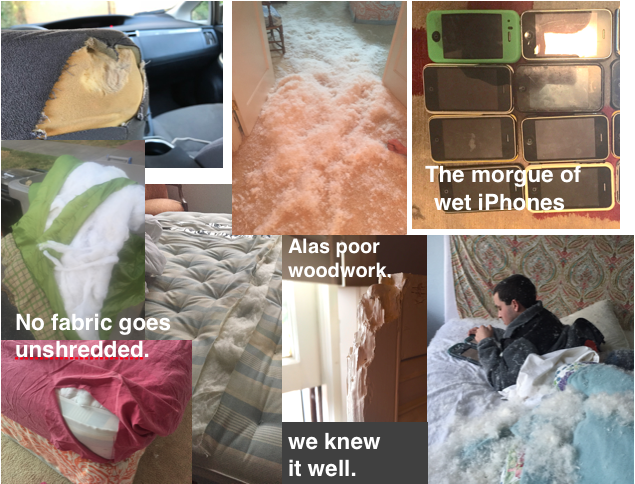
Just to illustrate how high this officially invisible toll of autism can be, a recent day at our home went like this. About $90 for a new sheet set to replace the otherwise perfect set he shredded (the 19th replacement of the year). A $120 iPad and iPhone repair bill. I do not exaggerate when I say that some weeks we’re a patient of Phone Doctor of San Jose every single day. Then add $240 for the housekeeper because I hardly have time for the Sisyphean task of cleaning up after my main man. In the late afternoon, add $225 for the handyman to replace the cracked casing of a door that had the misfortune to come between Jonny and his cherished iPhones. Finally, just as I looked forward to using them at the ice rink with my autistic daughter that evening, I found my new iPhone 7 earbuds torn into pieces, and poof! goes $29. In all, our daily autism-damage bill can easily top $500.

“In all, our daily autism-damage bill can easily top $500.”

Mattresses shredded. Upholstery ripped. Drywall bitten. Paint peeled. iPads shattered and iPhones dunked. Keys snapped off our piano and MacBooks. Window screens pushed out from their moorings. Down pillows punctured, with the nightmare of tiny feathers settling in all corners. Rugs denuded of their pile. Jackets ripped, shoes chewed, sweatpants with holes the size of grapefruit. Shutter slats chewed, askew and broken, giving our home a whiff of Haunted Mansion. The car’s seat gouged into a mini crater of foam.

To be abundantly clear, I don't blame my beloved son one bit. Not a speck of this Tasmanian Devilishness is his fault. You will not find a kinder or sweeter soul on this planet. He deserves the Nobel Peace Prize just for being him. It’s simply a matter of short-circuited brain wiring — blaming him would be like blaming someone for having seizures.

But understandable though it may be, no one can ignore a bill for material casualties easily exceeding $25,000 a year. If we counted all the child care, social services, schooling, therapeutics, and specialized camps and recreation, we’re talking an annual Autism Bill of many multiples of that. And that doesn't even encompass our Double Bill, as we have another child with nonverbal autism as well.

“No one can ignore a bill for material casualties easily exceeding $25,000 a year.”

For many families, massive expenses like these are just the start of their reverse lottery. Often parents must sacrifice a job, and the entire income stream that came with it, to care for children or adult children. They become unable to save for their own retirements as every excess penny from this dried up cash flow gets diverted to the never-ending Bill. The financial damage of autism can be devastating, even a one-way ticket to poverty. And now the situation seems poised to get worse.

I know, groan, these are not fun topics. Wouldn't you rather just binge watch "The Good Doctor," with its autistic genius protagonist? Perhaps instead of indulging in sugar-coated fantasies, turn your attention to the hundreds of thousands of families in our country living with harsh and often bank-draining realities of severe autism.

As I edit this blog I get a text from a friend. Her large autistic son just broke her bed, after recently breaking his own, which they had reinforced multiple times with heavy lumber and bolts, to no avail. Two beds dead. Two mattresses with mushed springs. Her Autism Bill of the day started with a whopper of about $2,000. Not to mention all the family's lost sleep and time she must devote to restoring habitability to her home.

Just before dawn, I spy my rugs over the north fence, alongside a pile of missing sheets and towels. Phew, no shopping today, just a retrieval mission. But then my gorgeous Jonny, skipping with his abundant energy and joy, darts into the front yard and yanks the rear windshield wiper off my car, breaking the arm. Ka-ching! And it’s only 6 a.m.

Jill Escher is President of the National Council on Severe Autism, Immediate Past President of Autism Society San Francisco Bay Area, founder of the Escher Fund for Autism, and a housing provider to adults with autism and developmental disabilities. She is also a former lawyer and the mother of two children with nonverbal forms of autism. [A version of this post first appeared at the Autism Society San Francisco Bay Area blog.]

Disclaimer: Blogposts on the NCSA blog represent the opinions of the individual authors and not necessarily the views or positions of the NCSA or its board of directors.

Prevalence of autism up in schools across the U.K.

Rate more than doubles in Northern Ireland, Scotland, England and Wales

 
UK asd prevalence jpg crop.png
 

By Jill Escher

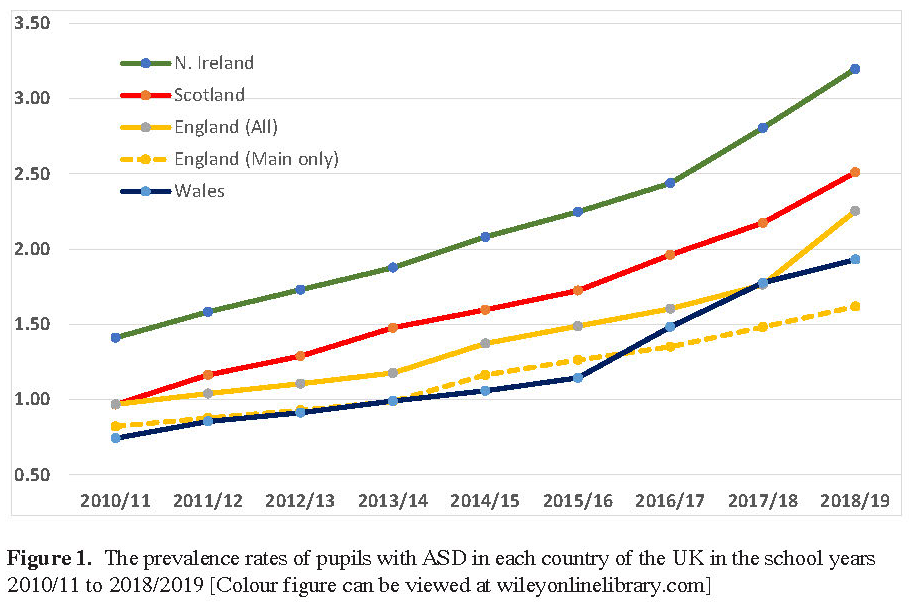
A new report on autism in U.K. schools indicates sharp increases in prevalence rates over a nine-year period through 2019. The report saw autism rates climbing in all four countries of England, Wales, Scotland and Northern Ireland.

Northern Ireland had the highest prevalence throughout, reaching 3.20% of all students by 2018/19, more than double 1.41 nine years prior). The lowest rate in 2019 was 1.92% in Wales, a number that aligns with the rate seen in a recent study of U.S. children by the CDC. England, which has by far the largest population of schoolchildren (8,180,469 in 2019) had a rate of 2.25%, with Scotland seeing a slightly higher rate of 2.51%

The paper noted the data were based on consistent protocols for recording ASD. Every year on a specified date all pupils with special educational needs are identified by school personnel and by their type of needs, including “autism spectrum disorders.” These school census data now go back nine years. The pupils have undergone a formal process of assessment and received a statement of their special education needs. A formal diagnosis of ASD is not recorded in the census.

The four countries had some differences in recording disability categories, however. Scotland and Northern Ireland, all the types of special educational needs applicable to each pupil could be selected. However, in England, the most significant or primary need was ranked as ‘1’, with any secondary need ranked ‘2’. Wales had one special educational need recorded per pupils up to 2015/16, and then recorded all types of needs per pupil. A sharper increase in Wales’ autism prevalence was noted after this change in practice, though the rate still remained lower than in the other three countries.

Diagnostic substitution is unlikely to explain the increase. The author of the report, Roy McConkey, PhD, Emeritus Professor of Developmental Disabilities and formerly Professor Learning Disability, Institute of Nursing and Health Research at Ulster University, stated, “we have seen in the U.K. an overall rise in the number of pupils considered to have special educational needs and also with autism being identified as a co-morbidity alongside other developmental conditions and impairments.”

Data was not available to segregate cases by severity levels, and exercise that could have helped clarify some of the underlying trends. However, the reported noted a sharp increase in students with autism in special schools across the U.K., with the rate nearly doubling in England.

Though the report addressed potential administrative reason behind the increasing rates it ultimately could not identify the reasons for the full longitudinal growth or variation among the countries, but noted that “the rate of increase shows little sign of abating and may indeed be accelerating.”

Reference

McConkey R. The rise in the numbers of pupils identified by schools with autism spectrum disorder (ASD): a comparison of the four countries in the United Kingdom (2020).

An autism fact too horrible to discuss

The mother of a teenage daughter with nonverbal autism opens up about her extreme sexual vulnerabilities

Stock photo

Stock photo

By Meredith C.

Of all the things that are so f%#ked up about autism, how come we never hear about the one that’s the most f%#ked up of all?!

Pardon my language but I can’t help myself.

My 17 year-old daughter, I’ll call her Cathy, has autism. Not the “self-advocate” autism, or the “neurodiversity” autism, or the Daryl Hannah autism (whatever that was). Noooooooooooo. My Cathy has an autism that leaves her helpless, 100% defenseless.

Cathy is gorgeous, quite tall, with wavy bright blond hair and a face like a doll. If an actress were to play her in a movie I think Cameron Diaz would fit the part. But after that, no similarity. Cathy can’t talk, read, write, answer a phone, text, or understand a story. She can’t brush her hair or teeth, wipe herself after toileting, change her menstrual pad, or put on her clothes. If it’s freezing outside it wouldn’t occur to her to put on a coat. More than once she’s left the house totally naked.

I found NCSA because of this post on its website, A Sister’s Quest to End Sexual Abuse of the Severely Disabled. I was looking for information I could use to protect Cathy, because she is more vulnerable to sexual assault than almost anyone else in the world. Mothers like me suffer a sheer terror that rips our hearts into pieces.

If someone were to abduct her, she wouldn’t cry out, or fight back. She can’t say the word “No,” or other words. She would not be able to call us, or know to escape. If she were raped at a school or day program we wouldn’t know unless, like the girl in the NCSA blogpost, she came down with a sexually transmitted disease, or, God forbid, got pregnant. If we wanted to lodge a report or file a complaint with the police, she could not provide testimony or name the perpetrator, or be a witness on the stand.

At her recent IEP meeting I said my top priority was to define all the ways to make sure Cathy was never raped or otherwise assaulted, at school now or when she graduates. To me, everything else was secondary.

Well, that went nowhere. There were programs for intellectually disabled girls who could learn about sex, saying no, and reporting. And some about romantic relationships. But none of those apply to Cathy. It seems to me there are no real answers to ensure protection of our severely autistic females.

Forgive me for screaming bloody murder, but WHY ISN’T THIS ONE OF THE MOST IMPORTANT TOPICS IN AUTISM TODAY?

Realistically I think the only insurance against sexual abuse would be for me to keep her with me at all times. My husband and I are considering it (we are doing this now because of coronavirus), and fortunately I do not work. But Cathy also deserves a life without her mother (and I will pass away at some point anyway) — a SAFE life, free from any threat of sexual abuse. How are we going to make this happen for our severely autistic women? AND WHY ISN’T EVERYONE TALKING ABOUT THIS?! NO ONE HAS ANY ANSWERS!

Thank you NCSA for letting me share, and scream.

Meredith C is the pseudonym for a mother who lives in the Pacific Northwest. She and her husband have one child, a daughter with severe autism.

Disclaimer: Blogposts on the NCSA blog represent the opinions of the individual authors and not necessarily the views or positions of the NCSA or its board of directors.
.

Three Strikes... and He's Out?

What happens when the regular world has had enough of my son's autism

3 strikes collage jpg crop.png

[This piece is reprinted from a 2018 blogpost at Autism Society San Francisco Bay Area]

By Feda Almaliti

Oh Muhammed, or Mu, as we like to call him… my sun-shiny 13 year-old autistic boy, with his big smile, bigger hugs, and that mischievous sparkle in his eye. I’m literally kvelling just thinking about him. 

But the rest of the world? Its patience seems to be wearing thin. As I explained in a post last year, Inclusion Sucks, Or Why My Son Has Nowhere to Swim this Summer, Mu has the sort of autism that makes him welcome, well, not a whole lotta places. So naturally we’ve had another summer of rejection.

Here’s how it started. Mu can speak some sentences, though usually only when the planets and Ben & Jerry’s align, and even then he’s not understood by non-familiar listeners. Therefore he is considered functionally nonverbal. So to help him communicate he uses an Augmentative and Alternative Communication device (AAC). The AAC has been a godsend. It reduces his frustration and lets him bark at me like a regular teenager. His device shouts, “Want fries!" (his favorite vegetable) and “Want bubble water!” (In my experience, the word “please” drops from the English vocabulary between ages 13-17, autism or no.) 

And it’s not just about food. He can use it say, “Fix that!”— “that” being soap dispensers (three of them, yes, there must be three) when not placed at perfect 90-degree angles. Not to mention helping him medically, since he can usually use it to tell me where the “hurt” is. Mu wears the device pretty much all day long. It’s his voice, an essential. 

Now, Mu’s autism is really severe. He can be aggressive at times, have tantrums, and massive meltdowns. And when he does, you better believe the device is right there through it all. So our insurance policy includes getting a loaner during repairs. But recently the company that makes the device denied Mu one. Why? He was on the “Do Not Loan List.”

I mean I’m an Arab and a Muslim so I’ve totally heard of the Do Not Fly List. I’ve even heard of the Do Not Call List. But a Do Not Loan List? What’s the heck is that? Like a three-strikes law for autistic people?

"I'm an Arab and a Muslim so I've totally heard of the Do Not Fly List.... But the Do Not Loan List? What’s the heck is that? ​Like a three-strikes law for autistic people?"

I pleaded with the rep, telling him the AAC is his voice, not a vacuum cleaner! The rep still wouldn’t budge. Too many loans, and my son was Out.
 
Anyway, even without a loaner, Mu managed to ask to go swimming about 100 times. But guess what, we can’t go. Because, wouldn’t you know, we are also on the Do Not Swim List.
 
We recently took Mu to a nearby community pool, and let’s just say things didn't go so smoothly. We were asked to leave.

"Let's just say things didn't go so smoothly. We were asked to leave."

As soon as he blasted through the door, Mu jumped on, and broke, the pool’s handicap chair. Yes, you know that something that exists to make the pool more inclusive.

​I gotta admit… not cool Mu. That was way outta line and I laid it down to him. But believe it or not, that’s not why we were asked to leave. It’s because he was bothering the “moms and their young children” and taking “bites out of the swim noodles.” First off, I’m fairly certain there were chunks missing in the swim noodles when we got there—hey, it’s not like typically developing kids are all well behaved angels. And second, if allowed to return I would bring an armful of new ones as gifts—the Dollar Store is, after all, an autism mom’s best friend. But for now, it’s no AAC and no pool for Mu.
 
Now, I know what you are thinking—if Mu can’t behave in a way the public expects, at least there's help at home, right? 

Well, think again, because our behavioral agency recently put Mu on the Do Not Serve List.
 
After years of working with us they decided they wanted to drop Mu because they couldn't “appropriately” serve him (code for we don't get paid enough to deal with your kid). So, after much advocating we were able to secure help of another agency.
 
Then, within a week we faced another walkout. 

It started with the toilet. If something has a moving part, Mu will most certainly figure out a way to break it. It’s not that he means to or does it on purpose. He’s just very strong and doesn’t realize his own strength most of the time, some of the time, okay… all of the time. 

[Although I feel in a recent case he was plotting against me. Seriously, how did he even think to remove the toilet tank cover and stick in whole roll of toilet paper, then put the cover back on, and don’t even ask me what the plastic thing was in the middle of the roll. Again, not cool, Mu.]

Anyway he broke the toilet handle and tank so often our handyman finally insisted on installing a commercial version made of one solid piece.

Problem solved? Hardly, because then Mu broke off one of the sink handles, and then the doorknobs to the bathroom. Three strikes, again. ​​

Even the handyman had enough. He quit, too. Yes, the ultimate nightmare for us autism parents—the Do Not Fix List.

Inclusion is a hot topic in disability circles, but when our kids can’t play by society’s rules, inclusion can truly suck. Instead of some fantasy of joyful acceptance, we get black-listed. Over and over and over. How I dream of places, spaces and programs fully accepting of our special children. Autism-friendly rules, not “If you act autistic you’re out” rules.

 "Instead of some fantasy of joyful acceptance, we get black-listed."

With that in mind I end on a more positive note. At Autism Society San Francisco Bay Area’s Summer Pool Parties we make sure an autistic kid can be him or herself. Where they can chew on pool noodles, bellow and flop around, and no one judges them. ​So here we are, me in the burkini and Mu in his element. A place, however small, where everyone with autism belongs... on the VIP List. If only the rest of the world were so accommodating.

[End note. Please read before you send me hate mail. I believe all persons with autism should be accepted as they are anywhere they go, while I’m still holding out for my autism kibbutz or island. Whichever comes first. It’s all about choices. I respect everyone’s choices. Even yours.

And yes I’m a Muslim who likes to speak some Yiddish, okay? Kvell = to gaze upon with love and pride.​​

And finally, for those who don't like realities of autism discussed in public, I'm not shaming my son. There is no shame in behaviors one cannot control, it's like saying there's shame in a seizure for someone who has epilepsy. If you are ashamed for Mu, well shame on you.]

Feda Almaliti is Vice President of NCSA and Vice President of Autism Society San Francisco Bay Area.