A Federal Policy Victory for Adults with Autism
A 2014 Medicaid guidance, now withdrawn, had the effect of substantially restricting program and residential choices for autistic adults precisely at a time of surging need for new options.
We are pleased to inform you of a significant policy victory for adults with autism.
The surging population of young adults disabled by autism is creating unprecedented demand for a wide spectrum of supportive programs and residential options across all our communities.
NCSA will update this page soon with more details about the CMS guidance.
Together for Choice press release here
Many of these options will be funded in part through federal “Medicaid HCBS waiver” dollars. This is federal money designed to subsidize services in one’s own home or one’s own community, and outside of state institutions.
In 2014, Medicaid’s administrators, the Center for Medicare & Medicaid Services (CMS), surprised the developmental disability community by issuing a sub-regulatory guidance that has had the effect of substantially restricting program and residential options for adults with autism and other DDs. The guidance targeted farmsteads, disability-specific communities, residential schools, campus models and other intentional communities as “isolating,” and therefore presumptively noncompliant with the CMS regulations, a presumption that could be overcome only after an opaque process called “heightened scrutiny.”
Fortunately for our community, this past Friday CMS issued new HCBS guidance which supersedes the previous guidance. You can view the new policy here, which is written in FAQ form. Advocates spoke with CMS staff on Friday and confirmed the following:
-
Settings described in previous guidance are no longer presumed institutional nor isolating and will no longer be forced to go through heightened scrutiny if the state determines the setting is compliant with the HCBS Final Rule.
-
Consumer-controlled settings are presumed compliant.
-
Settings previously submitted for heightened scrutiny may no longer need to go through the heightened scrutiny process if the state determines it is compliant or can become compliant by July 2020.
-
The role of an individual’s person-centered plan is paramount in guiding services, their home preferences, and access to the greater community.
-
The new guidance is outcome-oriented and focuses on the setting’s facilitation of community engagement as described in one’s person-centered plan.
This welcome development will help our community mobilize as many options as possible for our burgeoning and incredibly diverse population disabled with autism. We will update this page soon with additional information, but in the meantime for background information please see:
-
“Learn about the Issues” from Coalition for Community Choice
-
Together for Choice website
-
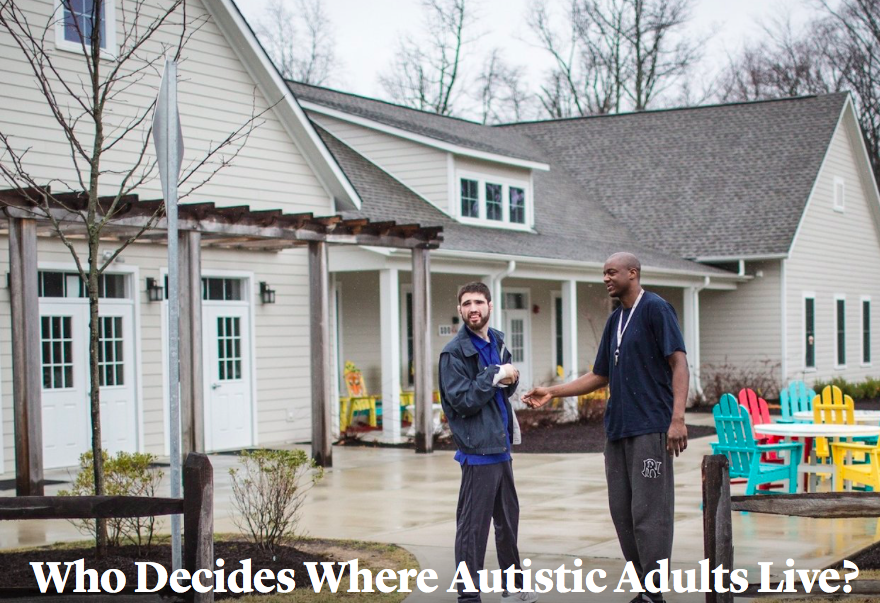
"Who Decides Where Autistic Adults Live?" by Amy Lutz, NCSA secretary
-
“The Federal Government’s Quiet War Against Adults with Autism” by Jill Escher, NCSA president
-
“You Can Choose Where You Want to Live... Unless You Have Autism" by Jill Escher.
NCSA thanks all the autism and disability advocates who pressed for common sense, person-centered policy changes, and who fought draconian rules that would have privileged a segment of the disability community at the expense of others, particularly those in need of strong supports.