50 Shades of Re-homing

Enough with the pearl-clutching: re-homing of one form or another is common, and often necessary, with the severely autistic

By R Medina

A few weeks ago my social media got flooded with posts expressing moral outrage after there was news that a YouTube star and her husband had “re-homed” their severely autistic son, whom they had adopted from China. Apparently the son’s behaviors were more difficult and dangerous than they had bargained for so they found some way to place the boy with another family.

Now I don’t know anything about those YouTubers and this post is not about them or the boy’s autism. Was he a feces-smearer? Was he attacking his siblings? Did he screech at 2am, chew the drywall and break windows? I don’t know what prompted it. But this much I do know. Re-homing, in various direct and indirect forms, is entirely common with severe autism. In fact, one form or another is inevitable in most cases. All the sanctimonious judgment and social media pearl-clutching seemed based in obliviousness about what happens, over time with overwhelmed severe autism families, in the real world.

I would say there are at least 50 different shades of re-homing, from outright giving up custody to many more sublte forms. Clearly few pathways to re-homing are as early or overt as this case. But they all start from the same place, a single parent, couple, or sometimes caregiver sib who are so physically, mentally, emotionally, and/or financially exhausted or imperiled, or who have become so old or infirm, that they can no longer provide adequate care for the child or adult. Very often, as the children grow into adults, they become terrified of their strength and unpredictable violence.

Let me tell you about some of the shades. One is called “ward of the state.” I have a friend who is my age (46). Her younger brother had autism. But when he was young and the parents couldn’t take it any more, they made him a ward of the state. He now lives in a group home in a rural community about 500 miles from here, and his family members visit on rare occasion. When the parents relinquished him was there an uproar? Is there an uproar now? No.

Another shade is called “residential school.” This is a temporary form of re-homing. When an autistic child is too dangerous or destructive for a local school district and parents to handle, the IEP team will sometimes place the child in a residential school, often in another state like Kansas or Utah. Some of these schools are year-round, giving exhausted and overwhelmed parents a long break, with the hope of some improvement in skills and behaviors. When the the clock runs out on the IEP the parents are often faced with the difficult-to-impossible task of finding a new home for the young adult who has just fallen off the services cliff. 

Now let me tell you about the most common form of re-homing, it’s sort of a passive form, a kind of abandonment. It is called “parent (usually the father) has a sort of nervous breakdown and simply leaves.” I have seen this play out more times than I can count. The dad exits, and the child is re-homed to the care of a now single mother, often left impoverished and with little support. Where has the community outrage been when a dad leaves his disabled child — something that happens every day in this country, from what I can tell? Not a peep from the social media arbiters! A mom walks out and BLAMMO HASHTAG WARRIORS GO, but a dad? Here’s your free pass, sir.

Another shade is the group home. I used to work closely with a group home agency. Do you know what? Even people much more mildly disabled than those with severe autism were routinely placed in group homes. People really quite sweet, competent, capable. I never heard a speck of outrage when the families put them in group homes, permanently.

Another shade is inpatient care. When families hit the breaking point, they desperately seek an inpatient program where doctors and therapists could use drugs and therapy to help make the child or adult more manageable. This gives parents a break, sometimes for longer than you would know, I knew of a case like this that lasted almost two years. The single mother had her aggressive, self-injurious autistic son placed in an inpatient program and after that ended he could not return home, so he lives round-the-clock with 2 to 3 caregivers in a home rented through a government subsidy program. I do not pass judgment on her, she did exactly what she needed to do to survive. But it is a form of re-homing. And it deserves no condemnation.

I could go on with other examples, but I hope you see my point. With severe autism, re-homing by other names, other means, happens. All. The. Time.

Finally, can we please acknowledge two things. First, my work with families has shown me the the decision to place a severely disabled child or adult outside of the home is excruciating and heartbreaking for the parents, even for those parents covered in bitemarks and bruises, and who haven’t had a decent night’s sleep in years. It is never done lightly. It is the last resort, done out of desperation. Do not dare to pass judgment on these parents or mob them on social media unless you have walked a mile in their shoes.

One last lap here. Let’s acknowledge the darkest, most horrible truth of all. Parents are temporary. No matter how much they love their disabled kids, they will die. As they age we are in for wave upon wave of massive re-homing of severely autistic adults. Autistic re-homing is not an outlier, but a necessity, these adults have no ability to live on their own. Where they will go, I don’t know, but one thing is clear: whether we like it or not, re-homing is the future of autism.

R Medina is a pseudonym for a mom and disability community worker who lives in Southern California.

Disclaimer: Blogposts on the NCSA blog represent the opinions of the individual authors and not necessarily the views or positions of the NCSA or its board of directors.

New Study Points to Grim Outcomes for Adults with Autism

99% of adults diagnosed with autistic disorder as children are incapable of living independently.

With few exceptions, adults with autistic disorder lacked capacity to work or live independently. (Stock photo)

With few exceptions, adults with autistic disorder lacked capacity to work or live independently. (Stock photo)

By Jill Escher

Forget all the hype about autism as a superpower. A new study out of South Carolina following 187 people diagnosed with autistic disorder found their long-term outcomes to be overwhelmingly negative. A team under Roger Stevenson of the Greenwood Genetic Center published the paper, “Autistic Disorder: A 20 Year Chronicle,” in the Journal of Autism and Developmental Disorders in June.

The subjects were followed over a course of 20 years. They had been enrolled in the study during a three-year period from early 1995 to early 1998, and were between the ages of 1 and 21 at that starting point. All were receiving services for autism from the South Carolina Department of Disabilities and Special Needs. The subjects included 153 males and 34 females, representing a 4.5:1 male–female ratio. Sixty-six percent had white ancestry, 32% black ancestry and 2% other ancestry, numbers that parallel the population in South Carolina. Of the enrollees, 84% had co-occuring intellectual disability. The average IQ in the cohort was 49. Twenty years later, at the average age of 27, the investigators ascertained their outcomes.

The outcome data was grim, showing pervasive inability to live independently, hold a job, or manage money. Few became independent, with 99% unable to live independently. Of those, 70% lived at home with relatives, 21% lived in disability homes in the community, and 8% in residential facilities.

A mere 3.7% attained postsecondary education, about half of those representing certificates from college disability programs. While the majority were considered incapable of holding a job in the competitive workspace, some worked in disability workshops or other sheltered positions. Most participants were incapable of handling money, even with caretaker assistance, with only 9.5% considered capable.

The study also probed questionnaires and biological samples for patterns and causes. It found, for example, that 12% of siblings had autistic, mental health, or other behavioral manifestations, a figure that is in the ballpark of findings from similar studies, if somewhat lower. A review of genetic data revealed that 29 participants (about 15%) had genetic or genomic alterations considered to be pathogenic, but the genetic findings did not correlate with IQ. This rate is slightly higher than the 10% rate commonly seen in other studies, but since this cohort was limited to more severe forms of autism (autistic disorder under the DSM-IV is a segment more narrow than “ASD” under the DSM-5), and therefore possibly more likely to be suffering from genetic disease, this finding is not altogether surprising. In addition, 20 participants were born at or before 32 weeks gestation or had other possible prenatal or perinatal complications. No consistent or diagnostic facial dysmorphology was identified. Structural brain malformations were distinctly rare.

The study findings also underscored enormous unpopularity of the neurodiversity philosophy: fully 95% of parents or caretakers who responded to a study question relating to treatment overwhelmingly desired a cure if one were available.

Overall, the study provided a needed reality check about the long-term outcomes of children diagnosed with autistic disorder. Advocates might hype the idea of autism as a superpower or autistic adults becoming independent and capable of competitive integrated employment, but the data tell another, altogether more devastating story.

Jill Escher is the President of the National Council on Severe Autism.


Autism: It’s time to take the conversation back

“Our families must be heard, our loved ones deserve appropriate resources and services. The intentional blocking/censorship of the severe side of the spectrum must come to a end.”

The author with his family. It’s time for the families that have had the nightmare experiences of severe autism to be leading the conversation about the future of our disabled loved ones, he says.

The author with his family. It’s time for the families that have had the nightmare experiences of severe autism to be leading the conversation about the future of our disabled loved ones, he says.

By Vance Goforth

I’ve been actively advocating for changes regarding issues related to severe autism and severe behavioral disorders for over two years now. This process started after our son Joshua finally received treatment for severe autism and behavioral disorders that had been in crisis levels for years.

I experienced the devastating effects that a broken system had on my son and family and I’ve been screaming from the rooftops ever since. I have seen resistance and outright anger from those who would rather my viewpoint be censored than be addressed. This goes beyond disturbing for me and I find it outright ludicrous that those dealing with severe autism/related diagnoses have been totally dismissed by autism advocates and disability organizations that claim to represent our families.

It was hard enough for us to share our story publicly, but when a prominent disability organization heard about our son and talked to me about solutions, their response was “good luck, several other parents have said the very things you have and haven’t been successful in getting those changes.” Disheartening doesn’t even describe what I felt when I heard those words and also the fact that they weren’t even in the least bit interested in helping by speaking out about what my family had experienced.

I refuse to be talked over and talked down to anymore. It’s time to take the conversation back.

Our families must be heard, our loved ones deserve to be treated with respect and provided with appropriate resources and services. The intentional blocking/censorship of the severe side of the spectrum must come to a end.

I’m very tired of different forms of media asking about our story and saying they will cover the story and then when they find out that it‘s not one of those happy feel-good autism stories, I never hear from them again. This isn’t a shiny-gift autism that gets covered in the news so often, this is a gut-wrenching hard autism that is no cause for celebration for my family or the families that truly understand what I’m talking about. It’s devastating.

Families cannot get resources and services in the form of respite, therapies, in-home care, medication management, behavioral treatments, inpatient treatment (both acute and long term treatment). I know some states are better than others in providing services; but still, there is a widespread lack of needed support for families facing issues related to severe autism and other ID/DD disabilities.

We’re seeing respite resources having their budgets cut, even Medicaid waiver programs are being cut back or delayed like in my state. This is not the right direction, especially when considering that the autism rate continues to rise at an alarming rate.

We are one of thousands of families that can attest to the fact that treatment facilities are overwhelmed and the waitlists are grueling for those in need of immediate help. I’ve sent many emails and testified before state legislators about the need for more treatment centers. Here is the response that truly perplexed me and I’ve heard it more than once. “The state just closed all of the institutions, they will not be willing to explore the idea of adding new treatment facilities.”

What, what????? How is providing treatment facilities being equated with an institution? I don’t know the answer to this but it’s happening. We are already so behind the curve with the increased autism rates, it’s scary and very few are paying attention to the distress calls from families.

I personally know one family that is 3,400 miles from their child because of the shortage of treatment locations. How would you feel if this was your family? The pain and the stress these families face is indescribable. They feel hopeless and totally invisible in a system of advocates and organizations that considers it forbidden to discuss the hard issues of severe autism. Higher functioning advocates champion the closure of anything that is related to or even falsely described as an institution, while refusing to discuss multiple and overwhelming issues created by not providing suitable alternatives when these closures happen.

It’s time for the ones that have had the nightmare experiences of severe autism to be leading the conversations. We need more families to share the systemic inadequacies they face and we definitely need more organizations and legislators to have an open ear to the tsunami of challenges that are hitting families right now and getting worse with time.

Vance Goforth is the father of son with severe autism. He and his family live in Tennessee.

Like the Voice for Joshua Facebook page here: https://www.facebook.com/changeforjosh
Join the Voice for Joshua Facebook support group here

Read more from Vance here:
Walking on Eggshells, a Severe Autism Perspective
The Crisis Call No One Is Willing to Hear


Disclaimer: Blogposts on the NCSA blog represent the opinions of the individual authors and not necessarily the views or positions of the NCSA or its board of directors.

"This is the taboo about autism that no other organization wants to talk about"

Frustrated by tepid mainstream advocacy, an outspoken mom says change will only come if we bust the taboos around severe autism.

The author with her son, D.

The author with her son, D.

By Tonya W

My son D has autism, is 21 years old, and now living in an inappropriate group home. I worry about him every day because he has limited speech and I know that the management and staff have no training working with my son's autism.  
 
He lives in a group home because I can't manage my son when he becomes aggressive, which happens with and without triggers. Meaning he loves Kit Kats. He loves McDonald's 10-piece chicken nuggets with a large fries and Coke. When he says in his own way, ‘Donald's’ or ‘Kit Kit,’ those items better appear quickly or if not here comes the Hulk. This can lead to destruction of property. He can attack staff with trying to bite fingers. 

Then there is the puzzle of him doing the same thing out of nowhere, it just shows up. My son is on meds just for these aggressive behaviors. However, I have witnessed a miracle D getting angry and he understood and captured it and literally took control of it and it went away; he is truly amazing. 

I want to say thank you to NCSA for reaching out and talking about our kids and young adults who can have aggressive behaviors with or without triggers. This is the taboo about autism that no other organization wants to talk about.   

This taboo is why there are no appropriate resources and residential placements, or staff. Or, hospitals that are knowledgeable about autism. 

Our loved ones deserve a caring, very patient, appropriate staff with training from an accredited college for special education, specifically in autism. There should be a special office or department just for autism in all states and counties. There should be facilities built for our loved ones to live, made specifically for autism.  

My son's autism along with your loved ones' autism is a pandemic ignored by organizations like Autism Speaks, The Arc, and Autism Society, to name a few. This recognition is needed in all of the United States. We need appropriate resources to be prepared for the 21 year-olds that have or will be transitioning out of school.  

This also includes the young children and teenagers with autism. Many simply cannot live at home because of the severe autism. Sound the Congress alarms and let's get what is needed our adults, teenagers, and children with autism to have safe, happy, productive long-term care NOW.

Tonya W is the mother of a young man with severe autism. She lives in Maryland.

Disclaimer: Blogposts on the NCSA blog represent the opinions of the individual authors and not necessarily the views or positions of the NCSA or its board of directors.

The data doesn't lie: Autism is a massive national emergency

We are heading toward 5% of all U.S. males being disabled by autism. Yet academia and the media blandly accept this horror as a new normal.

By Jill Escher

Over the years I have been at odds with many autism advocacy groups, most notably those who blame vaccines for autism, or who tout autism as some sort of treatable immune disorder. The evidence simply does not support those views, and many have been harmed by anti-vaccine and faux therapeutic ideas related to them. I will admit even the words “Age of Autism” make me cringe.

But there is one area where we have strong agreement: the terrible reality of the steep escalation in rates of serious brain dysfunction we call autism. The evidence for this dramatic surge is simply overwhelming from nearly all corners: clinical records, educational records, state disability programs, epidemiological studies, Social Security, Medicaid, and more. No matter the source one can easily see a 20- or 40-fold, or more, increase in autism over recent decades. And, no, there is no evidence whatsoever that we simply missed hundreds of thousands, or millions, of seriously cognitively and functionally disabled children in the 1950s, 60s, 70s, and 80s. In fact, based on robust data this is plainly impossible, as I discussed in a recent blogpost here.

Nevertheless — just like the ghastly Refrigerator Mother myth of yore — the “it’s all just better ascertainment” idea, no matter how data-free and devoid of evidence, has taken hold like a panther on its prey. This new myth of autism has become so ingrained that even Autism Speaks has joined the ranks denying any increase in the prevalence of autism, as discussed here. Which should disgust the entire autism community.

Screen+Shot+2020-06-27+at+9.45.34+AM.jpg

With all that in mind I would like to acknowledge a brief video recently put out by SafeMinds. It features Walter Zahorodny, PhD, one of the investigators in the CDC’s ADDM monitoring network. It’s only about 5 minutes, and it’s worth watching. This is the front-page news that’s been missing from our front pages for years. No, I don’t agree with SafeMinds on many things, but this video is spot-on.

We are experiencing a double-whammy nightmare: a nation careening toward 5% of all U.S. males being disabled by autism, based on the most recent data from New Jersey, which Dr. Zahorodny considers a leading indicator, and a concurrent yawn from academia and the media, both of which blandly accept this horror as a new normal. Classrooms full of kids who can’t talk or learn, while they shred their clothes and pick off their skin? Entirely normal! We just didn’t notice them before. Droves of young adults unable to care for themselves and dependent on costly (and tragically scarce) 24/7 care? We must not have counted them before!

As a consequence of rampant autism denialism, while suffering and panic spread across our country, we have no serious national discourse about long-term needs, or even potential causes, all while research dollars keep flowing to dead-end, incremental studies that do nothing to help autism families today. And meanwhile “disability rights” advocates who consider autism a “gift of neurodiversity” rather than a devastating neurodevelopmental disorder, work to de-fund programs serving the severely disabled. It’s so absurd I feel like I live in Autism Twilight Zone.

New Jersey now suffers a 3% overall autism rate (boys and girls), yet as Dr. Zahorodny points out, no one seems to find this fact distressing or shocking. “If we said that 3% of the children in our country had a hearing impairment or a visual impairment, I think that would be taken as a real urgent issue that would call for lots of research and investigation.” Yet with autism — a condition far more serious, costly, and disabling — we get the nationwide shoulder shrug.

NCSA also featured Dr. Zahorodny in a recent webinar, Autism’s Continued Climb, which you can access here.

Jill Escher is President of the National Council on Severe Autism. She is also a research philanthropist focusing on questions of non-genetic inheritance in autism.

Disclaimer: Blogposts on the NCSA blog represent the opinions of the individual authors and not necessarily the views or positions of the NCSA or its board of directors.

A Tale of Two Autisms

Two kids with severe autism, two starkly different realities and needs

Sophie, here social distancing at a park in San Jose, California, is nonverbal and autistic, but known for her giant smile and sweet disposition. Her brother’s autism, on the other hand, can be volatile and dangerous. Their needs are light years apa…

Sophie, here social distancing at a park in San Jose, California, is nonverbal and autistic, but known for her giant smile and sweet disposition. Her brother’s autism, on the other hand, can be volatile and dangerous. Their needs are light years apart.

By Jill Escher

Like many other autism families, we are “twice blessed” by the autism fairy. Our younger son Jonathan, 21, and daughter Sophie, 14, both suffer from the disorder — their mysterious brain abnormalities have rendered them nonverbal, with few functional abilities, and they will both require 24/7 care for the rest of their lives. Neither can speak, read, or write, or comprehend even basic abstract concepts.

But there the similarity ends.

Sophie ice skating in March 2020 just before the shutdown.

Sophie ice skating in March 2020 just before the shutdown.

Over the last two years Sophie has blossomed in many ways. She is joyful, easygoing, and engaging. She likes to play catch and dance to music (we call her deep side-side lunge “The Sophie”), and enjoys long walks with mom as she dribbles her basketball. In quiet moments she often grins and giggles, reaching out for tickles, hugs, and arm scratches.

My friends joke that she has “portable autism” because she’s game to go anywhere, no fuss at all. She’ll sit nicely at most any restaurant — those were the pre-Covid days, alas — and she’s a hearty traveler, her favorite destination being Hawaii where she can frolic in Waikiki waves for hours. She’s also become a fearless blue-run downhill skier, which is pretty remarkable considering that a few years ago she lept off a ski lift in a panic (she was fine). And did I mention the kid can confidently power-skate around an ice rink like a derby girl?

Unfortunately, the last two years have seen my son slide down the opposite trajectory.

He has developed the impossible-to-take-anywhere autism. Despite his intensely loving nature, Jonny has all those hallmarks of the severe end of the spectrum — property destruction, aggression, self-injury, anxiety, outbursts. Whereas I used to take him hiking for hours, today that would be an impossibility. Even persuading him to exit the car would be a Herculean task that could lead to a meltdown.

Jonny playing with his iPhones a few months ago.

Jonny playing with his iPhones a few months ago.

These days you see a Jonny with his forehead and arms slashed with self-inflicted scratches. My car is so destroyed by his ravages that it literally has no back seat remaining. We’ve been through about a dozen shredded mattresses and beds in just recent months. Outdoors, he will peel bark from trees or rip his clothes or dash across the street despite desperate attempts to keep him safe. While I could easily spend years caring for Sophie with minimal stress, even one day with Jonny can leave a caregiver frazzled and exhausted.

Two young people with severe forms of autism, yet so vastly different I hardly consider them in the same category of disability. Jonny’s care needs are so off the charts compared to Sophie’s, it’s like comparing a mission to Mars to a walk in the park.

To my mind there are some lessons to be learned from our little microcosm of the autism world. Mainly, that the autism experience — even within one family and limited to the severe end of the spectrum, never mind the galactic expanse of the mid and high functioning ranges — is so immensely varied that any attempt by self-advocates to “speak for autistics” is absurd and should be presumed invalid. While constructive advice is always welcome, attempts to superimpose one’s narrow agenda on others with starkly different realities and needs is nonsensical. As a friend said, it’s like an attempt at voter suppression of severe autism families, stripping them of their voice.

Amy Lutz, who serves on the NCSA board, just published a piece in Psychology Today about the dangerous phenomenon of “partial representation,” where one group purports to speak for another, thereby misinforming policymakers and the public about the real needs of people disabled by autism. I encourage you to read it.

Says Lutz, “In my opinion, autism has just become too broad—representing both married college graduates and profoundly intellectually disabled adults who spend their lives in diapers and helmets … — to be fairly represented by one voice.” She adds that “claims of representation need to be made carefully, with humility and respect for diverse perspectives. And the broader the claim, the more skeptically it should be treated.”

This is clearly true. My own experience under my family’s own roof has taught me that advocacy for autistic people is only right, moral and authentic if it emphasizes an individualized, person-centered approach based not on arbitrary notions of group identity, but instead on the meeting of each diverse need, rooted in respect for each reality — what works for one person may very well fail another. Anything less is false advocacy and fraud.

Jill Escher is President of the National Council on Severe Autism.

Disclaimer: Blogposts on the NCSA blog represent the opinions of the individual authors and not necessarily the views or positions of the NCSA or its board of directors.

Immersed: An Unflinching Look at Severe Autism

A legally blind photographer’s captivating images reveal a hidden world of severe disability

bruce hall 1.jpg

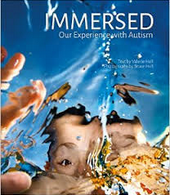
Immersed: Our Experience with Autism
Photographs by Bruce Hall
Text by Valerie Hall
Visual Summit Media $34.95 here

By Jill Escher

I’ll start this review with a fitting quote from the late Carrie Fisher who said, "I like the truth in any form. It only bothers me if I'm asked the truth about other people, I cannot tell their truth. I will tell mine in any form."

When it comes to severe autism, personal truths are hard to come by these days. The media tends to emphasize the small-victory stories like the spectrum boy whose 3-point shots brought his team to victory, the quirky, withdrawn young men who land specialty jobs at tech companies, or the troubled autistic girl belting out a holiday song on YouTube. And in advocacy circles, one is hardly allowed to mention the unremitting turmoil, exhaustion, and despair present in many autism homes without incurring the wrath of a militant minority that has anointed itself with the job to paint an infinitely rosy picture of this mysterious and often incapacitating brain disorder.

But Valerie and Bruce Hall, a couple living in Southern California who have twin boys with severe autism, take the Carrie Fisher approach. Rather than trivializing or minimizing the tragic dimensions of their boys’ disorders or pretending to speak for all with “autism,” the talented duo steadfastly tell their own truth. And they tell it hard, in both words and pictures in this unusual large-format art book (it is a high-quality art book, which accounts for the unusually high price), acknowledging that autistic kids like theirs “generally do not make inspirational news stories.” Bruce, a photographer who has been legally blind since birth, tells his truth in photographs, while Valerie, a gifted writer with a poetic bent, shares her painful reality in poignant prose accompanying the images.

Immersed is not the first to take the art-book approach to portraiture of classic forms of autism. I know of Echolilia, by Bay Area photographer and autism dad Timothy Archibald, and Understanding Stanley by UK autism mom Rosie Barnes. Photography fans should also check out photographer Mel Lindstrom’s artful series on Elevators, created in honor of his autistic son’s obsession. Immersed is a jewel in this subgenre, for it vividly opens the world’s eyes to an all-too-often hidden tragedy, and invites the broader society to understand, and to help. As autism rates skyrocket (up 40-fold in California over the past 30 years, surpassing 125,000 severe cases) each autism story should not only be told, but considering the vast societal implications, should also be considered front-page news, adorned with blazing neon lights, clanging alarms and giant arrows flashing “READ THIS! ” I wish all autism families had the ability and drive (and time) to tell their stories as the Halls have done, for the public deserves to hear hard truths about autism that will affect us as a society for decades to come.

”The public deserves to hear hard truths about autism that will affect us as a society for decades to come.”

As I first leafed through the book, seeing picture after picture of the twin boys James and Jack with vacant expressions and engaged in the most simplistic of repetitive of behaviors (jumping, splashing, screaming, spinning, swinging, for example), my favorite definition of the word “autism” came immediately to mind. The late Bernie Rimland, in his seminal book “Infantile Autism,” published 55 years ago, offered perfect terminology when he called the central dysfunction of autism a “closed loop phenomenon.” He likened autism brain circuits to a track lacking switches and sidings that would promote integration of complex information. Instead “raw material comes and goes, but the parcels are never opened and their contents are not mixed to form any useful compound.” In autism, said Rimland, “stimuli are apprehended but not comprehended,” resulting in profound learning disability and behavioral abnormalities that are the outward manifestation of an inner world stuck on a closed loop rather than a flourishing web of connections fundamental to meaning, cognition and development (Infantile Autism, 50th Anniversary Edition, p. 111).

This exasperating and stubbornly intervention-resistant closed-loop phenomenon is the core of the autism portrayed in Immersed. While the likes of author and inventor Temple Grandin may get all the attention, she and other highly articulate and intelligent people do not come close to representing this catastrophic core mental dysfunction. Indeed, Jack and James are poster children for classic closed-loop autism. They appear in the photos to be virtually imprisoned inside the misfiring loops of their funky-wired brains. While their typically developing older sister Christina peers from the pages with a sparkling intelligence that connects effortlessly to the people and things around her, the boys are lost in small worlds, or circularities, of their own. James stares at a spinning top. He plugs his ears to keep out sounds. In spite of many efforts to curtail the behavior, Jack bangs his head, leaving a red bruise.

swing blur.jpg
bruce head.jpg
hands droplets.jpg

The photos are at once in-your-face and immediate—probably a byproduct of Bruce’s visual limitations and inability to see from a distance—but also remarkably non-intimate in the sense that the subjects never connect to us through the camera. Typical boys of Jack and James’ age clown for the camera, gesturing, sticking out their tongues, showing off, smiling, or otherwise performing kid antics. But these young subjects have no awareness of the camera’s function, they never pose or react or are seen doing anything remotely purposeful in response to their father’s clicking of the shutter.

Those of us who live with severe autism can easily relate to many of the pictures as scenes ripped straight from our own lives. The miserable therapist fruitlessly trying to teach a basic “feed the baby” task as the oblivious autistic student instead flicks plastic utensils. A helpless grandfather going through the joyless ritual of a birthday party that means nothing to the boys except for the pleasure of being able to fiddle with new mylar balloons. Boys wearing Halloween costumes but not having a clue what the outfits mean. A boy jumping high and flapping his hands at the sight of a wave at the beach. The boys are seen alternatively biting a swing, ripping out plants, splashing in water, staring intensely at their hands or plastic rings, screeching, scribbling, running about naked. These private scenes, artfully captured with originality and multi-layered meaning, are all too familiar to me and so many other families.

In spite of the gritty-reality approach, the book never loses respect for the boys and is never without love. In a theme common to autism parents, two narratives play tug-of-war in Valerie’s heart: “Every day, I embrace the reality of who Jack is. I close up the wound, tell it to heal. Every day, Jack grows, and does not grow. And the wound is reopened. As long as he is here, as long as the days keep coming, the losses recur and evolve and accumulate. I see and love Jack for who he is. I see and mourn Jack for who he will never be….”

“Every day is Groundhog Day, with precious few skills achieved over the years in spite of endless therapies and interventions. The stunted development is in sharp contrast to the hyperabundance of caregiving, cleaning and chaos.”

Valerie expresses a fairly universal autism-mom experience when she describes going through daily life feeling almost alien “among all these people with their normal lives, normal concerns, normal frustrations and problems.” But it’s the lack of growth, development and learning that most distresses her. Every day is Groundhog Day at the Hall residence, with precious few skills achieved over the years in spite of endless therapies and interventions. The stunted development is in sharp contrast to the hyperabundance of caregiving, cleaning and chaos.

For me, the book also provokes important questions. Why do Jack and James have autism in the first place? (The book does not address this, but from a public health and social services point of view, it’s clearly an urgent question, and since my main focus in autism is crafting pilot research projects examining causes of genomic disruptions I could not help but wonder.) Why have cases like these, once so exceedingly rare that pediatricians would see one or two in the entire course of a career, been surging in number since the 1980s? Who will care for the boys and the countless thousands like them as they age into adulthood and parents become infirm and die?

It also begs the question, what is "autism"? Valerie voices a simmering resentment toward trendy Pollyanna views of autism and the euphemism-mongers of the neurodiversity movement, who consider autism just a difference, or even a gift, and not a disability. She writes: “You hypocritical proponents of neurodiversity, who would ferociously stand against a cure for their debilitating disease, who do not have to live my boys’ lives, do not experience the pervasive and devastating consequences of autism. You may offer me platitudes or judgment, but you would never trade places with me, or with my boys, or with any of the people you claim to defend.”

The ultimate message of the book: autism can be so hard and demanding that no family can go it alone, and it must be seen and treated as a shared social responsibility. It is art serving as a cry for help.

Buy the book: http://a.co/0vIaSTx

Bruce Hall's website:
 www.brucehallphoto.com

Jill Escher is president of the National Council on Severe Autism. This book review is adapted from her prior piece that appeared at the Autism Society San Francisco Bay Area website.

The reality of severe autism during shelter-in-place

“How come you can go to the gym but my kid can’t receive his essential therapies that are written in and signed on an Individual Education Plan?”

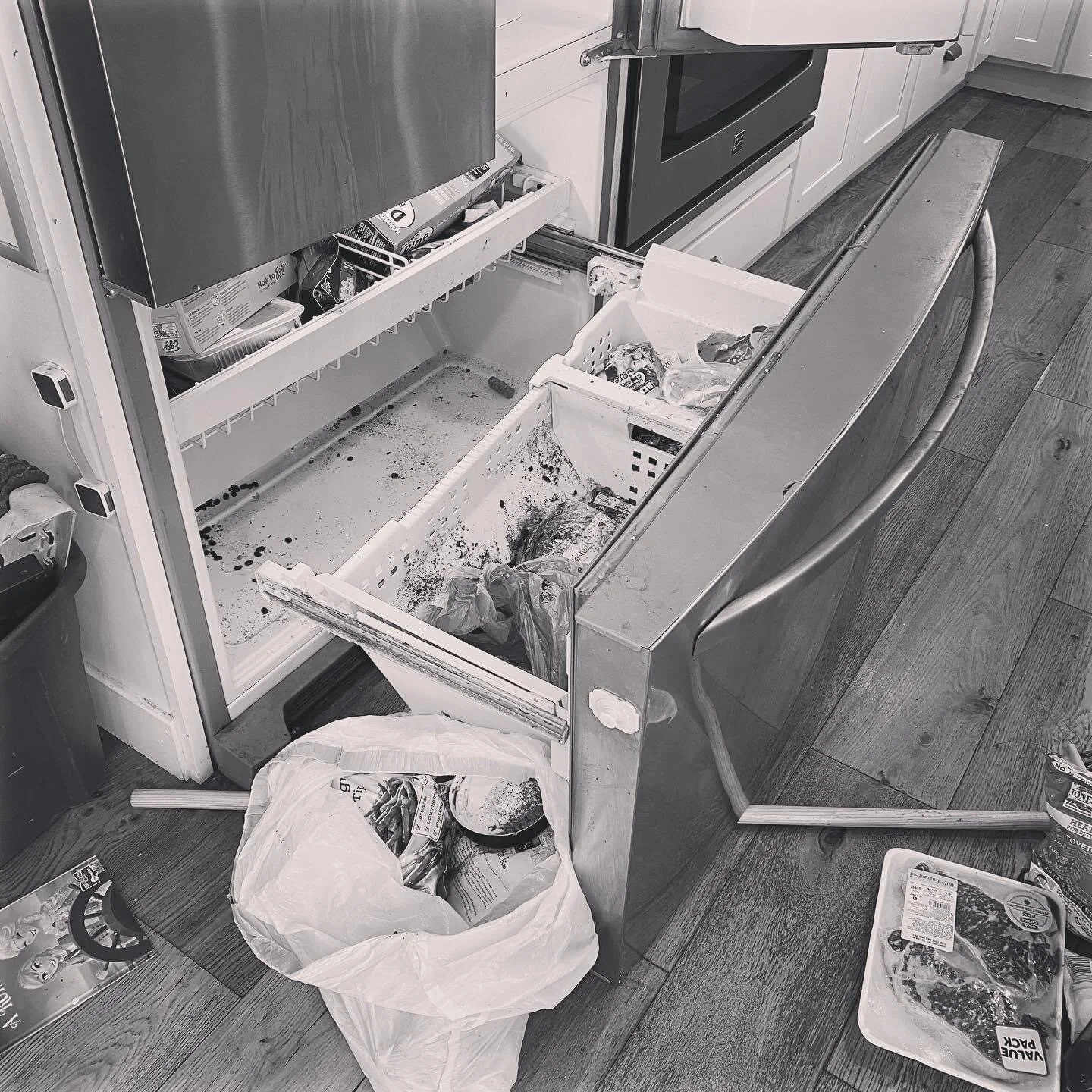
The author’s fridge, broken, covered in coffee grounds, thanks to #severeautism.

The author’s fridge, broken, covered in coffee grounds, thanks to #severeautism.

By JH

This is the reality of #severeautism in shelter-in-place. Months of being isolated. This is a small piece of it.

An aggressively pulled out broken freezer (I’ve tried locks in the past) covered in coffee grounds. Why? Anger & frustration from a confused and frustrated #asd kid.  

I see on my private Facebook group of severe autism parents that we are all in hell. Holes in walls. Electronics thrown across a room. Bite marks. It’s like trying to get through a ‘full moon’ kinda day every day.

We have have been very stringent since the beginning with self-isolation; we have a family member with a compromised immune system. As I begin to watch restrictions lift all around me, I get more and more angry and resentful. I’m the first to admit it’s hard to watch everyone go out to eat, vacation, finally get their hair done after complaining for so long.

A lot of us #specialneedsparents laughed in the beginning because being confined to home due to a challenging child is our norm. But AT LEAST we had day programs. We had school as one of our only respites. Our children go to school for so much more than education. They receive many essential therapies such as speech, applied behavioral, occupational, life skills. Now, all gone.

At 11, our son is still working on being able to sit for longer than 30 seconds. And when there’s a long break, there’s major regression. There’s added behaviors. There’s heartache. I see daycamps opening back up. I see families going to the beach and visiting parks and hanging out with other friends and families. Yet our special kiddos are still supposed to be ‘educated’ through Zoom?

Have you seen how fast they are? Watch me chase him in the backyard with a laptop trying to get him to connect with his speech therapist. He literally laughs at me.

How come you can go to the gym but my kid can’t receive his essential therapies that are written in and signed on an Individual Education Plan? I know it’s not your fault. But I have reached out to both @gavinnewsom and my Assemblymember with no response. My son’s special needs school is amazing and is a huge part of his growth. But their hands are tied. Who has the answers?

JH is the mother of a son with severe autism. She is based in the San Francisco Bay Area.

Disclaimer: Blogposts on the NCSA blog represent the opinions of the individual authors and not necessarily the views or positions of the NCSA or its board of directors.